
Tajikistan
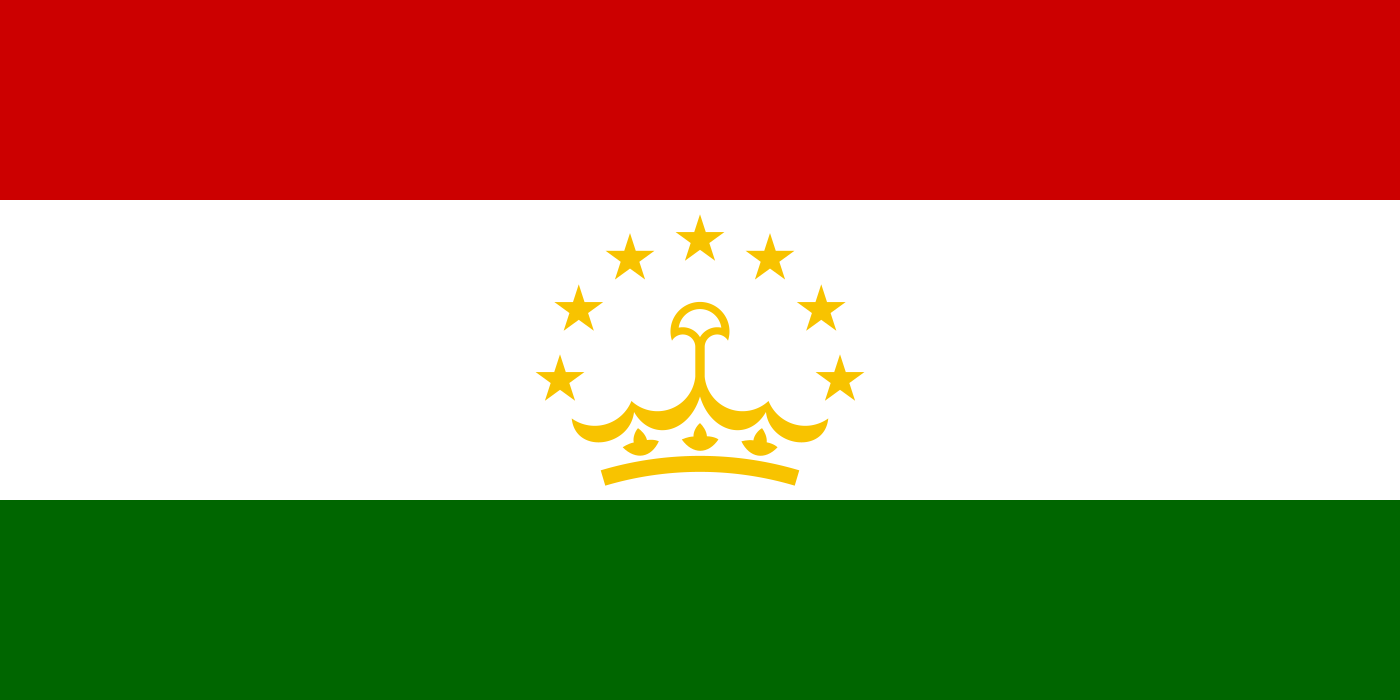
Country Spotlight
Tajikistan does not possess nuclear, biological, or chemical weapons and is party to relevant nonproliferation treaties and organizations. Like other nations in Central Asia, Tajikistan faces nonproliferation challenges shaped by its Soviet legacy and porous borders, raising concern of the potential for smuggling of WMD-related materials. Active in ongoing efforts to minimize CBRN threats to international security.
See Tajikistan’s performance in
Region Former Soviet Union
1,000,000 Metric tons of uranium ore processed annually by the Vostokredmet facility at its height
54.8 Million tons of radioactive waste (tailings) from Soviet era mining activities
$6.5 Million in assistance provided by IAEA for projects such as uranium waste disposal
Nuclear
- Pursuing the refurbishment and reactivation of never-activated Argus nuclear research reactor in Dushanbe with Russian and Chinese assistance
- Interested in reactivating major uranium mining and processing site, the Vostochnyy Rare Metal Industrial Association (Vostokredmet), inherited from the Soviet Union
- Has taken steps and received international support from U.S., Russia, and others for improving border security to prevent smuggling of nuclear materials
Biological
- No evidence that it participated in Soviet biological weapons research, and is party to the Biological and Toxin Weapons Convention (BWC)
- Retains a still-active regional Anti-Plague (AP) facility in Dushanbe
- Researchers at the AP facility destroyed their pathogen cultures during the 1992-1997 civil war to prevent their use as biological weapons if seized by warring factions
Missile
- Does not possess any ballistic missiles and lacks the domestic capability to produce them
- Operated a facility during the USSR that produced rocket motors for Soviet strategic missiles
- Party to Hague Code of Conduct Against Ballistic Missile Proliferation (HCOC)
- Received two divisions of S-300 anti-aircraft missile systems from Russia in 2023
Chemical
- Does not possess chemical weapons
- Produces dual-use chemicals and industrial capability to produce CW precursors, but follows relevant CW regulations
- Party to the Chemical Weapons Convention (CWC)