

NTI’s “Young Voices” series highlights students and early-career professionals making their mark as part of the community of experts and practitioners tackling today’s existential threats. At a time of heightened international peril—with wars ranging in regions of the world with nuclear weapons, new arms races underway, and growing concern about emerging biological threats—it is crucial to build capacity in the national and global security space and support the next generation of leaders. This series reflects NTI’s commitment to uplift a range of voices and ideas, including those that have traditionally been underrepresented; help break down stereotypes that contribute to generational divides on security; and give a platform to young people to share creative, innovative ideas that address the evolving threats posed by weapons of mass destruction and disruption.
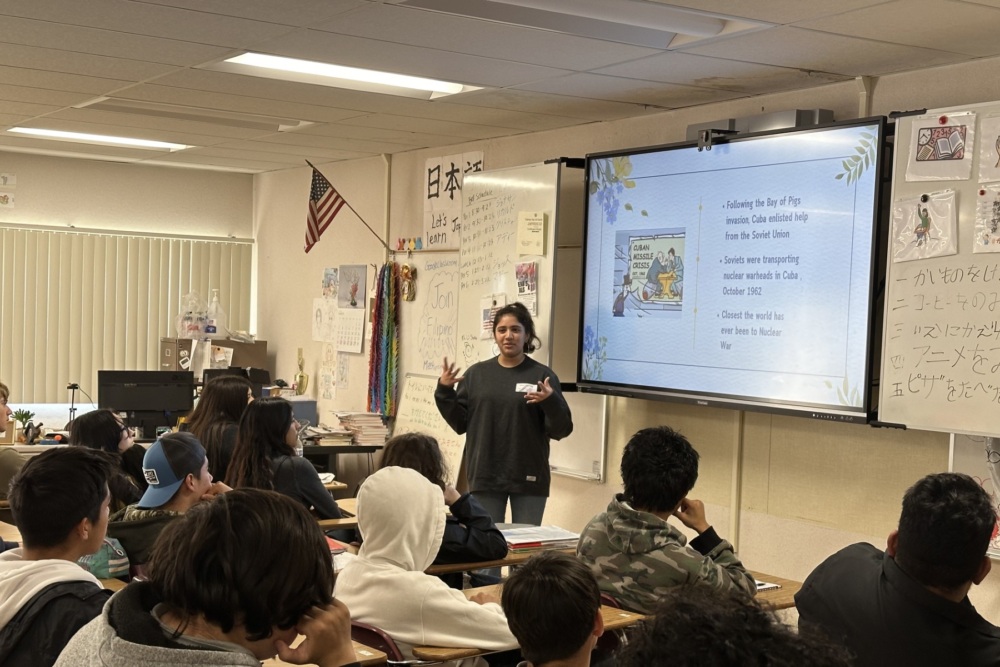
Cristina Panaguta, NTI’s Communications intern, spoke with Naina Singh, a current student at UWC ISAK Japan. Despite still being in high school, she has created impactful educational content on nuclear politics and served as a co-instructor for Soka University’s Nuclear Politics Program, teaching both undergraduate and graduate students. This interview has been edited for length and clarity.
Cristina Panaguta: You’ve taken on some quite serious global issues while still in high school. Was there a particular moment or realization that motivated your involvement?
 Naina Singh: When I was 16, I attended the Critical Issues Forum in Monterey at the Middlebury Institute for International Studies, which catalyzed my journey with nuclear disarmament. Later, I attended Soka University’s Nuclear Politics Program. Having the topic of nuclear weapons broken down to molecular level by experts in the field allowed me to understand the intricacies of these issues. When people advocate for nuclear disarmament, they also advocate for the environment, racial issues, women’s rights, and anticolonialism, as it is a traffic junction for global peace.
At Soka University, I also learned about the devastating human cost of nuclear war—not just the initial blast, but the long-term effects such as cancer and nuclear winter. Hearing real cities like L.A. and New York used as examples of a nuclear war scenario made it personal; my family lives near L.A., and it hit me how easily everything I love could vanish. That fear was paralyzing at first, but eventually it pushed me to act. Nuclear weapons are still a massive threat, as we saw with the Israel-Iran strikes. People avoid talking about it because it feels hopeless, but I believe that fear can drive meaningful change.
 CP: You’re heading into your final year of high school at the United World Colleges (UWC) ISAK in Japan. How has attending a school openly focused on promoting intercultural understanding and idealism shaped your approach to nuclear disarmament?
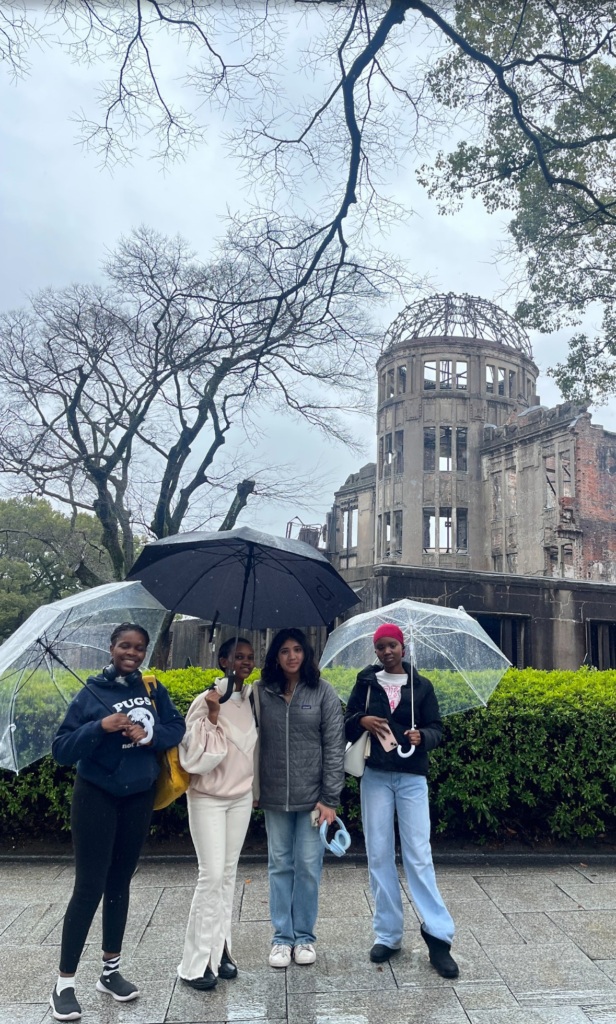
NS: UWC is an ideal place to start working on nuclear disarmament because it’s built around peace and sustainability. At UWC ISAK, as part of the school’s leadership curriculum, I initiated a project called A Teenager’s Guide to Nuclear Disarmament, aiming at educating high school students on nuclear issues. The community’s openness and global diversity made it easy to engage with others as many had personal ties to nuclear issues. During the school year, UWC schools carry out a week-long project-based experience, which allowed me to visit Hiroshima. Visiting Hiroshima’s Peace Memorial Museum was a powerful reminder of the human cost of these weapons. It connected me back to the real core of why nuclear disarmament is so important. It’s because we want to preserve our lives. We want to preserve human connections. We want to preserve our cultures. And this is exactly what UWC education strives to achieve.
CP: I know from my own experience, UWC does a great job in personalizing global issues to the extent that everything hits close to home as you make friends from all around the world. Continuing the academic note, tell me more about your research on the Radiation Exposure Compensation Act.
NS: For my IB Extended Essay, I’m evaluating how effective RECA was in addressing the impact of radiation exposure on uranium miners, especially within indigenous communities. Despite decades of advocacy, many of these communities were excluded from the original Radiation Exposure Compensation Act (RECA). Only recently has Congress moved to include them in compensation efforts.
CP: What developments or issue areas do you find most motivating in your disarmament work that you would like to pursue in the future?
NS: Studying RECA has exposed me to the deep injustices tied to post-colonial nuclear testing. Many still view nuclear weapons as harmless since WWII, overlooking the damage from testing in places like French Polynesia and the U.S. Southwest. These untold stories deserve attention to shift public perception and highlight the real human cost of nuclear weapons. So, in the future, I also want to contribute to amplifying the voices of those underrepresented in the media and on the global stage.
CP: If you could reimagine global education to better address existential threats such as nuclear weapons, what do you think it would look like?
NS: I’d start with early awareness. When I began my project, A Teenager’s Guide to Nuclear Disarmament, most students had never heard of nuclear weapons or disarmament. That lack of education is part of why disarmament hasn’t progressed. Empowering youth with even basic knowledge can spark action. Grassroots efforts like Students for Nuclear Disarmament are doing great work, but we need more programs targeting students under 18. If young people take this knowledge back to their communities, it can create real change.
Sign up for our newsletter to get the latest on nuclear and biological threats.

Younger generations understand nuclear weapons through digital screens rather than personal experience. The future of nuclear risk reduction hinges on the ability to communicate with and engage young people directly; to educate and mobilize them around nuclear issues.
Most of us think of cognitive biases as quirks of everyday decision-making, but a recent Texas National Security Review study shows they are deeply embedded in people’s attitudes toward nuclear weapons and war.
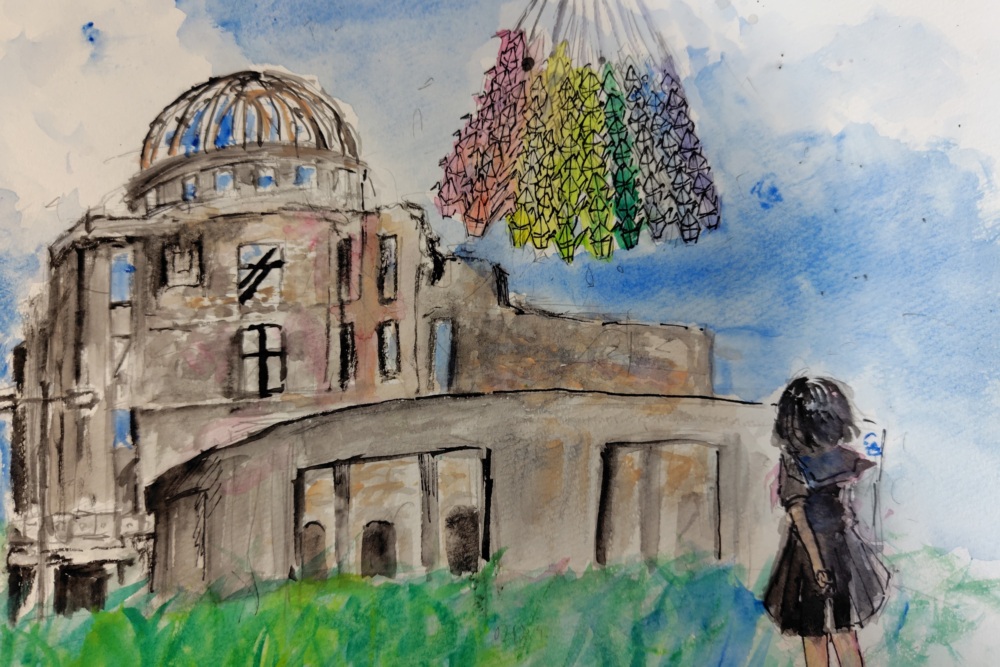
NTI’s Hiroshima and Nagasaki commemoration activities this year centered on the theme of passing the torch to the next generation. The result was an intergenerational connection reflected in two artists: 88-year-old Hiroshima survivor Toshiko Tanaka, and 13-year-old painter Kotone.
Sign up for regular updates on innovative, real-world solutions to existential threats.