

Eric Brewer
Deputy Vice President, Nuclear Materials Security

The risk of more countries seeking nuclear weapons—or the tools to make them—is growing. At the same time, many of the strategies the United States has used to stop proliferation in the past are losing their effectiveness. If nuclear weapons spread, it would directly threaten U.S. security: Even in the hands of allies, more nuclear weapons in more countries would reduce America’s influence, make conflicts harder to manage, and increase the chances of a nuclear incident.
Luckily, there are clear steps the U.S. government can take to mitigate these threats. NTI convened a group of 13 former senior government officials and experts over the course of a year to craft a new, long-term strategy to guide U.S. policy.
Here’s five things they recommended the United States do to help prevent an era of nuclear anarchy.
Beyond Iran, many of the biggest sources of proliferation concern are U.S. allies and partners who have agreed to forego their own nuclear weapons in exchange for protection by the U.S. nuclear umbrella. Some of these countries—including Poland, Germany, South Korea, Japan, and Saudi Arabia—have become nuclear weapons-curious as they worry that America is no longer willing or able to defend them against growing threats from regional adversaries. To manage this problem, the United States must work with these allies to strengthen and evolve that security relationship beyond its Cold War foundations. That means better augmenting and integrating allied conventional military capabilities as part of a more equitable division of labor. Washington should also remind its allies of the risks inherent in proliferation.
Cooperation between the United States and Russia on nuclear nonproliferation—historically, an area of common cause—has almost completely halted and the relationship between Beijing and Washington is hardly better. Convincing Russia and China to drastically alter their approach will be a tough task given geopolitical tensions, but Washington should continue test whether Moscow and Beijing may be willing to cooperate. Steps could include reaffirming commitments to nonproliferation, cooperating on nuclear safety, security, and safeguards, and steps to help restrain Iranian and North Korean nuclear ambitions. Behind closed doors, the U.S. should make clear to Russia and China that their behavior is driving nuclear weapons interest among U.S. allies, and that they all have an interest in avoiding further proliferation.
At the heart of the Nuclear Nonproliferation Treaty (which has near global adherence) is a bargain that says countries without nuclear weapons won’t get them, those that have them will work toward giving them up, and all can benefit from peaceful nuclear technology. Multilateral buy-in to this nonproliferation regime has made it much easier for the U.S. to enforce the rules. In recent decades, however, the bargain has been eroding as countries with weapons expand and modernize their arsenals, the world has had to confront several proliferation crises, and there is a sense that great powers are bending the rules to serve their interests. Washington should work to reverse this backsliding by seeking arms control and risk reduction dialogue with Russia and China, doing more to ensure the Global South sees the benefits of the bargain, upholding its moratoria on explosive testing, and increasing support the International Atomic Energy Agency (IAEA), whose capabilities back-stop key elements of the bargain.
Interest in nuclear energy is expanding globally, which could lead more countries to acquire some of the key technologies to build nuclear weapons. Once a nuclear energy leader, Washington is no longer well-positioned to help write the rules of the road for this new future. To be able to once again use exports as a nonproliferation tool, the United States needs recoup its leadership position in the global nuclear marketplace. Washington needs to begin by kick-starting its ability to build new reactors at home—with nonproliferation considerations at the forefront—and revamp how it finds customers and partners abroad. It also needs to develop a suite of new policy tools and approaches to providing nuclear fuel that can make it a more attractive nuclear energy partner and dissuade countries from pursuing sensitive technologies that can be used for nuclear energy or nuclear weapons.
Maintaining the domestic and international system to prevent proliferation is not cheap. The U.S. shoulders a large share of the costs but also accrues a commensurate share of the benefits. Washington should recommit to and invest in the people, policies, and programs that back-stop its ability prevent proliferation—from safeguards and sanctions experts to intelligence officers and nuclear engineers. This includes launching an initiative to take advantage of AI and other technologies to detect proliferation, targeted retention and recruitment of experts, updating anti-proliferation sanctions laws, and maintaining military options to use as a last resort.
The threat of nuclear weapons spreading is real—and growing. But it’s not inevitable. By revamping its strategy, the United States can help build a safer future and prevent a new wave of proliferation. The recommendations outlined above offer practical steps for doing just that.
Sign up for our newsletter to get the latest on nuclear and biological threats.
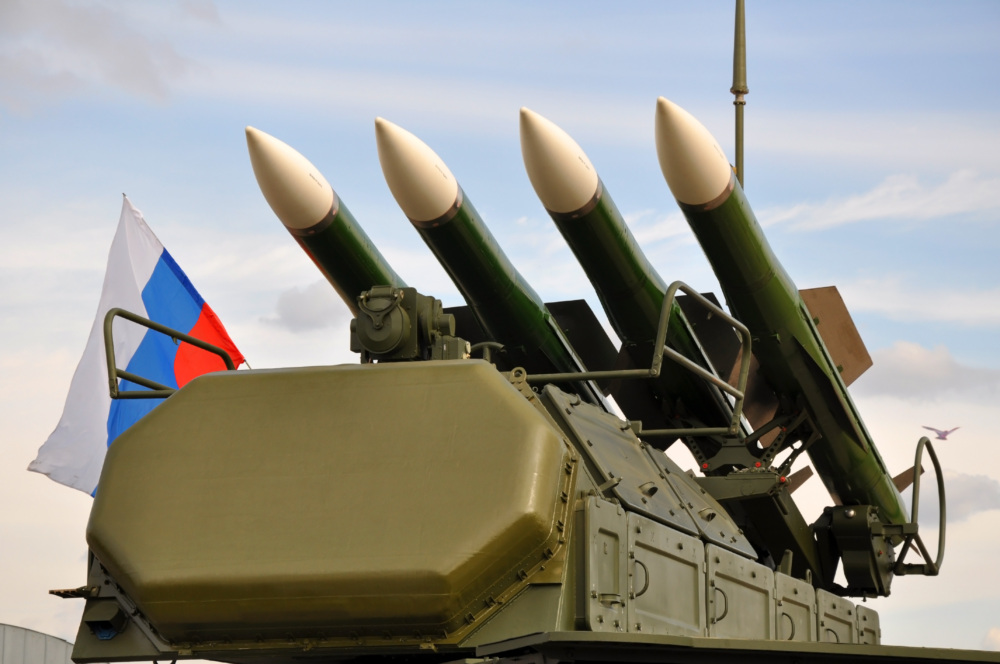
Putin’s announcement is a significant blow to the last remaining strategic arms control agreement between the world’s two largest nuclear powers and to the fraying Euro-Atlantic security architecture more broadly.

For nuclear power to be a problem solver rather than a problem maker, the international community must push for a smart brand of nuclear power that prioritizes safety and security.

In an NTI seminar, author and nuclear expert Dr. Rebecca Davis Gibbons shared insights from her new book, the Hegemon’s Tool Kit: U.S. Leadership and the Politics of the Nuclear Nonproliferation Regime, in which she explores the creation of the nuclear non-proliferation regime and steps taken to ensure that as many countries as possible continue to adhere to it.
Sign up for regular updates on innovative, real-world solutions to existential threats.