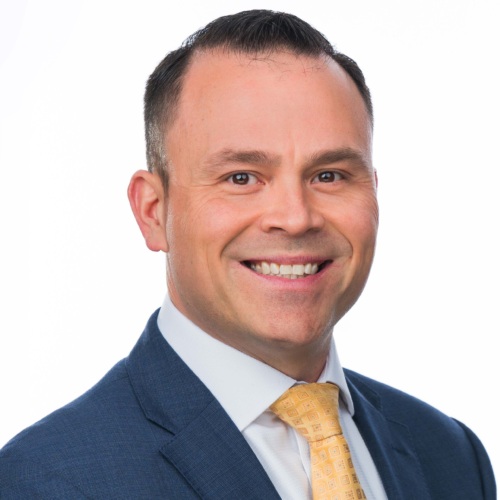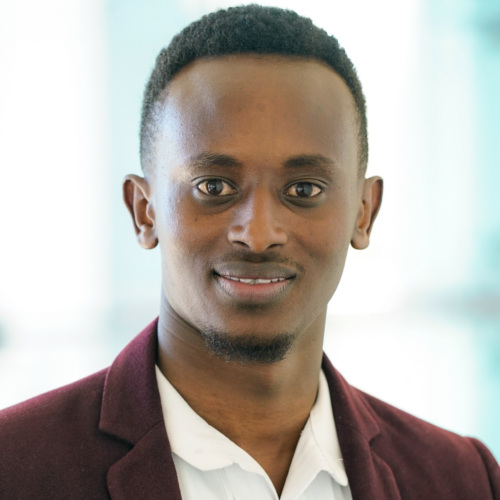
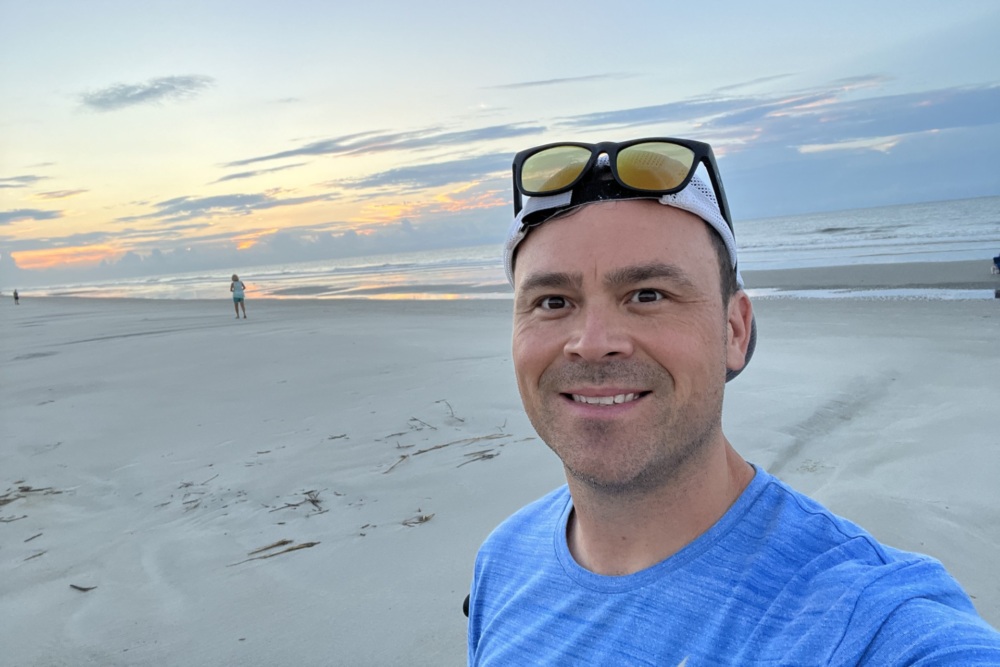
Jake Jordan, PhD serves as the Vice President of Global Biological Policy and Programs (NTI | bio). He rejoined NTI in March 2026, having previously served as a senior director from 2018 to 2020. Jake spoke with NTI | bio intern Alex Kyabarongo about his role and past experiences. This interview has been edited for length and clarity.
As the Vice President for NTI | bio I lead a team working to reduce global biological threats. We convene the people building biotechnology and the people governing it, stress-test the promising ideas, and write the playbooks that let others put them to use. We don’t run a lab, and we don’t serve as regulators. We fill the space in-between. We work to share best practices, develop new solutions or amplify promising concepts, map out where we are today, and project to the future we want to be in.
My day-to-day varies. I may work with our team to prepare for or participate in convenings with experts, policymakers, and external partners, from the United States and around the world. The global perspective is important to surface diverse perspectives and ensure that promising solutions can be adapted and scaled across jurisdictions.
I also support original research that helps identify emerging challenges and opportunities for risk reduction. Alongside this work, I coordinate with our government relations, communications, and development teams to raise awareness of our work, sustain funding, and keep stakeholders informed of our impact.
Coming out of graduate school as a chemical engineer, I thought that I was going into industry to support the next generation of biotechnology advances, but this did not happen. I ended up working to assist the U.S. government in emerging technology opportunities at DARPA. I stayed for almost a decade. The work was exciting.
I was able to help shape new biotechnology capabilities, and I spent most of my time thinking about all the capabilities those new technologies would enable. As time went on though, I started focusing on a slightly different question: what happens when they get used by someone we did not anticipate, or in a way we did not intend? In 2018, I moved to NTI where I helped to start and lead our Biosecurity Innovation and Risk Reduction Initiative (BIRRI).
In 2020, I took a leadership position overseeing contracts in support of DARPA. During this time, I also spent a portion of my time working as a senior advisor, including roles with Operation Warp Speed and the creation of ARPA-H.
While I want technology to succeed, the growing risks make us vulnerable to misuse and its consequences. That concern is what ultimately brought me back to NTI: I wanted to work on an international scale to help mitigate those risks, and I could imagine no better place to do that than NTI.
Today’s biothreat landscape is dynamic. Concerns come from deliberate misuse by state and non-state actors, accidents, and naturally occurring outbreaks. International agreements like the Biological Weapons Convention (BWC) and efforts to uphold the taboo against biological weapons help reduce some of these risks, but emerging biological tools introduce new challenges.
Naturally occurring disease outbreaks remain a serious concern, especially as geopolitical instability, weakening global health infrastructure, and rising security challenges increase the risk of health emergencies. The recent release of the Africa Health Security Index (AHSI) helps to highlight these vulnerabilities.
When it comes to potential misuse by non-state actors, we are exploring practical guardrails to reduce risk without slowing scientific progress. Our AIxBio Global Forum is an example of where this work happens. It brings AI developers, biologists, and global AI safety and security leaders together to consider how both frontier AI models and biology-specific AI tools can be developed and used responsibly.
State risks need additional tools. Next year’s BWC Review Conference is an important opportunity to strengthen the treaty, deter misuse, and explore how emerging AI capabilities could support more effective implementation.
Working with people around the world who share a belief in the promise of technology while recognizing its risks keeps me motivated. Many are committed to building a safer future, bridging geopolitical divides, and developing solutions that can gain broad support. Learning, collaborating, and bringing new and unlikely voices into the conversation is deeply motivating. Solutions are more likely to succeed when everyone helps shape them, and diverse perspectives often make good ideas stronger.
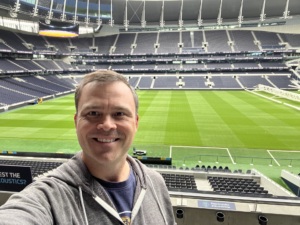 I am a Tottenham fan. I had the opportunity to visit the stadium during a trip to London with my family. We did a tour of the stadium, and it was fascinating — and the model was on sale.
I became a Tottenham fan several years ago, when I started watching Premier League soccer and needed to pick a team. You have to have a team, right? Back then, one or two games would appear on TV in the U.S., not like today where you get every match. I wanted to cheer for a team that was London-based, because I felt that was the easiest way to get involved; we have family living in London. Also, I wanted a team that wasn’t riding at the top, and Tottenham certainly checked that box.
But most importantly, I found out that my wife’s extended family were former Tottenham season ticket holders which gave me a nice way to bond.
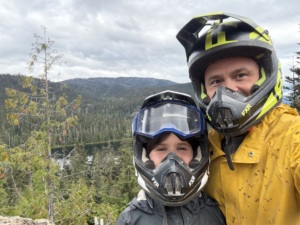 These days, many of my hobbies revolve around my kids’ interests. I enjoy joining them and often get pulled in too. A few years ago, my daughter became interested in gymnastics and wanted to learn skills like cartwheels, so we worked through them together. When my son wanted a 3D printer, for example, I soon started designing and printing things myself, which felt like a return to my engineering roots.
More recently, as his interest in soccer grew, I became an assistant coach for a group of 12-year-olds, which I found more challenging than my day job!
In general, I enjoy diving into whatever my kids are exploring, and I often end up with hobbies that enrich both their lives and mine.
Sign up for our newsletter to get the latest on nuclear and biological threats.
As AI expands what is possible in biology, it’s past time the biosecurity, insurance, and legal communities came together to examine what these developments mean for preventing harm and assigning responsibility if it occurs.
The development of SynthID Bio by a major frontier AI lab is an important reminder that responsible development and cutting-edge progress are not mutually exclusive.
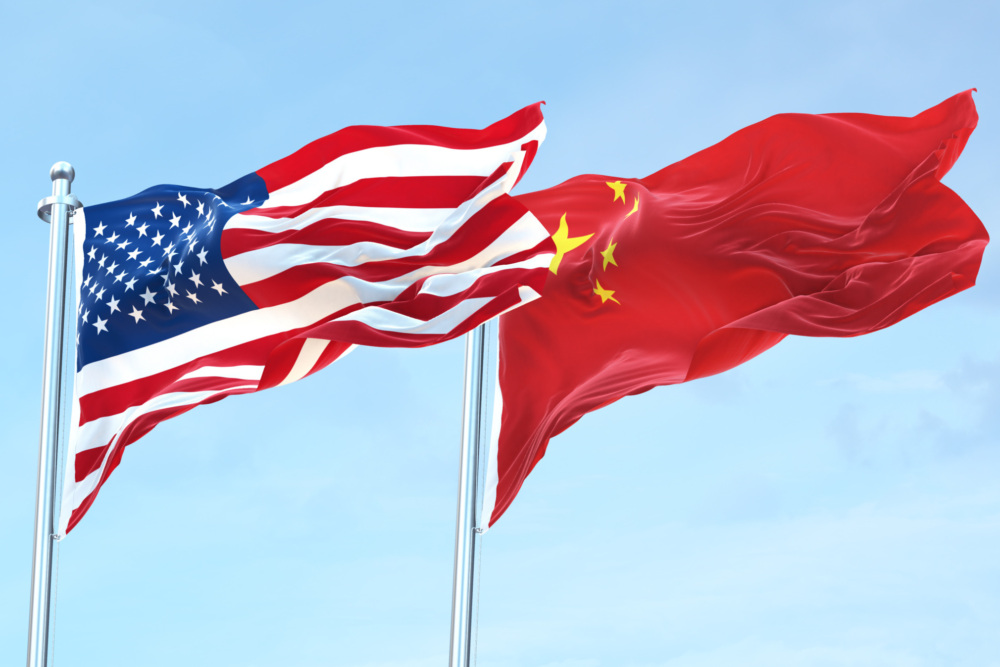
The Trump and Xi summit may offer an opportunity to begin filling the leadership vacuum on AI advances, especially with respect to bioweapons. If the reports from AI companies are correct, it’s imperative that Presidents Trump and Xi start this work now.
Sign up for regular updates on innovative, real-world solutions to existential threats.