

Simon Thorpe
Herbert Scoville Jr. Peace Fellow
NTI just released the 2026 NTI Nuclear Security Index (NTI Index), the only independent and transparent assessment of global nuclear and radiological security conditions across 176 countries and areas. The NTI Index team spent months poring over thousands of data points, synthesizing them into the 11 most urgent findings, and crafting recommendations for how governments can respond. Among those thousands of data points, here are five worth knowing:
Why this matters: The greatest threat to a nuclear facility often comes from inside of it. Insiders—employees, contractors, or guards with legitimate access—have played a role in nearly all documented cases of nuclear theft or sabotage. When an insider begins acting suspicious, their coworkers are the first line of defense to identify and report their behavior.
When nuclear facilities do not have robust reporting mechanisms and requirements, warning signs can go unheeded until it is too late. In 2014, an attacker at the Doel nuclear power plant in Belgium, causing a reactor shutdown and roughly €30 million in damage. A seven-year long investigation confirmed that an insider was responsible but could not find enough evidence to charge anyone, suggesting—among other deficiencies—an insufficient reporting process. A workforce that knows exactly how to deal with suspicious employees is often one of the most effective ways to prevent nuclear terrorism.
Why this matters: Modern nuclear facilities rely on numerous computers and digital systems for tracking nuclear material, running cameras and alarms, controlling access to sensitive areas, and helping operate reactors. This infrastructure needs to withstand continuously evolving cyber threats.
But most countries with weapons-usable nuclear materials or nuclear facilities do not require annual cybersecurity assessments that identify weaknesses before hackers exploit them, whether to sabotage facilities or steal sensitive materials. The rapid sophistication of AI-powered cyberattacks, such as the Hugging Face incident earlier this year, makes annual examinations the bare minimum.
Why this matters: No country can prevent nuclear terrorism on its own. The United States and Russia established the Global Initiative to Combat Nuclear Terrorism (GICNT) in 2006 to build nuclear terrorism prevention capabilities among all member countries. The GICNT, which had grown to 89 member countries, paused after Russia invaded Ukraine, and the United States partnered with Romania to carry on the work through Global FTPRNT.
But not all GICNT countries joined the transition to Global FTPRNT; the result is that Russia, China, India, and a number of other countries with nuclear facilities have lost a major avenue for nuclear security cooperation. The full extent of the impact on global nuclear security will become clear in time, but what we know now is that the disappearance of cooperation between states is to the detriment of all.
Why this matters: If a nuclear facility is attacked, its own security force responds first. But ultimately, onsite security will need to cooperate with offsite responders like local police, the military, and emergency services. Joint exercises—especially when conducted annually—help integrate offsite forces with facility security. The importance of joint exercises is growing as plans emerge for nuclear facilities to open closer to population centers. Strengthening coordination capabilities between response forces is a powerful way to build trust with local residents and mitigate the damage a natural disaster or armed attack could cause the community.
The number of countries that require such exercises increased during the late 2010s and early 2020s, but progress has now stalled: no new country has added a joint-exercise requirement since 2023, and only Finland and Switzerland have added an annual-testing requirement in that time. Several countries with no exercise requirements—such as France, Slovakia, and Belarus—already generate substantial percentages of their total electricity output through nuclear energy.
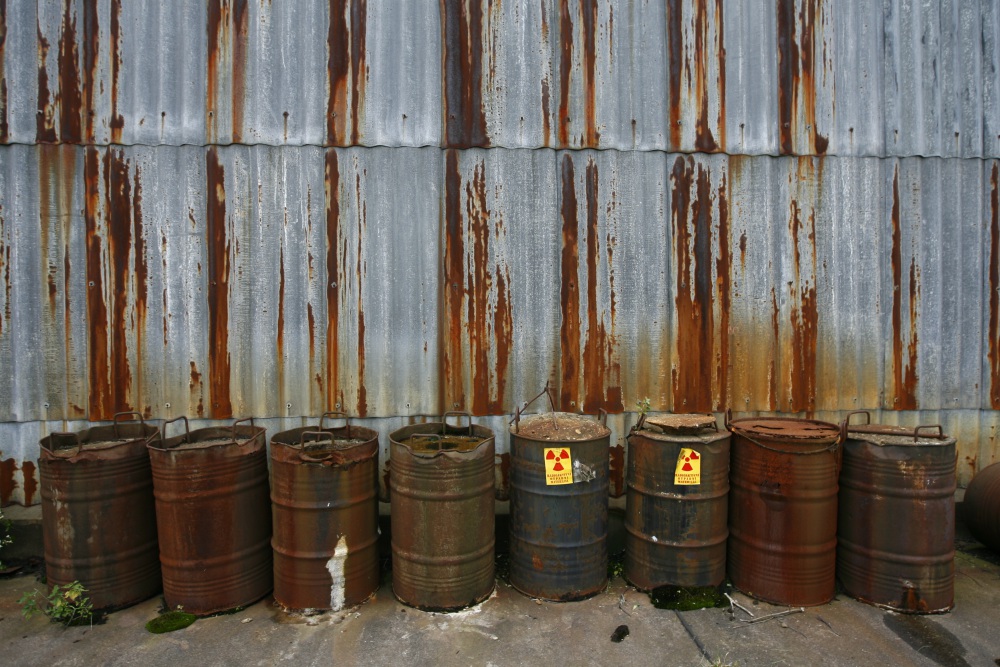
Why this matters: Unlike nuclear materials, which sit in a limited number of protected sites, radioactive sources are used in hospitals, factories, and universities worldwide. Most are benign, but some high-activity isotopes, such as cobalt-60 and cesium-137, can be transformed into dirty bombs or radiological exposure devices capable of endangering human health and causing severe societal disruption. Almost one third of countries do not have any legal requirements to protect these sources, a weakness that transnational terror networks or other bad actors could easily exploit.
The international nuclear security architecture is only as strong as its weakest links, or, in other words, the places where security regulations do not keep pace with the dangers they face. As threats continue to evolve, so must the frameworks, institutions, and individuals working to counter them. The data reveals that countries around the world can do much more to prevent nuclear and radiological terrorism—and the 2026 NTI Index provides key actionable insights to make it happen. Learn more about what your country or area can do on the NTI Index website.
Sign up for our newsletter to get the latest on nuclear and biological threats.

Nuclear Security is Only as Strong as the Weakest Link: 2020 NTI Index Highlights Cybersecurity and Insider Threat Prevention

What Were Hundreds of Nuclear Policy Wonks Doing in the California Desert? #INMM19!
Fourth Edition of NTI Index Underway
Sign up for regular updates on innovative, real-world solutions to existential threats.