
Article
NPT
The Treaty on the Non-Proliferation of Nuclear Weapons (NPT) prevents the spread of nuclear weapons, promotes disarmament and peaceful uses of energy
Article
The Treaty on the Non-Proliferation of Nuclear Weapons (NPT) prevents the spread of nuclear weapons, promotes disarmament and peaceful uses of energy
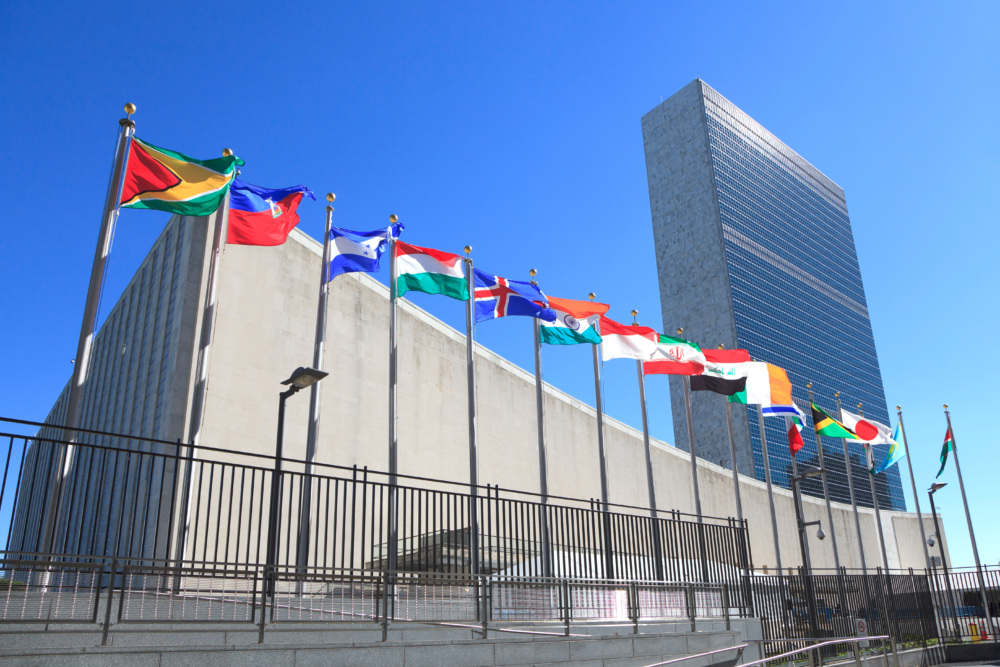
At a time when the NPT is under growing strain, NWFZs stand out as one of areas where cooperation has not only endured but delivered tangible results. They demonstrate that large regions can sustain security without nuclear weapons, and that states are willing to translate commitments into practice.

What happens “if we can’t rely on the information we have,” asks Christopher Painter, former top U.S. cyber diplomat. In an NTI seminar on January 25, Painter posed this critical question and discussed a range of issues at the intersection of cyber and nuclear security.

"Far from being a burden to new nuclear energy projects, following common-sense security norms can actually help catalyze new growth."
Information and analysis of nuclear weapons disarmament proposals and progress in Kazakhstan
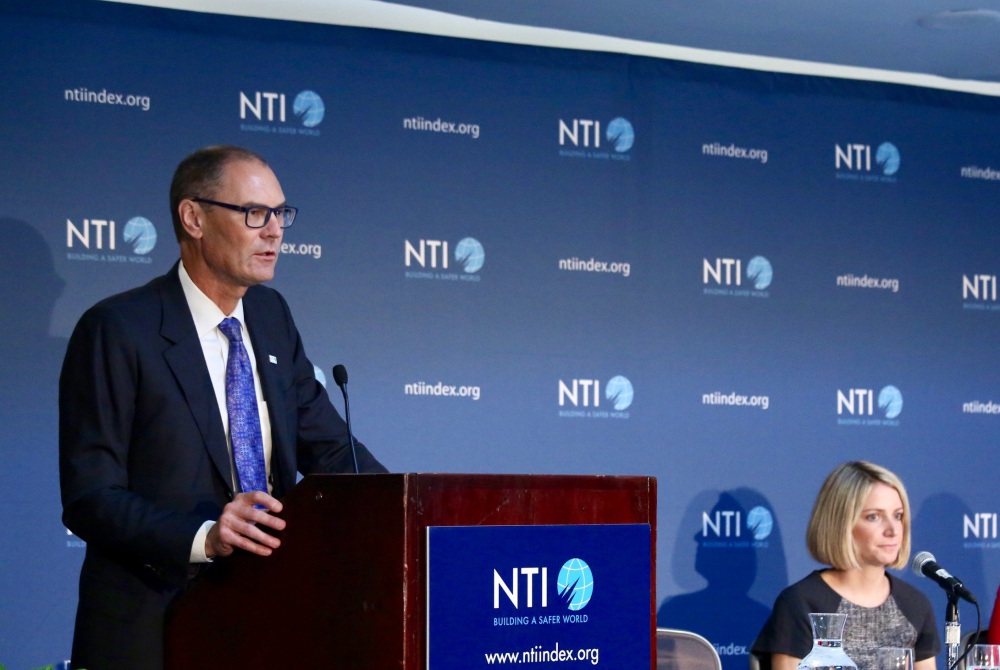
The NTI Nuclear Security Index finds that the steps countries have taken to reduce nuclear terrorism are jeopardized by various factors.

The 2020 Presidential Debates: Will Nuclear Policy get the Attention it Deserves?

A Call to Action on the Fifth Anniversary of the Final Nuclear Security Summit

NTI's Lynn Rusten joined Rose Gottemoeller and Gerald Brown on a panel hosted by the Arms Control Association to discuss the ways in which the U.S. can foster an effective dialogue with China on confidence building measures and nuclear risk reduction.
Nunn called for U.S. and Russia to reduce reliance on nuclear weapons and end their nations’ Cold War nuclear force postures and remove hair-trigger status.
Sign up for regular updates on innovative, real-world solutions to existential threats.