

Patricia Jaworek
Director, Global Nuclear Policy Program
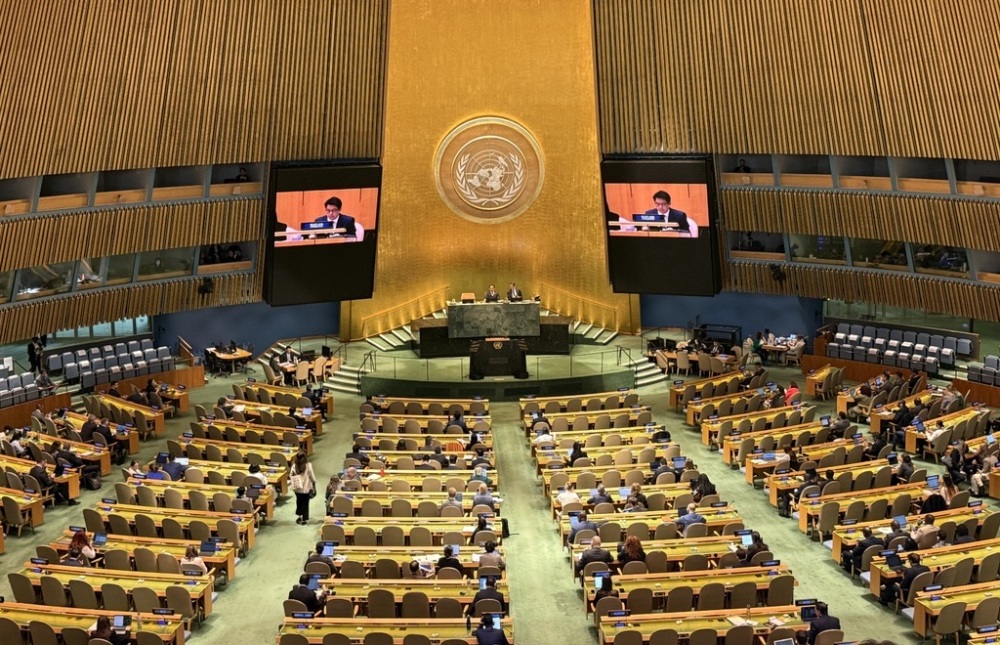
The 2026 NPT Review Conference (NPT RevCon) ended on May 22 without a consensus outcome—the third consecutive RevCon to do so. It took place against one of the most difficult geopolitical backdrops in decades: Russia’s ongoing war in Ukraine, U.S.-Israeli strikes on Iran, Iran’s non-compliance with its safeguards obligations, the rapid expansion of China’s nuclear arsenal, and the expiration of the last remaining arms control agreement between the United States and Russia.
Conference President Do Hung Viet captured the mood in his closing remarks: “My goal was to make everyone equally unhappy. In that, I think we can all agree that I had made some progress towards that goal.” The remark is honest, but it reflects a resignation we cannot afford to accept.
Some argue that the failure to adopt an outcome document is not the right measure of success—that four weeks of negotiations among 191 states parties are valuable, and that the treaty’s norms and legal commitments remain in force. Others see the consecutive failures to reach consensus as a sign that the regime is in grave and accelerating decline.
Both views are partly right. As Under-Secretary-General Izumi Nakamitsu notes, states parties should take this pattern “very seriously.” The three consecutive failures reflect a deeper structural strain within the NPT’s grand bargain: non-nuclear-weapon states (NNWS) agree to forgo nuclear weapons in exchange for access to peaceful nuclear technology and a commitment by nuclear-weapon states (NWS) to pursue nuclear disarmament. When that bargain appears increasingly one-sided, confidence in the regime inevitably erodes.
The conclusion, however, cannot be that the NPT is “doomed to fail.” In the climate space, the United Nations Framework Convention on Climate Change (UNFCCC), and its annual Conference of the Parties (COP summits), often produce weak or contested outcomes. Yet their value is not measured alone by whether they deliver breakthrough agreements. It lies equally in their ability to preserve transparency, sustain dialogue, create accountability, and keep states invested in a common framework.
The same logic applies to the NPT. The treaty encodes the goal of a world without nuclear weapons into law and remains the only universal, legally binding framework at the intersection of disarmament, nonproliferation, and the peaceful uses of nuclear technology. At a time when no other forum can bring all the relevant stakeholders together, preserving that framework itself is a strategic imperative.
The Treaty itself has been largely successful. When the NPT opened for signature in 1968, there were genuine fears that dozens of states would acquire nuclear weapons within a generation. Thanks to the NPT and the broader nonproliferation architecture it supports, a world of 30 or 40 nuclear-armed states never became reality.
The political conditions that made the treaty possible no longer exist, and the norms and institutions that arose from it would be extraordinarily difficult to rebuild. That is worth remembering when considering what it means to sustain the NPT, and what it would mean to lose it.
NTI’s work during the conference pointed to where momentum can still be built.
Nuclear-weapon-free zones (NWFZs) remain one of the most underappreciated tools in the nonproliferation and disarmament regime. In collaboration with Kazakhstan and the United Nations Institute for Disarmament Research (UNIDIR), NTI co-hosted a side event on April 28 marking the anniversary of the Semipalatinsk Treaty and presenting recommendations to keep the zones “fit for purpose” in a changing security environment.
Each of the five zones emerged from complicated geopolitical realities and represented a deliberate choice to reject nuclear weapons. This is a narrative that matters not only to the P5, but also to countries caught in the crosshairs of great power competition as they reconsider the role of nuclear weapons for their national security.
NTI also co-hosted a side event with the Asia-Pacific Leadership Network (APLN) and European Leadership Network (ELN) at the mission of the Republic of Korea to the UN on nuclear fail-safe reviews—a unilateral measure that nuclear-armed states can undertake to reduce the risk of accidental, unauthorized, or mistaken nuclear use. At a time when bilateral or multilateral arms control agreements are increasingly out of reach, fail-safe measures are a reminder that nuclear risk reduction does not always require consensus.
After four weeks of intense negotiations in New York, it is entirely understandable to feel frustration, disappointment, and anger. What we cannot afford is for diplomats, policymakers, and publics to internalize that frustration as resignation.
The energy and commitment negotiators bring to the next review cycle will matter enormously. Three consecutive failures to adopt a consensus outcome cannot become a justification for lowered ambition—or a narrative that becomes a self-fulfilling prophecy.
Making everyone equally unhappy may not be ideal, but seeing everyone become equally indifferent would be far worse.
Sign up for our newsletter to get the latest on nuclear and biological threats.
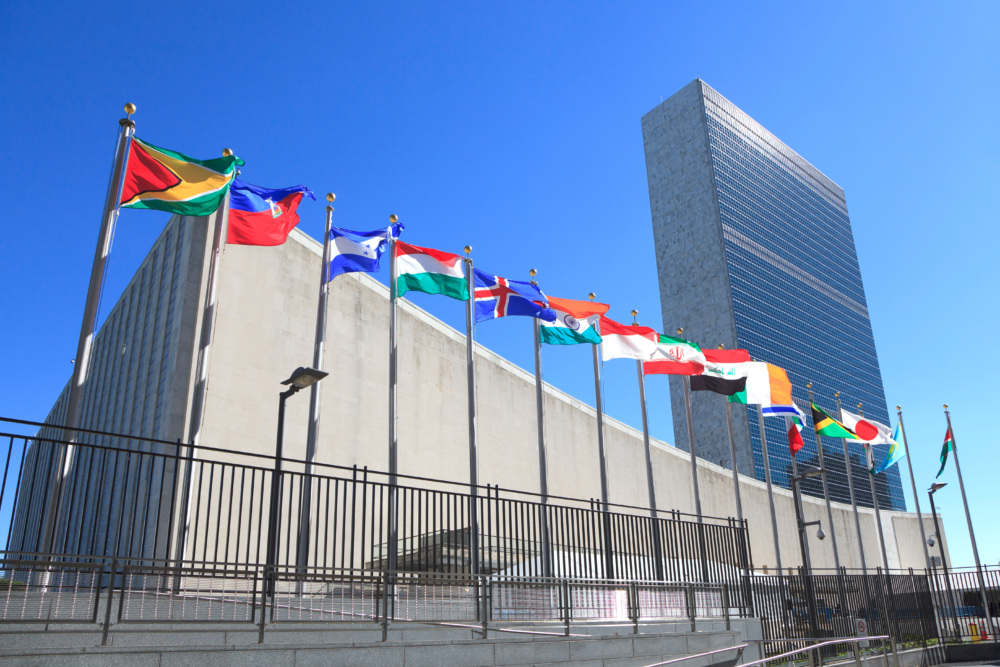
At a time when the NPT is under growing strain, NWFZs stand out as one of areas where cooperation has not only endured but delivered tangible results. They demonstrate that large regions can sustain security without nuclear weapons, and that states are willing to translate commitments into practice.
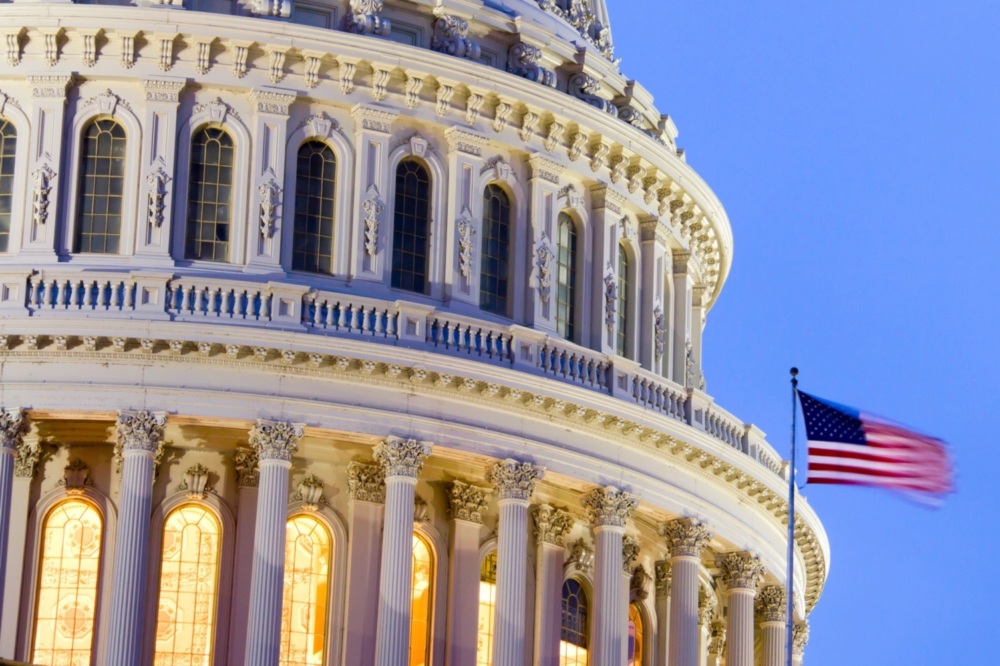
Congress’s oversight of U.S. nuclear policy is at a critical juncture. When the U.S. Senate approved New START in 2010, it mandated several annual reports and certifications to ensure strong congressional oversight of Russian compliance with the treaty. These requirements expired along with the treaty, creating oversight gaps just as strategic competition heats up.

In a political climate that feels more divided than ever, it seems nearly impossible to agree on anything—except, as it turns out, arms control. A YouGov poll commissioned by NTI and ReThink Media found that 91 percent of Americans support capping U.S. and Russian nuclear arsenals, including 89 percent of Trump voters.
Sign up for regular updates on innovative, real-world solutions to existential threats.