

Patricia Jaworek
Director, Global Nuclear Policy Program
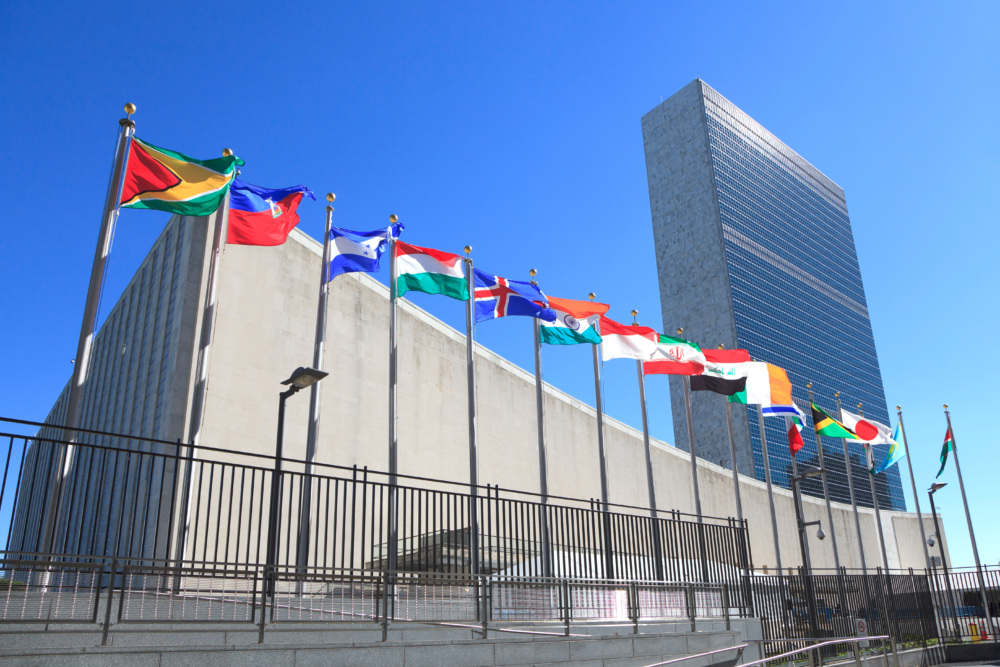
The Review Conference of the Nuclear Non-Proliferation Treaty (NPT RevCon), beginning April 27, will take place in uncharted waters. As states parties gather at the United Nations in New York, there are currently no limits on strategic nuclear arsenals, nuclear-weapon states are engaged in military conflict with non-nuclear states, and more countries are reconsidering the value of nuclear weapons.
It may be tempting to conclude that progress is out of reach. There are, however, some bright spots in this challenging time. Nuclear-weapon-free zones (NWFZs)—one of the most successful and enduring elements of the global effort to prevent the spread of nuclear weapons—have kept large regions of the world free of nuclear weapons activities for decades. They remain among the most effective and underappreciated tools available to advance the NPT’s three pillars of disarmament, nonproliferation, and cooperation on the peaceful uses of nuclear technology.
NWFZs are legally binding regional treaties that prohibit the development, acquisition, and possession of nuclear weapons, and in most cases their stationing, within defined geographic areas. Today, they span much of the Global South—including Latin America, Africa, Central Asia, Southeast Asia, and the South Pacific. While their provisions and implementation mechanisms vary, they are supported—albeit unevenly—by verification and monitoring arrangements, institutional frameworks, and mechanisms for regional cooperation.
Each zone is accompanied by protocols through which nuclear-weapon states (NWS) extend negative security assurances (NSAs) to zone member states, pledging not to use or threaten to use nuclear weapons against them. While ratification of the protocols by NWS remains uneven across zones, these protocols are a vital part of the NWFZ architecture and should be prioritized accordingly.
Within the NPT framework, NWFZs are recognized as an important step toward strengthening the nuclear disarmament and nonproliferation regime and as a concrete expression of states parties’ rights under Article VII of the NPT to establish regional arrangements ensuring the total absence of nuclear weapons. Their value lies not only in their past achievements but in their continued role in reinforcing international peace and security.
At a time of renewed great-power competition, nuclear modernization, and growing proliferation risks, strengthening NWFZs is one of the most practical ways to reinforce the NPT’s core objectives. NWFZs already provide proven regional frameworks that demonstrate large areas can remain free of nuclear weapons for decades, while reinforcing norms against their development, deployment, testing, and use. Many zone members face serious regional security challenges of their own yet have concluded that their interests are better served by addressing those threats without nuclear weapons.
NWFZs advance all three pillars of the NPT, including by facilitating peaceful nuclear cooperation under Article IV and by creating a platform for engagement with nuclear-weapon states, most importantly on the issue of zone protocols and NSAs.
Yet their continued effectiveness cannot be taken for granted. Uneven institutional capacity, emerging technological and geopolitical pressures, as well as declining awareness of their strategic value among diplomats, policymakers, and the public risk weakening the zones and keeping them from realizing their full potential. The Review Conference offers an opportunity to elevate NWFZs as central instruments for reducing nuclear risk in an increasingly contested global security environment.
If NWFZs are to remain effective, they must maintain the capacity to continuously adapt, coordinate, and lead. The single most important step to strengthening the zones remains the full ratification of zone protocols by NWS across all zones. In parallel, there is much that zone member states can do to strengthen NWFZ resilience, enhance their collective voice and impact, and reinvigorate their role within the NPT framework include:
Ensuring NWFZs remain “fit for purpose in a changing security environment.” As geopolitical competition intensifies and the nuclear landscape evolves, zones should periodically assess whether they remain adequately positioned to meet emerging challenges. This includes conducting focused risk assessments to identify near-term and over-the-horizon risks, evaluate institutional readiness, and explore response options.
Strengthening governance and institutional capacity. While some zones benefit from well-established governance and implementation mechanisms, others lack permanent structures to support coordination and engagement. Addressing these gaps—through stronger institutions, enhanced cooperation with regional and international organizations, and greater engagement with technical experts—is essential to ensure that commitments are effectively implemented.
Enhancing cross-zonal collaboration. Although the five zones share common objectives, coordination among them remains limited. Strengthening dialogue, identifying points of contact, and creating informal mechanisms for coordination—for example establishing a caucus within the NPT review process—could help amplify their collective voice and improve their ability to respond to shared challenges.
Supporting active leadership on evolving security challenges. This includes strengthening advocacy against nuclear testing, advancing innovative approaches to verification and monitoring, and addressing risks at the intersection of nuclear weapons and emerging technologies. Experiences such as South Africa’s nuclear dismantlement demonstrate that zones can contribute not only to normative leadership, but also practical expertise to international disarmament efforts.
At a time when the NPT is under growing strain, NWFZs stand out as one of areas where cooperation has not only endured but delivered tangible results. They demonstrate that large regions can sustain security without nuclear weapons, and that states are willing to translate commitments into practice. Strengthening the zones represents a practical way to reinforce the NPT’s foundations in a challenging time and to build momentum that can carry across the broader NPT regime.
Sign up for our newsletter to get the latest on nuclear and biological threats.
After four weeks of intense negotiations, it is entirely understandable to feel frustration, disappointment, and anger. What we cannot afford is for diplomats, policymakers, and publics to internalize that frustration as resignation.

Congress’s oversight of U.S. nuclear policy is at a critical juncture. When the U.S. Senate approved New START in 2010, it mandated several annual reports and certifications to ensure strong congressional oversight of Russian compliance with the treaty. These requirements expired along with the treaty, creating oversight gaps just as strategic competition heats up.

In a political climate that feels more divided than ever, it seems nearly impossible to agree on anything—except, as it turns out, arms control. A YouGov poll commissioned by NTI and ReThink Media found that 91 percent of Americans support capping U.S. and Russian nuclear arsenals, including 89 percent of Trump voters.
Sign up for regular updates on innovative, real-world solutions to existential threats.