

Isabelle Williams
Senior Director

Recent reporting has shown just how quickly governments and industry are embracing novel AI systems. Agentic AI systems that can plan, adapt, and act with little human control are being embedded into core government functions. Autonomous systems are conducting increasingly sophisticated operations. Meanwhile, Anthropic published a report last week with evidence of state and non-state actors attempting to use advanced AI for cyber, influence, and military-related activities.
What is missing from this discussion is recognition that AI’s growing role in defense and security is likely to become increasingly inseparable from nuclear weapons systems. These are large, highly complex systems where failures could have catastrophic consequences. AI is already beginning to enter parts of the nuclear enterprise, yet governments only have a limited understanding of the risks this may create.
Nuclear armed states have historically been confident in their ability to manage nuclear risks and prevent accidents through rigorous safety, security, and reliability procedures and practices. Nuclear deterrence has operated for decades without nuclear use, though not without numerous close calls.
Unlike previous technologies, AI is advancing rapidly outside direct government control and is largely driven by commercial firms. It interacts across nuclear systems rather than operating as a discrete piece of hardware.
The people building frontier AI models generally do not understand nuclear operations, while many nuclear operators and policymakers do not understand advanced AI. Nor do they fully understand where new vulnerabilities could emerge.
The debates around AI and nuclear weapons tend to focus on whether AI should be integrated into nuclear command and control systems, particularly the need to maintain human authority over critical nuclear weapon decisions or keeping a “human in the loop”.
While these issues are important, they are not sufficient. AI is already moving into different applications across the nuclear enterprise. This includes being used to support intelligence analysis, cyber operations, targeting, decision support, and the wider information environment. It could therefore influence how decisionmakers detect threats, interpret warnings, assess adversary intentions, and evaluate options in a crisis.
Many of these applications are already being seen in conventional conflicts, including Ukraine and Iran. Their potential role in nuclear operations is not a future concern but an emerging reality.
This is why questions of human control are insufficient. It is not clear what constitutes meaningful human control if decision makers are relying on AI-generated assessments or if AI has compressed decision timelines to the point where humans are compelled to rely on AI to keep up.
As AI becomes more embedded across nuclear enterprises and the systems that support them, such risks will become increasingly complex. To manage these risks, we need a better understanding of where and how AI is being used and the potential vulnerabilities.
Nuclear fail-safe reviews are an increasingly critical tool for helping governments grapple with this challenge. Fail-safe reviews are comprehensive, independent periodic reviews to ensure nuclear and related systems are as safe as possible from accidental, inadvertent, or unauthorized use.
The evolving entanglement of AI in nuclear systems introduces a new and critical element to these reviews, including a fundamental shift in how governments approach complex and constantly evolving risk. Assumptions that may have guided previous safety and security review processes, including that systems behave largely as designed, that human judgment remains central to decision-making, and that technologies can be adequately tested and validated, may no longer be valid.
Every one of the world’s nine nuclear-armed states should therefore have a formal mechanism for conducting regular reviews that explicitly account for AI-related risks.
Those reviews should not be limited to nuclear command and control. They should include the full spectrum of AI impacts across the nuclear weapons enterprise, including intelligence, cyber operations, decision support, and the information surrounding nuclear decision-making. They should ideally be conducted independently from daily nuclear operations with trusted and vetted individuals who can bring “fresh eyes” and red-team assessments to not only identify vulnerabilities but produce actionable recommendations and implementation plans.
The integration of AI into nuclear systems is underway. The guardrails, safety, and security frameworks needed to understand and manage the consequences are not. A new generation of AI-informed nuclear fail-safe reviews is urgently needed in all countries with nuclear weapons.
Sign up for our newsletter to get the latest on nuclear and biological threats.

Strengthening nuclear fail-safe measures and applying and adapting principles governing the use of outer space for peaceful purposes are essential to preventing nuclear use and maintaining strategic stability.
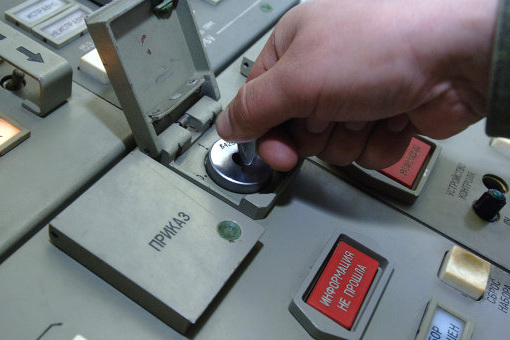
Vladimir Putin’s invasion of Ukraine is a prime example of a regional conflict that could inadvertently escalate beyond any of the protagonists’ expectations. History is replete with similar instances of humanity stumbling into devastating conflict.

If you want to learn more about Oppenheimer’s bomb and what we must do to protect the world today and for future generations, NTI’s online library is the perfect place to go.
Sign up for regular updates on innovative, real-world solutions to existential threats.