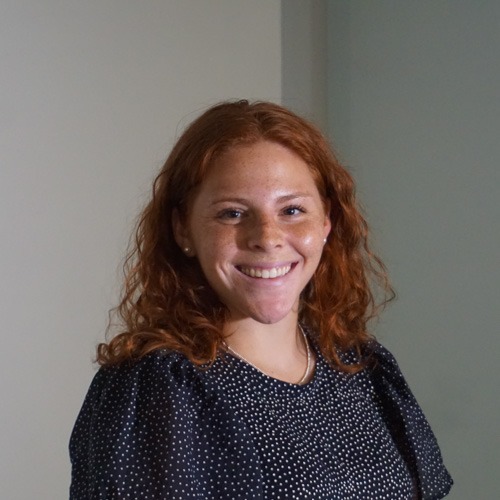
Former Intern

Lauren
Maynor

(she/her)

Lauren Maynor is the spring intern with NTI’s Global Biological Policy and Programs (NTI | bio) team. In this role she supports research efforts on strengthening biotechnology governance and upholding global norms against bioweapon development and use.

She recently finished her MA in Bioethics, Tech Ethics, and Science Policy from Duke University.  Maynor focused on the intersection of science and AI and considered their impact on national security. During this time, she interned with the Organisation for Economic Co-operation and Development (OECD) analyzing the convergence of synthetic biology and AI. For this project she interviewed key stakeholders and wrote policy recommendations for safeguards.

Maynor received her undergraduate from Washington College (Chestertown, MD). She majored in Biology (conc. Cell/Molecular Biology and Infectious Disease) and minored in Chemistry and Public Health.  Her senior capstone thesis was on the role of natural killer cells in latent and active tuberculosis. She interned at the Harvard T. H. Chan School of Public Health in Flaminia Catteruccia’s Lab working to create an in-vitro protocol to study the growth of the Plasmodium falciparummalaria parasite. Maynor also worked in Mala Misra’s lab at Washington studying the development of neuromuscular junctions (NMJs) in larval Drosophila melanogaster.

NTI Blogs

2025 Next Generation for Biosecurity Challenge: How Do You Define Bioweapons?

Risky Business

2025 Next Generation for Biosecurity Challenge: How Do You Define Bioweapons?

As the world marks the 50th anniversary of the Biological Weapons Convention (BWC), Next Gen contest participants have an opportunity to move the needle by introducing an updated way for professionals in the field to address the current and emerging threats that bioweapons pose.


A Call to Action for Global Health Security

Risky Business

A Call to Action for Global Health Security

Each day brings alarming headlines—H5N1, measles, tuberculosis—but the quieter underlying issues of public health security rarely break through the noise. On this World Health Day 2025, as U.S. domestic and global health policies undergo a realignment, the world must recommit to address both the urgent and the underlying health challenges that shape our lives.


Improving Biosecurity with A Three-legged Stool Approach

Risky Business

Improving Biosecurity with A Three-legged Stool Approach

A pandemic is not a once in a century event, and the international community must prepare now for the next one. It is essential the international community strike a balance between fostering and supporting beneficial AIxBio innovation while guarding against accidental or deliberate misuse of these tools.

Close

My Resources

Subscribe to NTI

Sign up for regular updates on innovative, real-world solutions to existential threats.

Get Updates