
Analysis
Trending
Sam Nunn Interview with David Westin on Bloomberg TV’s “Balance of Power”
Sam Nunn, Nuclear Threat Initiative co-chair and former U.S. Senator from Georgia, discusses Russia, China, and the Iran deal with Bloomberg's David Westin on "Bloomberg Markets: Balance of Power.

Establishing a Theoretical Foundation for Measuring Global Health Security
The article examines academic literature to identify evidence, as well as practice-based indicators and proxies, for measuring health security at the country level.
Remarks Delivered at the Luxembourg Forum “Burden of Change: Time for New Thinking”
Remarks by Joan Rohlfing, NTI President and Chief Operating Officer, to the Luxembourg Forum on June 4, 2019.
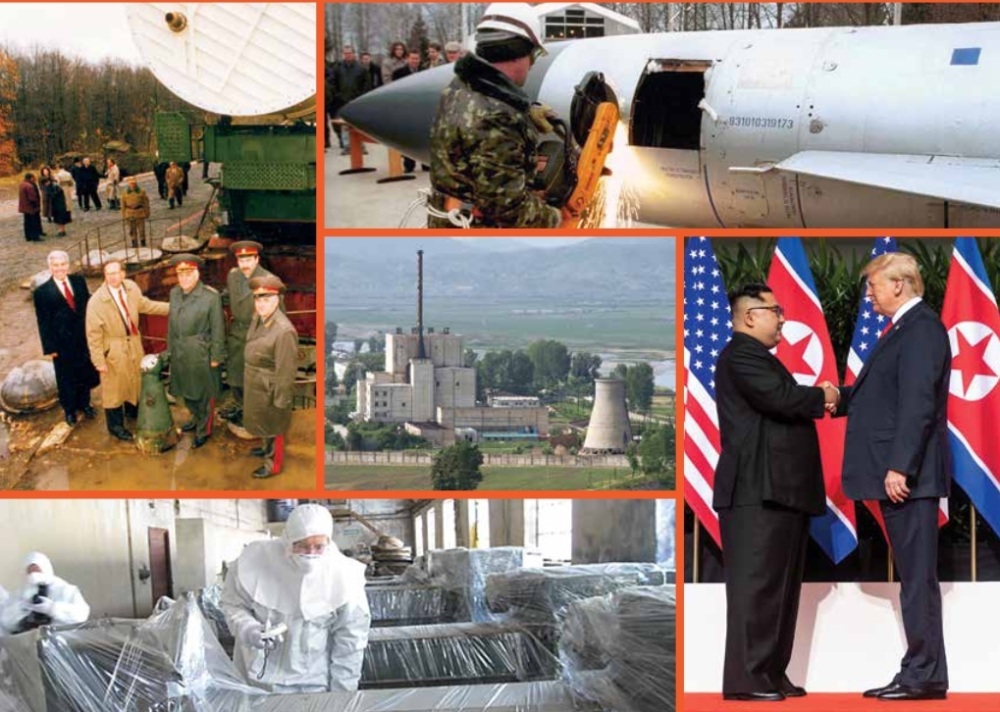
Building Security Through Cooperation: Report of the NTI Working Group on Cooperative Threat Reduction with North Korea
The Korean Peninsula is one of the most volatile and heavily militarized places in the world, carrying tremendous risk of conflict and the potential for catastrophic nuclear exchange.
A Spreading Plague: Lessons and Recommendations for Responding to a Deliberate Biological Event
The risks of a global catastrophic biological event are growing, intensified by an increasingly interconnected world, terrorist and state interest in weapons of mass destruction, global political instability, and rapid advances in biotechnology.
Insurance Incentives for Reducing Biological Risks
The working group on Insurance Incentives for Reducing Biological Risks, informed by a paper drafted ahead of the October 2018 Initiative launch.
Standards for Funders, Grantees, and Publishers to Identify and Mitigate Biological Risks
This page describes the working group on Standards for Funders, Grantees, and Publishers to Identify and Mitigate Biological Risks
Establishing a Seal of Approval to Incentivize the Adoption of Biosecurity Norms
In 2019, NTI and its Biosecurity Innovation and Risk Reduction Initiative partners will launch five working groups.
Financial Incentives for Biotechnology Investors to Improve Biosecurity
Biotechnology innovation now affects nearly every sector of the global economy.