

Mimi Hall
Vice President, Communications
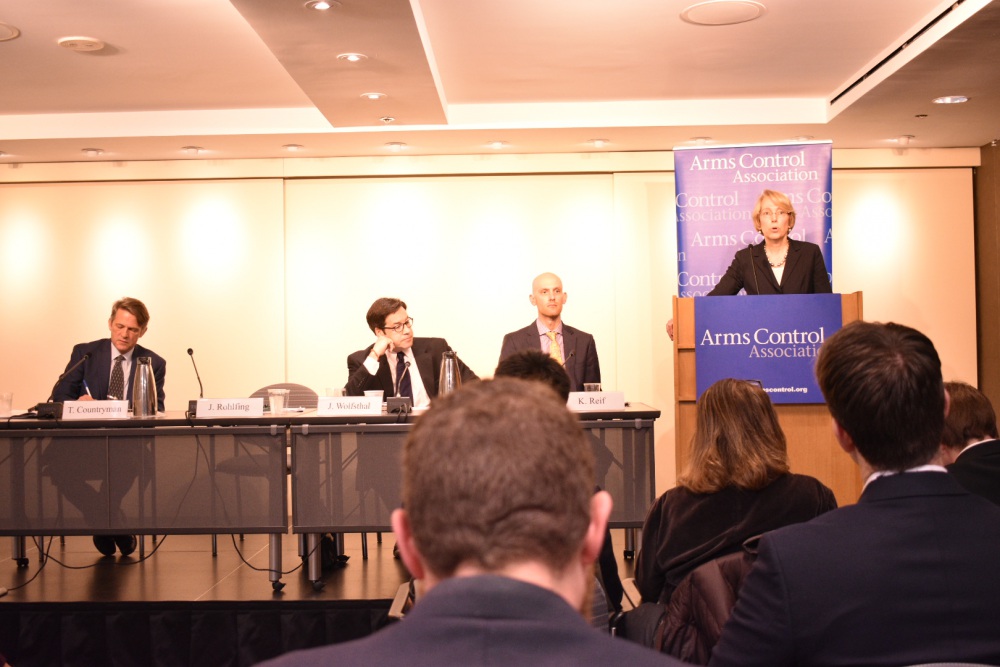
At
a briefing for the news media and policy analysts Tuesday, several of
Washington’s top nuclear policy experts criticized the Trump Administration’s
reported nuclear policy strategy as a dangerous and costly break from decades
of U.S. global leadership toward reducing reliance on nuclear weapons.
The
administration’s Nuclear Posture Review is expected to be released within the
next couple of weeks, but a draft of the 64-page document already has been leaked.
In it, the administration calls for expanding the scenarios under which the
United States might use nuclear weapons, such as responding to a massive cyber attack,
and proposes enhancements to the U.S. arsenal designed to make nuclear weapons
more “usable.”
“This
draft posture review represents a significant departure from the direction we’ve
been headed for the last four administrations,” said NTI President
Joan Rohlfing, one of three expert panelists at the briefing hosted by the
independent, nonpartisan Arms Control Association. “It increases our reliance
on nuclear weapons, expands their role in our security, and makes nuclear
weapons use more likely.”
Rohlfing
and the other panelists, former acting undersecretary of State for arms control
and international security Tom Countryman and former White House National
Security Council senior director for arms control and nonproliferation Jon
Wolfsthal, noted that the NPR is not yet final and changes could be made before
it is officially released.
All
three, however, found it alarming as drafted.
The
new nuclear strategy, which also calls for an estimated $1.25 trillion or more
over 30 years to replace and upgrade all three legs of the U.S. nuclear triad, has
“real implications for our budget, for our leadership role in the world, and
for our national security,” Countryman said.
Wolfsthal said the administration has underplayed the enormous cost of its proposals and doesn’t explain how they are affordable and sustainable; Countryman said it is crucial for Congress, the news media, and the public to
engage on these issues to try to limit such destabilizing policies.
Listen to audio from the event here.
Sign up for our newsletter to get the latest on nuclear and biological threats.

Presidents Trump, Xi, and Putin are scheduled to hold a trilateral meeting on the sidelines of the APEC Summit. Progress on nuclear risk reduction requires sustained engagement and dialogue among diplomatic, political, and military experts from all parties on a range of shared security concerns. If Shenzhen produces a commitment by leaders and clear directives to initiate such dialogues that would be a significant outcome.
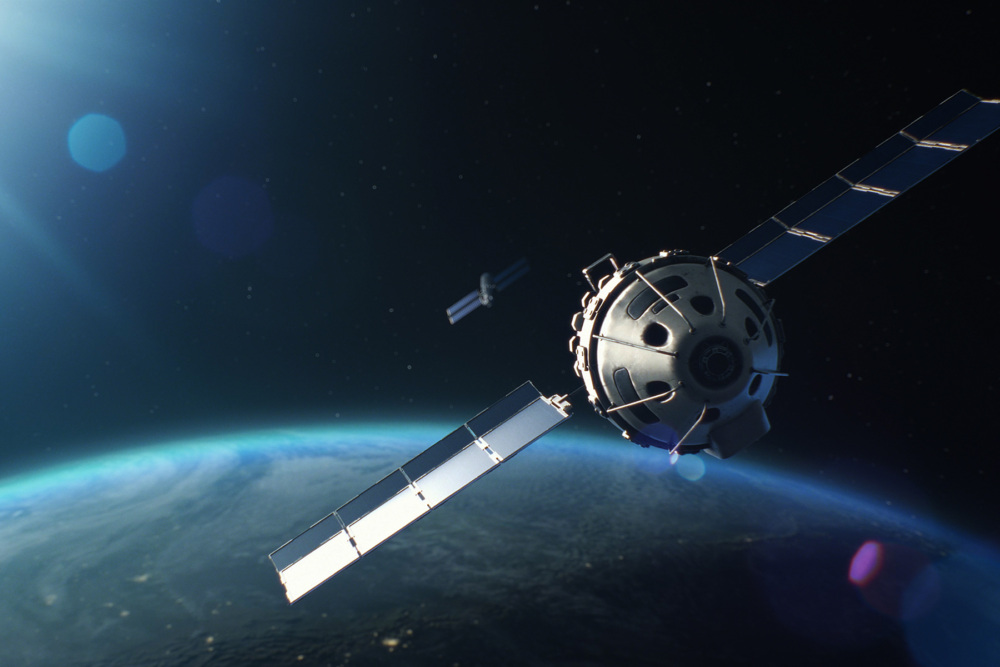
No major power has an interest in an unintended nuclear war. Weapons are now in orbit. The guardrails are not. The time to build them is before a crisis, not during one.

The integration of AI into nuclear systems is underway. The guardrails, safety, and security frameworks needed to understand and manage the consequences are not. A new generation of AI-informed nuclear fail-safe reviews is urgently needed in all countries with nuclear weapons.
Sign up for regular updates on innovative, real-world solutions to existential threats.