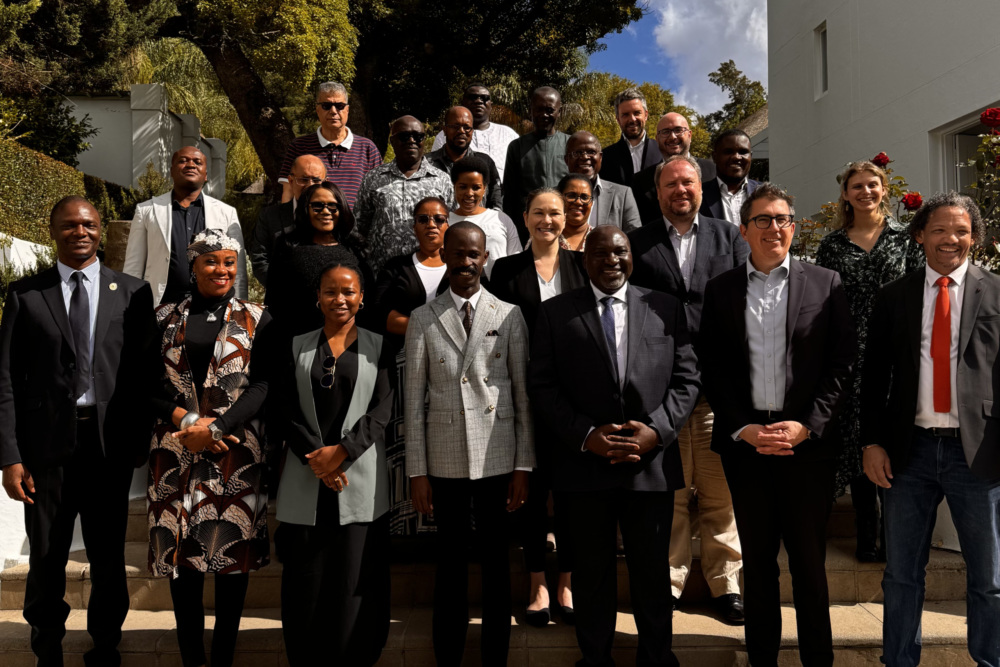
Government officials and experts from a dozen countries gathered in Osaka, Japan for the first NTI Asian Nuclear Security Dialogue from February 2–4, 2026, to chart practical steps for strengthening nuclear security across Asia. The dialogue highlighted the importance of translating ideas into implementable actions, amid an evolving regional nuclear security landscape that includes rapidly evolving risks and growing interest in nuclear energy. NTI convened the dialogue in partnership with the Institute for Peace and Conflict Studies and the Japan Institute of International Affairs, and with generous support from the United Kingdom’s Foreign, Commonwealth & Development Office and the Peterson Foundation.
During the discussions, regulators, diplomats, military leaders, and practitioners identified opportunities for cooperation to address emerging risks and developed concrete action plans tailored to the diversity of regulatory capacities, threat perceptions, and technological environments across the region. Participants proposed actions ranging from leveraging the Association of Southeast Asian Nations as a forum for nuclear security information sharing and confidence building, to convening a summit of nuclear security centers of excellence, to developing a tabletop exercise for regional practitioners that simulates cross-border crisis communication. Participants also explored regional approaches to improving global nuclear security efforts, which included strengthening implementation of the Amended Convention on the Physical Protection of Nuclear Material and using regional organizations to promote transparency, accountability, and sustained political attention to nuclear security globally.
The dialogue created a much-needed forum to address regional and subregional priorities, opportunities, and challenges that all require an approach that balances international best practices with the realities of geography, politics, and level of technological maturity. Participants emphasized the importance of such flexibility in the context of rapid nuclear energy expansion, the proliferation of emerging technologies, and complex geopolitical dynamics.