

Tabitha Sanders
Communications Associate
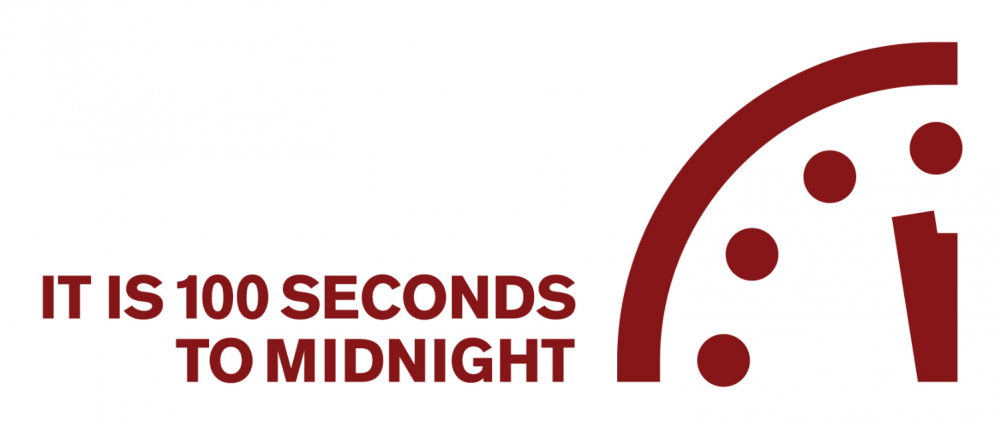
We now have only 100 seconds.
Today the Bulletin of the Atomic Scientists unveiled the 2020 Doomsday Clock, putting humanity at 100 seconds to midnight. This is the first time in the clock’s 73-year history that the time is set closer than two minutes to symbolic annihilation.
“The world is headed into an unregulated nuclear environment,” the Bulletin’s President and CEO Rachel Bronson warned.
The Doomsday Clock, created in 1947, is maintained by the Bulletin of the Atomic Scientists, which annually reviews the clock’s position and humanity’s proximity to catastrophe. Originally conceived to bring attention to the threat of nuclear catastrophe, the clock now addresses also the existential threat posed by climate change.
For the past two years, the clock has rested at two minutes to midnight, marking what the Bulletin calls a “new abnormal.” In the decade leading up to 2020, the time was moved up from four minutes to midnight. Before 2018, the last time the clock stood at two minutes to midnight was 1953, the height of the Cold War and the Cuban Missile Crisis.
“Humanity continues to face two simultaneous existential dangers—nuclear war and climate change—that are compounded by a threat
multiplier, cyber-enabled information warfare, that undercuts society’s ability to respond,” the Bulletin said in a statement addressed to leaders and citizens of the world. “The international security situation is dire, not just because these threats exist, but because world leaders have allowed the international political infrastructure for managing them to erode.”
The 2020 announcement comes after a difficult year for nuclear security.
Iran has taken increased steps to break uranium enrichment restrictions set by the 2015 nuclear deal, alarming its European signatories working to keep the deal alive in the wake of President Trump’s decision to withdraw from the agreement last year.
Trump and Kim Jong-un’s nuclear security summits have failed to yield any progress in restricting North Korea’s nuclear weapons program.
Meanwhile, the last remaining Cold War-era arms control treaty between the U.S. and Russia is set to expire in February 2021. This comes at a time of diminishing communication lines between the two countries, undermining strategic stability and increasing risks of nuclear use by miscalculation or accident. As NTI Co-Chairs Ernest J. Moniz and Sam Nunn warn: “Both sides seem willfully blind to the peril.”
The Bulletin’s announcement calls on political leaders to act, warning that the world is “sleepwalking” into a new, unprecedented nuclear landscape.
“The moment demands attention and creative responses,” Bronson said.
Sign up for our newsletter to get the latest on nuclear and biological threats.
The NTI Index team spent months poring over thousands of data points. Here are five especially worth knowing.

The integration of AI into nuclear systems is underway. The guardrails, safety, and security frameworks needed to understand and manage the consequences are not. A new generation of AI-informed nuclear fail-safe reviews is urgently needed in all countries with nuclear weapons.
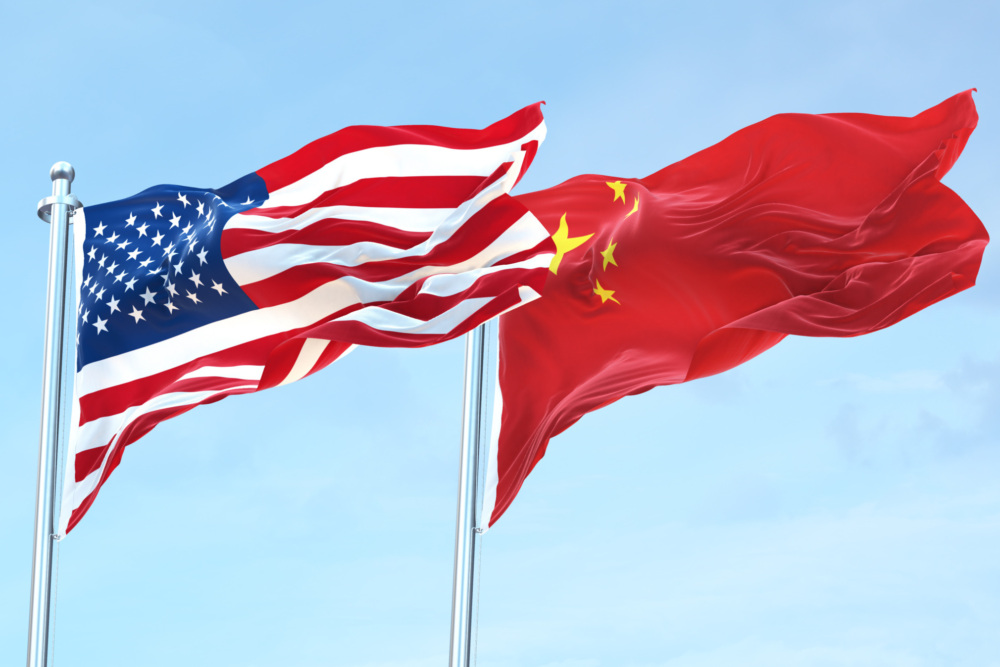
Beijing and Washington must be on the same page to avoid nuclear material from falling into the wrong hands. Continued Track II engagement on nuclear security is essential for preserving cooperation within a critical area of shared interest, even when diplomacy between political officials is at an impasse.
Sign up for regular updates on innovative, real-world solutions to existential threats.