

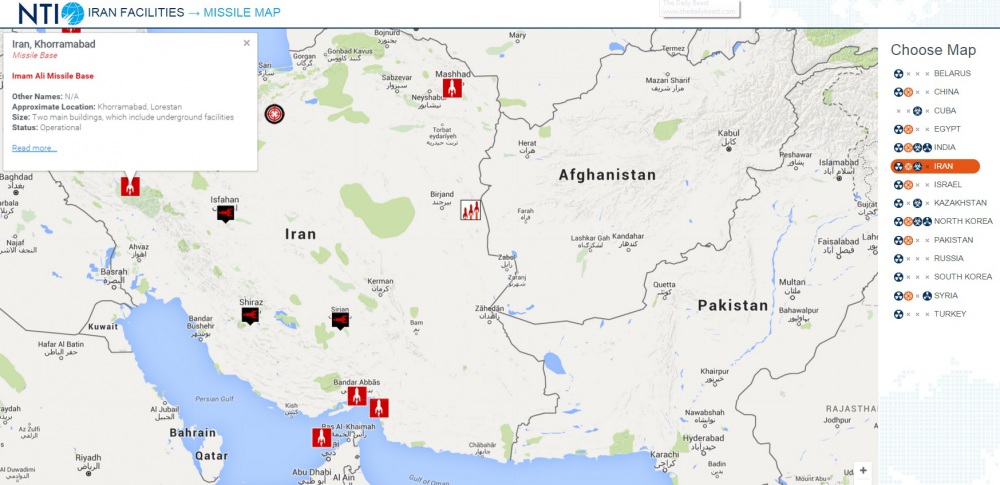
Among
the many foreign policy questions raised by the election of Donald Trump is this:
What will become of the hard-fought 2015 agreement with Iran to curb its
nuclear program?
During the presidential campaign,
candidate Trump said variously that he would ‘dismantle’ the deal,
that he would renegotiate it, and that he would ‘police (the deal) so tough they don’t have a chance.’ As Trump once conceded, however, it would not be easy to
change or walk away from a deal that was negotiated and approved not only by
Iran, but the five members of the U.N. Security Council, Germany and the
European Union and approved by a Security Council resolution.
Today,
if the U.S. acts unilaterally to unravel the eight-party agreement, it will
alienate its negotiating partners, and the U.S. will carry the blame for the
collapse of restrictions on Iran’s nuclear program.
Instead, as I argue in a paper recently published
by Harvard’s Belfer Center for Science and International Affairs, it is
absolutely essential for all parties to start working now to develop a long-term
solution, not only to the Iranian nuclear problem, but for controlling proliferation-sensitive
parts of the nuclear fuel cycle around the world so that we can avoid similar
crises in the future.
The
Iran agreement was an important achievement in that it defused an immediate
crisis and curbed Iran’s potential to produce nuclear weapons for 15 years, but
it is now time for the United States and its partners to work toward a
longer-term solution. We must not take steps that will only set us back.
Sign up for our newsletter to get the latest on nuclear and biological threats.

Presidents Trump, Xi, and Putin are scheduled to hold a trilateral meeting on the sidelines of the APEC Summit. Progress on nuclear risk reduction requires sustained engagement and dialogue among diplomatic, political, and military experts from all parties on a range of shared security concerns. If Shenzhen produces a commitment by leaders and clear directives to initiate such dialogues that would be a significant outcome.

No major power has an interest in an unintended nuclear war. Weapons are now in orbit. The guardrails are not. The time to build them is before a crisis, not during one.
Congress’s oversight of U.S. nuclear policy is at a critical juncture. When the U.S. Senate approved New START in 2010, it mandated several annual reports and certifications to ensure strong congressional oversight of Russian compliance with the treaty. These requirements expired along with the treaty, creating oversight gaps just as strategic competition heats up.
Sign up for regular updates on innovative, real-world solutions to existential threats.