
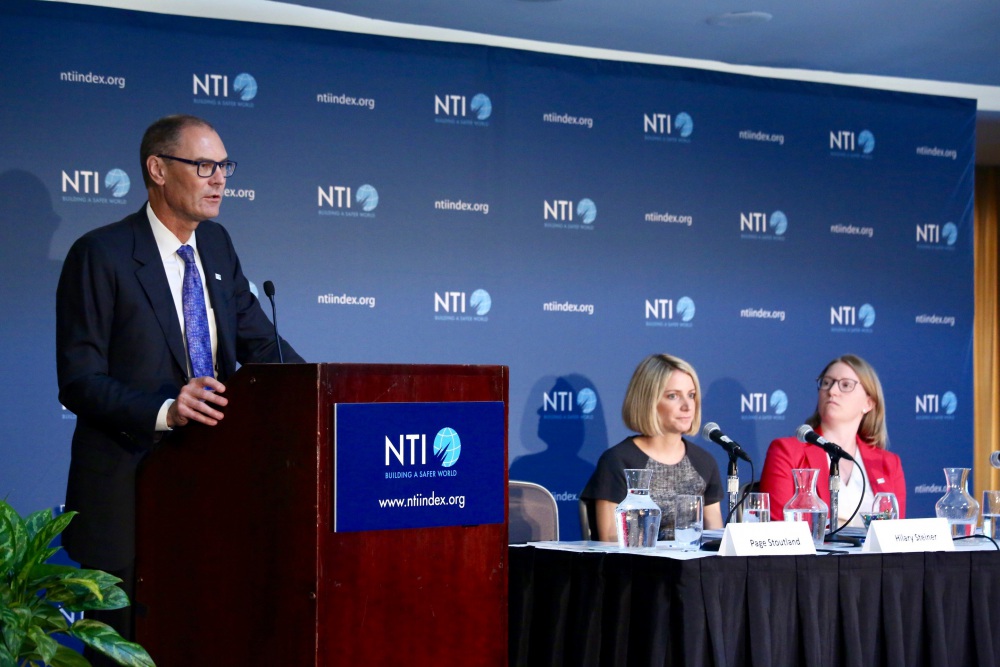
NTI Awards Two Grants to Improve Nuclear Security Conditions Worldwide
NTI announces the winners of the 2019 NTI Nuclear Security Index Challenge.
NTI announces the winners of the 2019 NTI Nuclear Security Index Challenge.
Article
The Nuclear Energy Agency (NEA) helps members use nuclear energy as a safe, environmentally acceptable, and economic energy source.
Article
Russia's All-Russian Scientific Research Institute for Experimental Physics (VNIIEF), Nuclear Facility

NATO and the West must continue to respond with steady determination and resolve to push back on reckless Russian threats.

For nuclear power to be a problem solver rather than a problem maker, the international community must push for a smart brand of nuclear power that prioritizes safety and security.

Cara Wilson, NTI’s Nuclear Materials Security intern, had the chance to speak with Kylie Jones, a researcher with the Carnegie Endowment for International Peace’s Nuclear Policy Program and a former James C. Gaither Junior Fellow.
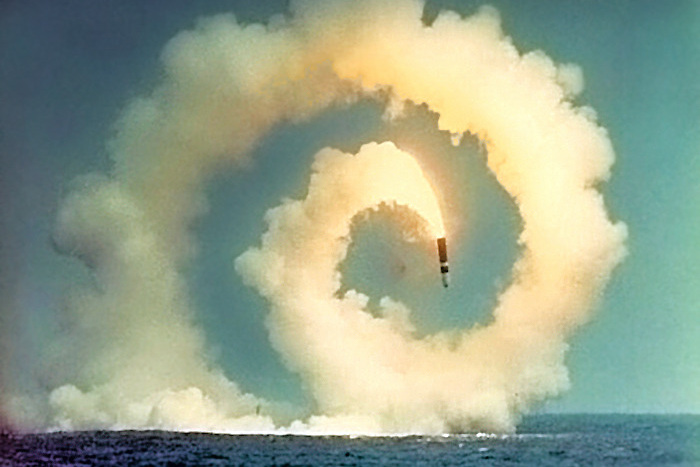
New research is beginning to reveal how nuclear use could trigger widespread environmental damage, economic disruption, societal upheaval, and global instability. A modern, evidence-based understanding of these risks is essential for decision-makers and the public to grasp what is at stake if nuclear deterrence fails.
The role of the Hague Code of Conduct against the Proliferation of Ballistic Missiles and its relationship with the Missile Technology Control Regime. (CNS)
The weapons of mass destruction (WMD) nonproliferation and disarmament activities in Central Asia in the decade following the end of the Cold War. (CNS)
In this testimony before the U.S. Senate Foreign Relations Committee, Laura Holgate offers various approaches that could help the G-8 fulfill the promise of greater resources and more comprehensive, better coordinated world-wide commitment reflected in its June announcement of the Global Partnership Against the Spread of Weapons and Materials of Mass Destruction.
Sign up for regular updates on innovative, real-world solutions to existential threats.