
Isabelle Williams
Senior Director
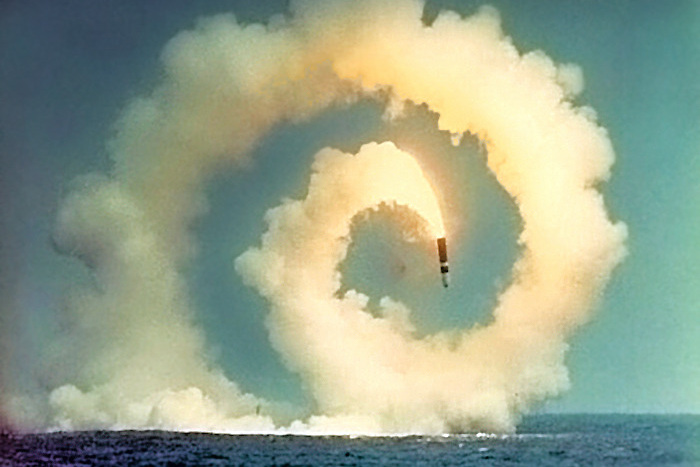
As nuclear risks grow more complex—driven by geopolitics, tech, and arsenal expansion—some policymakers are debating the value of building more “usable” nuclear weapons that they believe could be deployed in a targeted, controlled way without triggering full-scale nuclear war. They are dangerously overlooking the deeply interconnected nature of today’s world and the potential cascading effects of even a “limited” nuclear exchange.
New research is beginning to reveal how nuclear use could trigger widespread environmental damage, economic disruption, societal upheaval, and global instability. A modern, evidence-based understanding of these risks is essential for decision-makers and the public to grasp what is at stake if nuclear deterrence fails.
New initiatives are underway
In July 2025, the United Nations Secretary-General announced the formation of a 21-member global independent panel to conduct a comprehensive, scientifically grounded examination of the “local, regional, and planetary scale” effects of nuclear war. The panel brings together leading experts from around the world, representing a diverse range of expertise and geographic regions. The panel convened its inaugural meeting in New York in early September, where members selected two co-chairs—Professor Andrew Haines (London School of Hygiene and Tropical Medicine) and Professor Ana Maria Cetto (National Autonomous University of Mexico)—and began outlining their work plan. The members face the challenging task of delivering a final report in time for the 2027 meeting of the UN General Assembly (UNGA)—and reporting interim results of their work at the 2025 and 2026 sessions of UNGA—with an extremely tight budget.
Also in July, the U.S. National Academies of Sciences, Engineering, and Medicine (NAS) released a study on the environmental and societal impacts of nuclear war conducted by a panel of scientists and military experts who revisited existing research on the effects of nuclear weapons use in today’s global context. The NAS study highlighted the potential for global cascading impacts across agriculture, ecosystems, economies, and public health, underscoring that even smaller scale, targeted, so-called “limited” nuclear use scenarios could result in far-reaching global consequences.
Complementing these two efforts is the World Health Organization’s (WHO) mandate to conduct a study on the effects of nuclear war and nuclear weapons testing on public health and health services. This will likely involve reviewing existing literature (no new modeling will be conducted) and will be designed to complement the UN panel. A final report is expected by 2029.
Why is this important now?
Nuclear arms are the most powerful weapons in the world. While it seems obvious that any use of a nuclear weapon would be devastating, these scientific initiatives can paint a more nuanced picture of the negative cascading effects well beyond the zone of immediate destruction—especially important at a time when we are again inching closer to the brink.
Today, more than 12,000 nuclear weapons remain in the arsenals of nine countries, and most of those countries are pouring billions of dollars into expanding and modernizing their forces. There is reporting that the Russian government is developing a program to mount nuclear warheads on satellites, effectively placing nuclear weapons in space. Given modern society’s heavy reliance on satellites for everything from communications, energy networks, and infrastructure to military applications, the effects of a nuclear detonation in space represent another understudied but potentially catastrophic risk.
Moreover, public and political awareness of nuclear risks has diminished. Younger generations of leaders and citizens are further removed from the horrors of Hiroshima and Nagasaki and absorbed by a wide range of complex domestic and international threats.
These fact-finding efforts from the NAS, UN Panel, and WHO are well positioned to breathe new life into high-level debates about nuclear risks and give the public a more accurate depiction of what nuclear weapons use could mean. Ultimately, the more their findings can inform smart, forward-looking policies, the safer we all will be.
Sign up for our newsletter to get the latest on nuclear and biological threats.
By revamping its strategy, the United States can help build a safer future and prevent a new wave of proliferation.

The integration of AI into nuclear systems is underway. The guardrails, safety, and security frameworks needed to understand and manage the consequences are not. A new generation of AI-informed nuclear fail-safe reviews is urgently needed in all countries with nuclear weapons.

Strengthening nuclear fail-safe measures and applying and adapting principles governing the use of outer space for peaceful purposes are essential to preventing nuclear use and maintaining strategic stability.
Sign up for regular updates on innovative, real-world solutions to existential threats.