

Ernest J. Moniz
13th U.S. Secretary of Energy
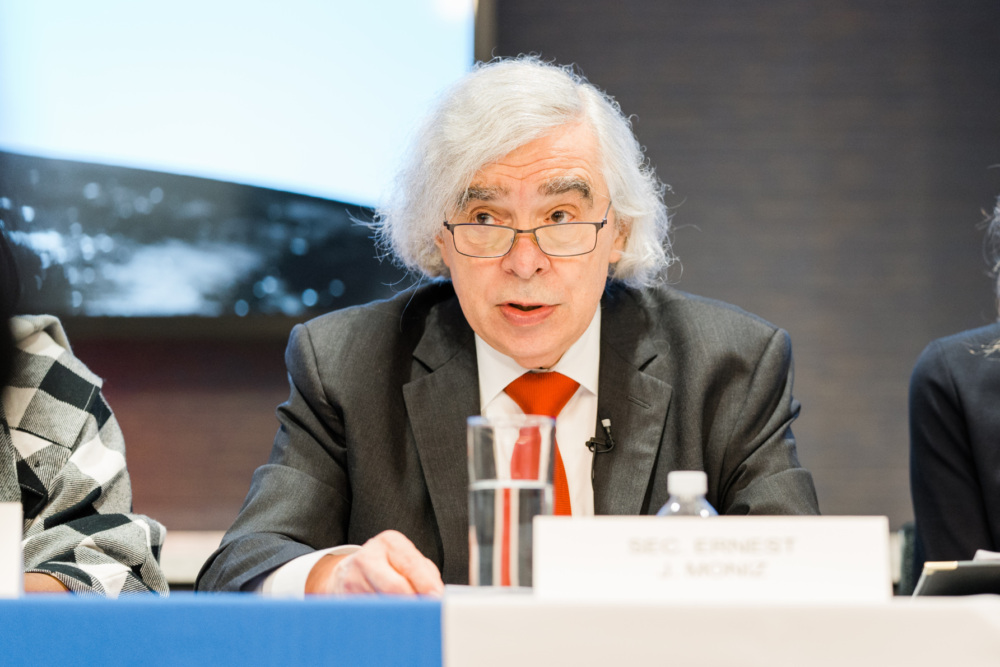
Ahead of this week’s summit between the U.S. and South Korean presidents, NTI Co-Chair and CEO Ernest J. Moniz writes in Foreign Policy that the security threats facing South Korea are real, but Seoul will not solve its national security challenges by developing nuclear weapons.
In “A Nuclear South Korea Is a Dangerous Miscalculation,” Moniz argues that South Korea would not increase its own security with a nuclear arsenal. Instead, it would “invite new challenges and trigger consequences that would stymie Seoul’s rise as a global leader and imperil both economic prosperity and national security in the process.”
Moniz writes:
“Instead of embarking on this pathway, which serves neither South Korea’s nor the United States’ interests, the countries should use the upcoming White House summit to further invest in their now 70-year-old alliance to address emerging challenges in ways that advance, rather than undermine, nuclear stability and nonproliferation.
“That means strengthening extended deterrence, including by tighter coordination of U.S. and South Korean military capabilities, and improved planning and communications mechanisms for peacetime and crises. It also means continuing to work toward an eventual nuclear weapons-free peninsula through renewed diplomacy with North Korea. For the United States, it means finding ways to manage strategic competition and avoid nuclear risks with China, however daunting those tasks may seem.”
Moniz adds that Yoon should reaffirm his commitment to nonproliferation and “Biden should applaud that commitment given the country’s worrisome security environment and, in return, reiterate the importance the United States attaches to its mutual defense obligations.”
Read the full opinion piece in Foreign Policy here.
Sign up for our newsletter to get the latest on nuclear and biological threats.
The 2026 NTI Nuclear Security Index proposes an agenda for a new era of leadership at a moment when the risk environment leaves no room for complacency.

This paper outlines six practical options that non-nuclear weapon states could pursue to reduce nuclear risks amid heightened geopolitical tensions. The options were developed based on interviews with nuclear policy experts from around the world. They reflect priority areas where government investment could have the most near- to medium-term impact, as well as the tools and channels through which these efforts could be advanced.

The Nuclear Threat Initiative (NTI), Euro-Atlantic Security Leadership Group (EASLG), Asia-Pacific Leadership Network (APLN), and European Leadership Network (ELN) have worked since March 2020 to highlight the benefits of independent, internal “fail-safe” reviews in nuclear-armed states.
Sign up for regular updates on innovative, real-world solutions to existential threats.