
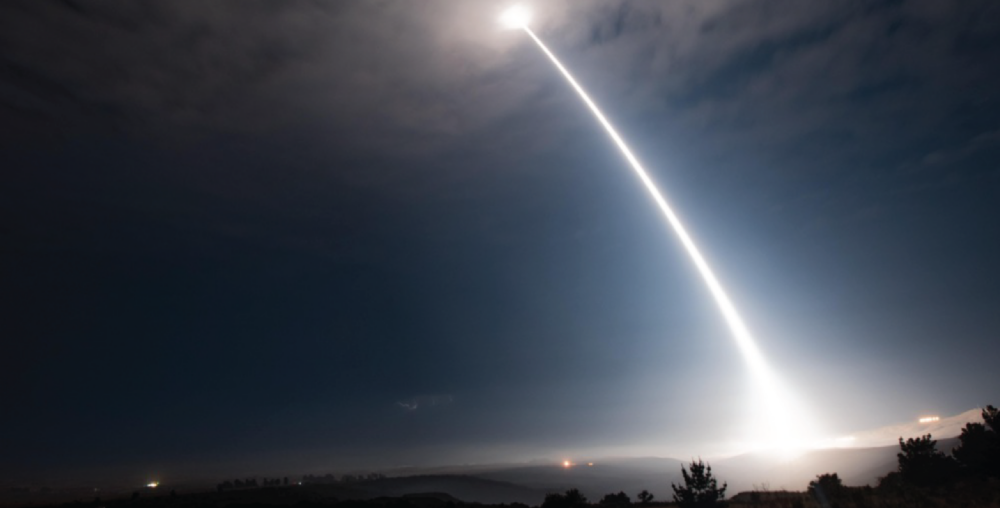
U.S. Nuclear Policies for a Safer World
NTI Co-Chairs Ernest J. Moniz and Sam Nunn call on the United States to resume a position of global leadership to reduce the risks posed by nuclear weapons.

Nuclear fail-safe reviews are periodic, comprehensive reviews of a state’s nuclear weapon systems. They are designed to identify vulnerabilities and to strengthen practical measures against accidental or unauthorized nuclear use.
As nuclear-armed states modernize their arsenals, and emerging technologies, including AI and cyber, rapidly evolve and integrate with military systems, fail-safe reviews are increasingly urgent.
Unlike arms control or other risk reduction measures, fail-safe reviews do not require negotiation or agreement among states. Each nuclear-armed state can conduct its own review to strengthen safety and reduce risk.
NTI worked with the U.S. Congress to mandate a new independent U.S. fail-safe review in 2022. The 2022 National Defense Authorization Act required the Secretary of Defense to charter an independent review of the safety, security, and reliability of nuclear weapons and related systems. The review was concluded in 2024 and briefed to Congress.
Since 2023, NTI has expanded this work globally. Working with the Asia-Pacific Leadership Network, the European Leadership Network, and the Euro-Atlantic Security Leadership Group, NTI has engaged experts and officials from other nuclear-armed states to build support and know-how for unilateral failsafe reviews. This includes a series of in-person and virtual workshops with officials and experts from China, France, the United Kingdom, India, and Pakistan.
This work was made possible by a grant from the Peter G. Peterson Foundation.
Andreasen, Steven. 2024. “Avoiding Nuclear War Through Nuclear Failsafe.” Arms Control Association, September. https://www.armscontrol.org/act/2024-09/features/avoiding-nuclear-war-through-nuclear-failsafe.
Berghofer, Julia. 2025. “How To Strengthen Nuclear Failsafe.” The National Interest. https://nationalinterest.org/feature/how-strengthen-nuclear-failsafe.
Bianco, Belen, and Rishi Paul. 2024. “Technological Complexity and Risk Reduction: A Guardrails and Self-Assessment Framework for EDTs in NC3 and Nuclear Weapons Decision-Making.” European Leadership Network. https://europeanleadershipnetwork.org/report/technological-complexity-and-risk-reduction-a-guardrails-and-self-assessment-framework-for-edts-in-nc3-and-nuclear-weapons-decision-making/.
Nuclear Threat Initiative. 2022. “Breaking Down the Cyber-Nuclear Threat.” YouTube. https://www.youtube.com/watch?v=A1R2ljrha4U.
Des Browne, Wolfgang Ischinger, Igor S. Ivanov, Ernest J. Moniz, and Sam Nunn. 2023. “Statement by the EASLG: Advancing Global Nuclear ‘Fail-Safe.’” Nuclear Threat Initiative. https://www.nti.org/analysis/articles/statement-by-the-easlg-advancing-global-nuclear-fail-safe/.
Junwei, Zhu. 2024. “Nuclear Fail-Safe: An Opportunity for the World.” China-US Focus, December 24. https://www.chinausfocus.com/peace-security/nuclear-fail-safe-an-opportunity-for-the-world.
Moniz, Ernest J., and Sam Nunn. 2021. “Biden Should Do More to Prevent the Accidental Launch of Nuclear Weapons. Here’s How.” The Washington Post, November 17. https://www.washingtonpost.com/opinions/2021/11/17/biden-should-do-more-prevent-accidental-launch-nuclear-weapons-heres-how/.
Moniz, Ernest J., and Sam Nunn. 2022. “NTI Statement on the 2022 Nuclear Posture Review.” Nuclear Threat Initiative. https://www.nti.org/news/nti-statement-on-the-2022-nuclear-posture-review/.
Moniz, Ernest J., and Sam Nunn. 2023. “Confronting the New Nuclear Peril.” Foreign Affairs, April 5. https://www.foreignaffairs.com/ukraine/russia-confronting-new-nuclear-peril.
Patil, Sameer, and Rahul Rawat. 2025. “Integration of Artificial Intelligence in Nuclear Systems and Escalation Risks.” Asia-Pacific Leadership Network. https://www.apln.network/analysis/policy-briefs/integration-of-artificial-intelligence-in-nuclear-systems-and-escalation-risks.
Nuclear Threat Initiative. 2025. “Statement by the EASLG: Three Essential Steps for Reversing the Slide to Nuclear War.”https://www.nti.org/analysis/articles/statement-by-the-easlg-three-essential-steps-for-reversing-the-slide-to-nuclear-war/.
Sultan, Adil. 2025. “Nuclear ‘Fail-Safe’ Reviews and Risk Reduction Approaches in South Asia.” Asia-Pacific Leadership Network. https://www.apln.network/analysis/commentaries/nuclear-fail-safe-reviews-and-risk-reduction-approaches-in-south-asia.
Downloads
Bell, Alexandra. 2024. “Remarks at NPT PrepCom Side Event on Technological Complexity and Nuclear Reduction: A Checklist and Guardrails Framework for EDTs in Nuclear Weapons Decision-making.” U.S. Department of State. Download here.
Stockholm Initiative for Nuclear Disarmament. 2025. “Navigating the Potential Impact of Emerging Technologies on Nuclear Disarmament, Arms Control, Non-Proliferation and Peaceful Uses of Nuclear Energy and Technology.” United Nations Digital Library. Download here.
U.S. Congress. 2022. “Sec. 1644. Review of Safety, Security, and Reliability of Nuclear Weapons Related System.” GovTrack.us. Download here.
U.S. Department of Defense. n.d. Final Report of the Federal Advisory Committee on Nuclear Failsafe and Risk Reduction. Download here.
Sign up for our newsletter to get the latest on nuclear and biological threats.
NTI Co-Chairs Ernest J. Moniz and Sam Nunn call on the United States to resume a position of global leadership to reduce the risks posed by nuclear weapons.
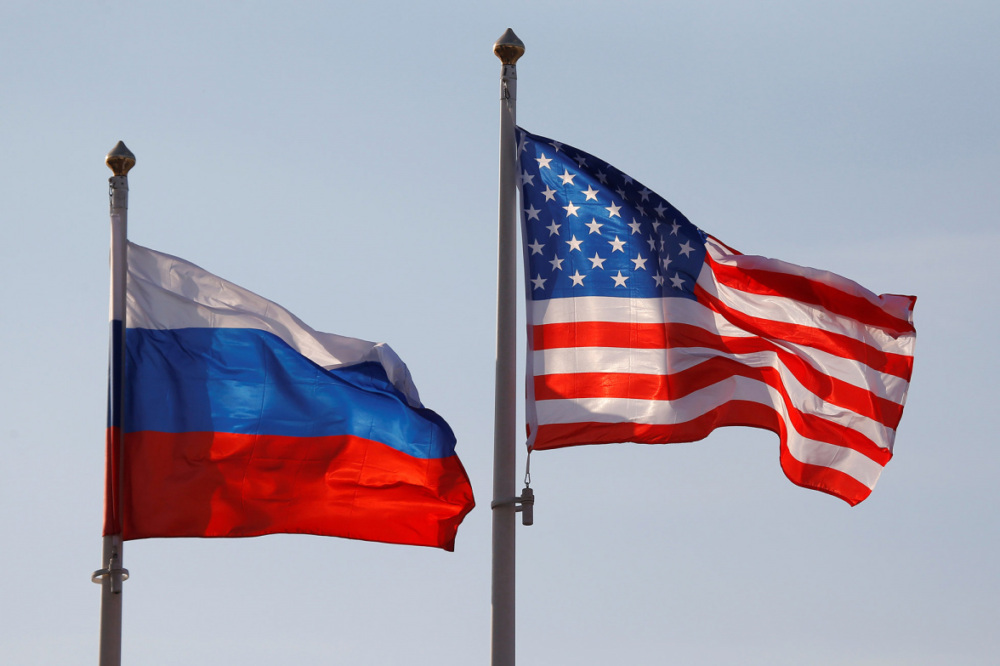
Unless the United States and Russia agree to maintain limits on their forces, the world will enter a period of potentially unconstrained nuclear build-ups.

The co-conveners and participants of the Euro-Atlantic Security Leadership Group call for the re-establishment of basic principles relating to security and nuclear order.
Sign up for regular updates on innovative, real-world solutions to existential threats.