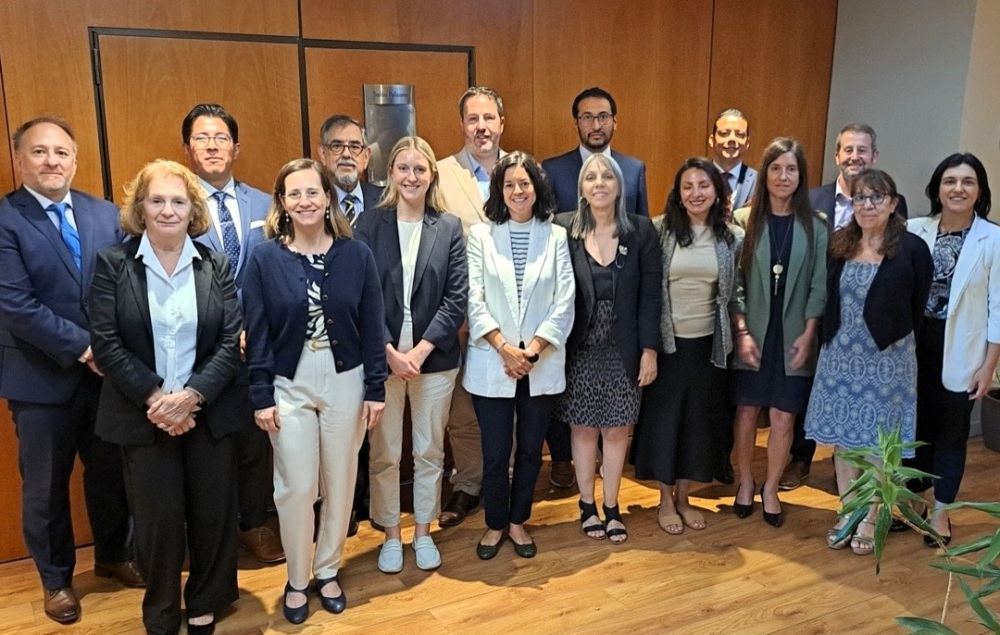
Against the backdrop of rising geopolitical tensions and nuclear risks, NTI—in collaboration with NPSGlobal—brought together diplomats, experts, and regional officials in Rio de Janeiro, Brazil on December 10–11 for a constructive workshop focused on strengthening Nuclear-Weapon-Free Zones (NWFZs). Participants examined how the Treaty of Tlatelolco, which established the first NWFZ in Latin America and the Caribbean, and other NWFZs can be productive geopolitical tools amid mounting challenges, including great power competition, disruptive technologies, and a weakening global nonproliferation and disarmament architecture.
Participants emphasized that NWFZs remain one of the few bright spots in today’s deteriorating security environment. They highlighted Latin America’s enduring normative stance against nuclear weapons and long-standing institutional leadership, evidenced by the Agency for the Prohibition of Nuclear Weapons in Latin America and the Caribbean (OPANAL), which ensures compliance with the Treaty of Tlatelolco, and the Brazilian–Argentine Agency for Accounting and Control of Nuclear Materials (ABACC). The group also explored ways NWFZs can adapt to new developments and emerging challenges, including AI and emerging technologies, naval nuclear propulsion, and the expansion of civilian nuclear energy.
The workshop underscored the value of deeper cross-zonal cooperation, strengthened verification practices, and renewed diplomacy on negative security assurances. Importantly, there was broad agreement on the need to reinvigorate the role of NWFZs as credible models of regional security and as bridges between nuclear-weapon states and non–nuclear-weapon states. NTI will continue this work with regional leaders in Africa and other NWFZs and will release a set of findings and recommendations ahead of the 2026 NPT Review Conference.