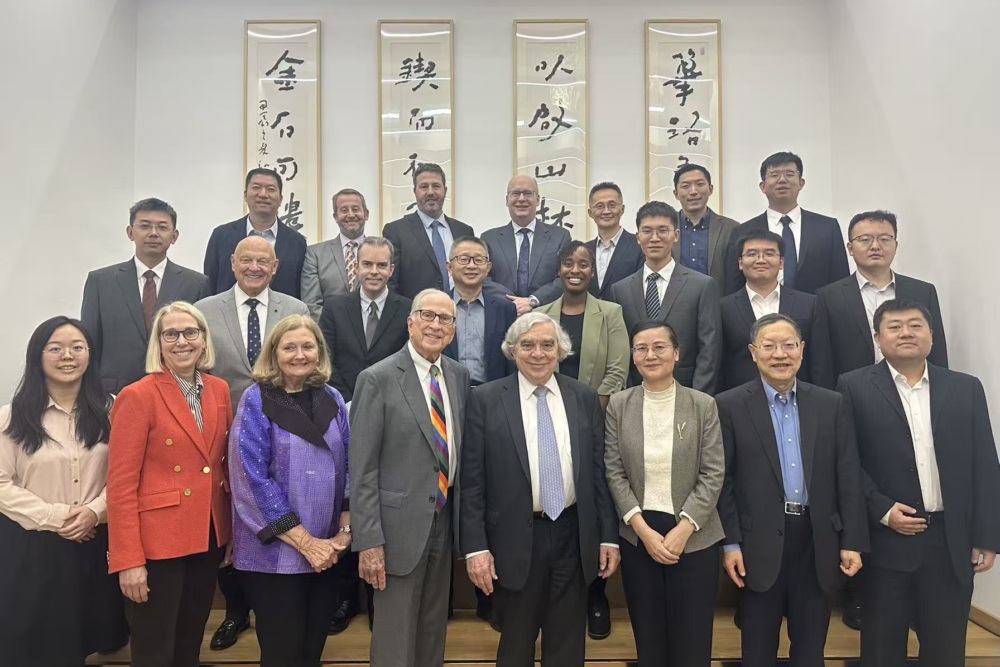
NTI Advances Global Nuclear Fail-Safe in Beijing
At a time of rising global tensions and rapid technological change, NTI continues to deepen its international partnerships and promote productive dialogue on nuclear risk reduction efforts.
New START, the last remaining arms control treaty capping U.S. and Russian nuclear arsenals, expires on February 5. This marks the beginning of a dangerous new era. For the first time in several decades, there will be no limits on nuclear weapons, less visibility into Russian nuclear weapons activities, and fewer tools to manage a crisis between the world’s two largest nuclear powers.
This problem will not solve itself, and the stakes are too high for inaction. An arms race already looms. New START has been instrumental to underpinning nuclear stability between the United States and Russia—but it was a treaty built for the past 15 years, not the next 15.
China’s nuclear expansion, increased Russian nuclear coercion, and growing competition in emerging technologies and the cyber and space domains make the strategic landscape more multipolar and multidimensional. Geopolitical flashpoints in Europe and the Asia-Pacific and an increasingly unpredictable international arena compound nuclear risks. The absence of guardrails on the U.S.-Russia nuclear relationship will further strain U.S. extended deterrence and an already fragile nuclear nonproliferation regime.
A renewed U.S.-Russian arms race would further increase pressure on U.S. nuclear weapons spending and divert funding from much-needed conventional defense and pressing domestic priorities. The wide-ranging, multi-decade U.S. nuclear modernization program is already confronting significant delays and ballooning costs. Maintaining a safe, secure, and effective nuclear deterrent will grow more challenging and costly in an unconstrained and more unpredictable strategic environment.
U.S. decisionmakers must prioritize:
These steps are not easy, and they should begin now. The world is entering a period of unpredictable and intensifying competition. New START expiration presents an opportunity to prioritize efforts to prevent nuclear use in an increasingly dangerous world.
Sign up for our newsletter to get the latest on nuclear and biological threats.
At a time of rising global tensions and rapid technological change, NTI continues to deepen its international partnerships and promote productive dialogue on nuclear risk reduction efforts.
"The NPR sets the right course by emphasizing dialogue and diplomacy, aiming to reduce the role of nuclear weapons in national security strategy."

New YouGov polling commissioned by NTI and ReThink Media finds that nearly 80 percent of registered voters, across party lines, say it is in the interest of U.S. national security to work with China to mitigate catastrophic threats associated with nuclear risks, AI development, and bioterrorism.
Sign up for regular updates on innovative, real-world solutions to existential threats.