
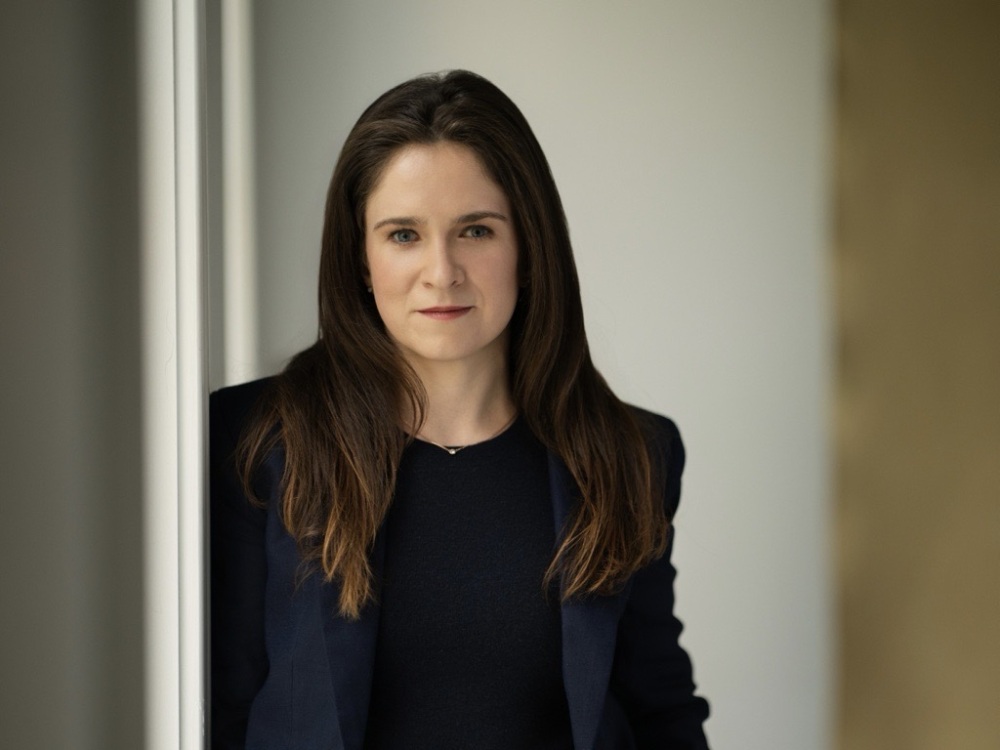
Cassandra Varanka is NTI’s director of legislative affairs. Since joining NTI in July 2025, she has focused on developing and advancing legislative strategies to shape impactful policy outcomes that further the organization’s agenda in the U.S. government. NTI intern Colin McAulay talked to Cassandra about her work and adventures before NTI.
Can you tell us about your role at NTI?
My official title at NTI is Legislative Director in the Government Relations program—what that actually means is that I do a lot of tracking what’s happening on the Hill, keeping track of where we are with the National Defense Authorization Act, and with appropriations bills relevant to our work. And then of course, standalone legislation, and tracking hearings and nominations. So basically, my role is to pay close attention to the Hill and bring that information back to NTI, where it informs how we work with our incredible experts to make sure that the Hill is making good policy.
Having worked on the Hill for almost a decade before coming to NTI, I’m wondering about some of the lessons you learned during that time that inform your approach now?
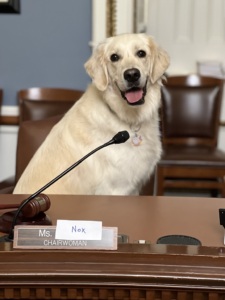
I think my biggest takeaway was learning how to be creative to get things done. People tend to think of writing laws as introducing a piece of stand-alone legislation that goes through the House, through the Senate, and then is signed by the president. But, in reality, that’s becoming more and more rare. Instead, people use things like the National Defense Authorization Act or appropriations bills as vehicles to move smaller pieces of relevant policies. Committee hearings, for example, are a tool that people use to get questions on the record or to get issues in front of the important officials at the agencies overseeing the work that they are interested in impacting. So, I’d say the experience taught me to be open to finding new paths to get things done—outside of the most obvious standard process.
That’s so interesting! Why is it important for organizations like NTI to be active on the Hill?
The staff on the Hill are absolutely wonderful, but they cover so many issues and react to so many developments on a given day—it isn’t nearly possible for them to be the best expert on every issue in their portfolio. That’s why it’s really important for us to be there to reinforce them with trustworthy information when they have questions, and to be available when news is breaking on a topic that they don’t deal with every day like we do. Our experts can support them with incredibly deep knowledge and expertise at critical moments.
Where do you see the most exciting opportunities for NTI to make progress on the Hill?
There’s a lot of younger staff on the Hill these days, which people have different opinions on. Some say that it’s a problem because they don’t necessarily have all the experience that they need. But, on the other hand, I think it’s an incredible opportunity to build relationships with people when they’re early in their career. Getting to make connections with those staffers and help them get the information that they need to make good policy is a really incredible opportunity—and NTI is actively making the most of it.
So, I learned early on in my internship that you spent time living in Australia. What were you were doing there?
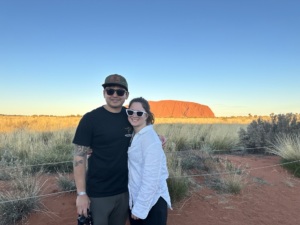
I wanted to get a master’s degree, and I found Rotary International’s Peace Fellowship program. They work with universities around the world and the condition is you cannot go to a university in your home country. I was particularly attracted to that part of the program, having worked in foreign policy exclusively from the U.S. perspective up until that point in my career. I wanted the opportunity to study somewhere else and engage with a lot of different perspectives to broaden my view of what foreign policy means. So, not only did I get to go study in Australia, I was in a program with a ton of international students whose diversity of experiences that broadened my understanding of what it means for America to lead on foreign policy.
What do you miss most about your time there?
One thing I miss terribly about Australia is the big sushi rolls! They’re everywhere and they’re super cheap. I just lived on sushi rolls! As you might not be shocked to hear, Australia has great quality seafood. There is no American equivalent of the fast takeout sushi like there is in Australia. They also have amazing chocolate bars filled with a pineapple cream. I was thinking about that the other day and trying to figure out if I could order one.
That sounds so good! Aside from the food, any suggestions for anyone who plans to visit Australia soon?
Go for as long as you possibly can! It’s hard to get to Uluru, also known as the Red Center of the country, but it’s a really beautiful and inspiring place. All the beaches are amazing—definitely go to the beaches! I got to spend a lot of time up at some of the world’s best surf beaches. Just be prepared to be disappointed when you come back to American beaches!
That sounds amazing. Thanks for your time and your thoughtful answers.
You’re welcome!
Sign up for our newsletter to get the latest on nuclear and biological threats.

Most of us think of cognitive biases as quirks of everyday decision-making, but a recent Texas National Security Review study shows they are deeply embedded in people’s attitudes toward nuclear weapons and war.
Amanda Krieger is an officer with NTI’s Development team, where she builds relationships and leads strategic engagement efforts to secure major philanthropic support for NTI’s mission. Amanda spoke with NTI intern Ryan Takeji Adams about her work in fundraising, past experiences, and hobbies.
Alex Tiersky serves as the vice president of NTI’s Government Relations team. He oversees NTI’s legislative branch strategy, shaping and driving the organization’s policy agenda.
Sign up for regular updates on innovative, real-world solutions to existential threats.