
Keirstin Anderson
Executive Assistant & Events Coordinator, Government Relations; Liaison, NTI Board of Directors
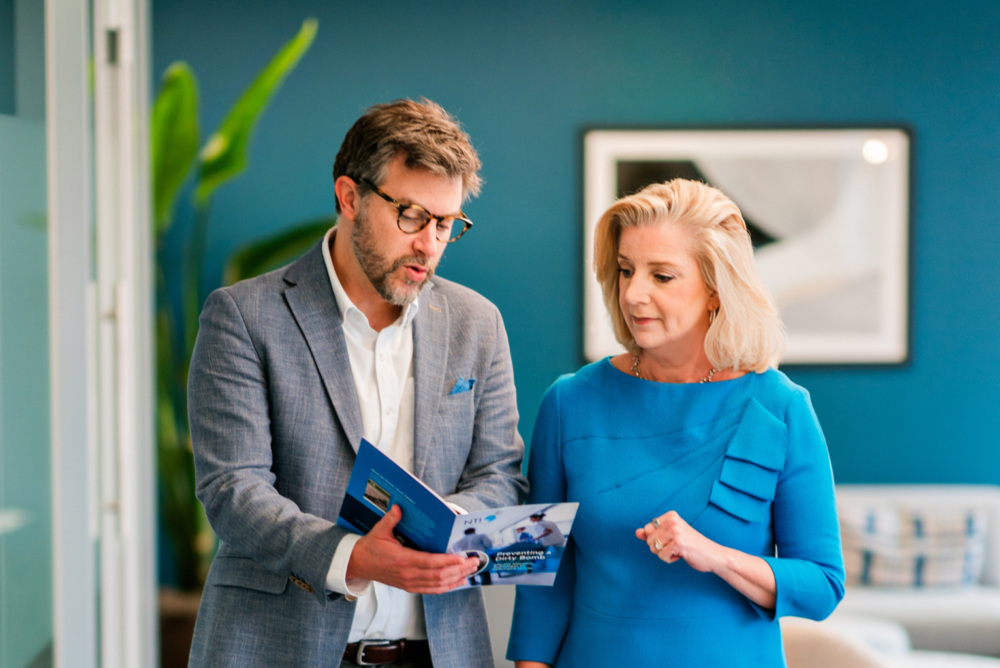
Alex Tiersky serves as the vice president of NTI’s Government Relations team. He oversees NTI’s legislative branch strategy, shaping and driving the organization’s policy agenda. Alex spoke with Keirstin Anderson about his work at NTI and life outside of the office.
Can you start by highlighting your role at NTI?
 Sure! I was hired to build a new function to help NTI’s strong national security expertise better connect with policymakers, particularly on Capitol Hill. In order to do that, the team that I have the privilege of leading has put together a set of programming that educates congressional staff and organizes meetings with staff and members on various issues on which NTI is well placed to provide authoritative information. We also serve as NTI’s ‘sensor’ function, trying to stay a step or two ahead of the policy discussion on the Hill.
A big part of government relations is building relationships. How do collaboration and relationships, inside and outside NTI, factor into your day‑to‑day work?
You’re right—in this business, relationships are everything. Both I, and other members of my team, have many preexisting relationships on both sides of the aisle and in both chambers of Congress. At the same time, we are always looking to find ways to expand who we know and talk to regularly, and to create new coalitions of interest around our issues.
Making relationships with both congressional members and their staff is about finding areas of common interest. We spend a lot of time understanding who we are talking to, what they are trying to achieve, and where there might be points of commonality with NTI, before walking in the door. And of course, we’re proud of our strong reputation for pragmatic, non-partisan analysis and expertise; being understood as serious makes asking for meetings much more productive.
But you also asked about collaboration and relationships inside NTI. If we’re doing our job right, we’re helping all of NTI’s various programs tell their stories on the Hill, and that starts with closely collaborating on a continuous basis across the organization. One of my favorite moments every week is when I host a meeting with representatives of each program and I get to hear about how their programs are innovating in our policy space, share with them the latest information we’ve picked up through our various contacts, and we brainstorm together how best to move forward in an impactful way.
What is one issue area or policy challenge you’re especially excited about right now, and one that presents an exciting opportunity for growth or impact?
 When I joined NTI, discussions on our core issues, in particular nuclear weapons, didn’t really seem to be at the top of the policy agenda for Congress and the public. But just in the last few months, when we’ve seen the expiration of the New START Treaty and our continued military engagement in Iran, these issues have rocketed back to the front page and are a daily part of congressional discussions. There’s an appetite for expert, non-partisan analysis on these issues.
That’s also true on the topic of biological threats, particularly given everyone’s experience with the pandemic. That makes it very easy to talk to offices about what we need to do to be more engaged on biological threats.
But I think the greatest area for growth is the incredible growth of emerging technology, and in particular artificial intelligence. Every office in Congress has a reason to be very interested in AI, whether it’s a data center in their district, their constituents being taken advantage of by new scams using AI, or the broader national security implications. I think that’s an area where NTI clearly has added value to provide, and I fully expect we will continue to be leaning into thinking through the implications of this technology and the way forward.
Is there a book, early experience in your career, or mentor that’s had a lasting influence on how you approach your work?
There absolutely has. When I was an undergraduate student at Tufts University, my main focus was on studying the different political systems in Western European countries and the United States. I wrote an undergraduate thesis on what were called the freeze movements of the early 1980s, when record numbers of the public protested, for instance, in Central Park, but also in many European capitals, against the deployment of new U.S. missile systems in Western Europe that were intended to counter a Soviet deployment. My undergraduate research was the first time I started thinking seriously about issues of arms control, the way that political change happens, and the impact of public movement on policy decision making. I wish I could say the conclusions of my thesis were brilliant – they weren’t – but in any case, that project is probably what set me on a path to work on these issues at various times during my career, including here at NTI.
Do you think you’ve deviated from the topic and then come back to it, or do you think you have always focused on it?
 No, I certainly have deviated. While one of my first real jobs was working on nuclear arms control at the State Department, I’ve been lucky to have the opportunity to work on a broad range of international issues over the years, both in the U.S. (in the executive and legislative branches) and abroad. Generally speaking, the through line has been national security and working with allies and partners on shared challenges and on the basis of shared values. It wasn’t necessarily obvious that after experiences working with USAID to support Ukraine or working on bilateral relations with several European countries on the National Security Council staff, I would eventually have the opportunity to return to what had been one of my first academic and professional interests. It’s been really rewarding.
To switch it up a little bit, what’s one fun fact about you that would surprise colleagues when they learn it?
Some folks might find it interesting that for many years, when not at work, I traveled internationally competing in Ultimate Frisbee. I played in various international competitions and had the opportunity to compete in several world championships, including as part of a team that won a silver medal at the World Championships in Perth, Australia in 2006. And for better or worse, it looks like I have passed the love of that sport to my children, who are also now competing at a high level.
I would be remiss if I didn’t ask about your dog. So, what is your dog’s name and how old is he?
My dog’s name is Samson, but we call him Sammy. He’s been with the family for nine months, and as our first pet, it’s been a learning curve, but he’s just an absolute delight. It’s also been a great new reason to spend more time exploring our neighborhood, and it’s been fun to get to know the community of dog owners.
And finally, if your dog had to write your NTI bio, what do you think they’d say about you?
I’m guessing it would go something like: provider of treats, scratcher of bellies, fellow lover of the outdoors; tall beyond measure and therefore sometimes useful in obtaining desirable things on shelves.
Sign up for our newsletter to get the latest on nuclear and biological threats.

Most of us think of cognitive biases as quirks of everyday decision-making, but a recent Texas National Security Review study shows they are deeply embedded in people’s attitudes toward nuclear weapons and war.

Congress’s oversight of U.S. nuclear policy is at a critical juncture. When the U.S. Senate approved New START in 2010, it mandated several annual reports and certifications to ensure strong congressional oversight of Russian compliance with the treaty. These requirements expired along with the treaty, creating oversight gaps just as strategic competition heats up.
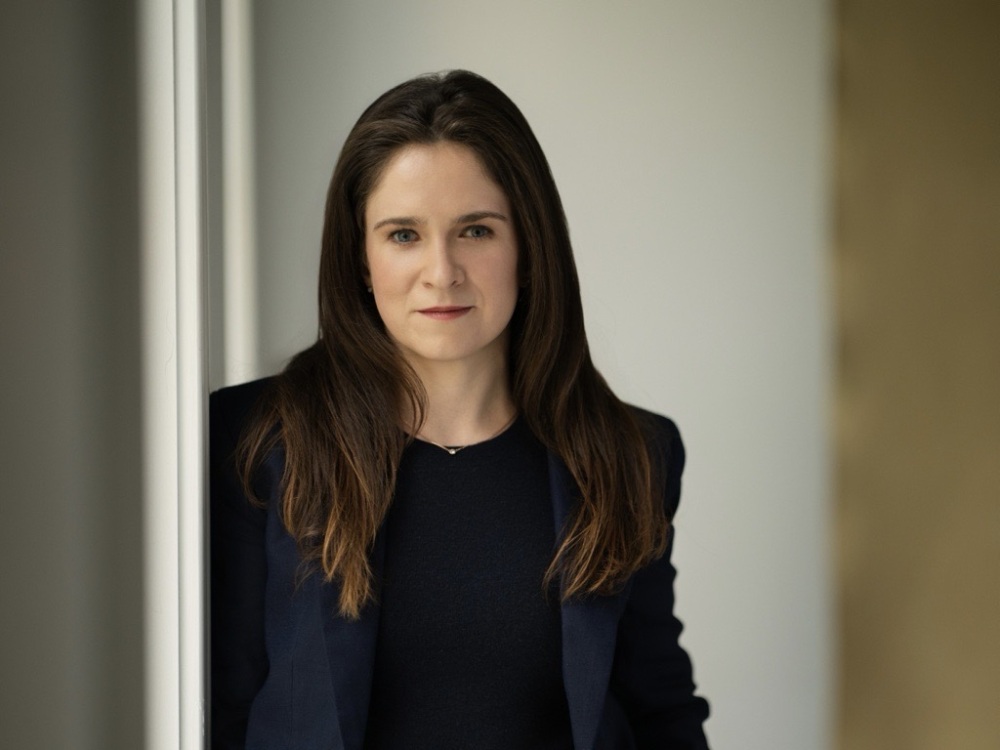
Cassandra Varanka is NTI’s director of legislative affairs. Since joining NTI in July 2025, she has focused on developing and advancing legislative strategies to shape impactful policy outcomes that further the organization’s agenda in the U.S. government.
Sign up for regular updates on innovative, real-world solutions to existential threats.