

Ross Matzkin-Bridger
Senior Director, Nuclear Materials Security

Ross Matzkin-Bridger is a senior advisor at the Nuclear Scaling Initiative (NSI), a partnership between NTI, EFI Foundation, and Clean Air Task Force to enable the rapid expansion of safe and secure nuclear energy. Across his work at NSI and NTI, Matzkin-Bridger focuses on the intersection of clean energy and security, specifically exploring fuel cycle choices that enable secure nuclear energy scaling.
Fresh off two presidential summits in just over two months, the United States and South Korea are approaching a pivotal moment in their bilateral relationship: the chance to define the next generation of clean, responsible, and globally competitive energy. With many countries currently betting big on nuclear energy, those who move fastest from theoretical plans to working plants that are safe, secure, and cost efficient will come out on top. The most direct route to success is through focusing resources on proven, innovative technologies and resisting distractions that promise more than they deliver. One of the most consequential decisions countries will face is whether to take a costly detour into nuclear fuel reprocessing, a technology that has failed every promise it has made.
Often marketed as “recycling,” reprocessing theoretically turns nuclear waste into a resource, which sounds appealing. In practice, it’s a messy endeavor that creates new waste that is harder to manage and yields little to no actual recycling. The process involves chopping up radioactive spent nuclear fuel and attempting to extract reusable portions. But after all the expense and complexity that it entails, approximately 99 percent of the recovered material remains unused. Plus, instead of solving the waste problem, reprocessing multiplies it, producing additional highly radioactive waste streams that are harder and costlier to contain, and still require permanent disposal.
How has reprocessing and recycling worked in practice? Its record of failure is clear. France has reprocessed for decades, but billions of dollars later, they are only able to recycle about 1% of their ever-growing stockpile of reprocessed spent fuel. Meanwhile, the government is still working to site a permanent geologic repository needed for all of the highly radioactive waste they have produced along the way.
Japan’s reprocessing program has faced even greater challenges, with taxpayers paying tens of billions of dollars to construct a facility that has suffered 27 delays since breaking ground in 1993. More than 30 years later, it is still not operational. The United Kingdom also had an extended foray into reprocessing, but abandoned the program after decades of frustration and expense.
Reprocessing also introduces serious security risks because it produces a purified form of plutonium, a material that can be used to make nuclear weapons. Every variant of reprocessing, including so-called “pyroprocessing,” which has gained attention in both South Korea and the United States, produces weapons-usable materials. That’s why U.S. policy has discouraged the spread of reprocessing technology for decades. Reversing course now would not only waste money and slow nuclear energy scaling, but also undermine decades of global nonproliferation leadership.
Each attempt to revive reprocessing ends the same way: billions of dollars down the drain, technical failures abound, and security risks increase. At a time when the world needs clean energy fast, reprocessing would be no more than a costly distraction. It diverts capital, talent, and political attention from innovations that can strengthen supply chains, lower emissions, and create real jobs. The lessons from abroad could not be clearer: reprocessing is a dead end.
The future of nuclear energy lies in advanced reactors, modernized manufacturing, and efficient fuel supply chains that actually work. Fortunately, the United States and South Korea are already showing what smart, results-driven nuclear collaboration looks like. The recent strategic agreement signed between X-energy, Korea Hydro and Nuclear Power, Doosan, and Amazon is an excellent example of a partnership with expertise across the nuclear energy value chain that can deliver measurable progress in a matter of years, not decades. When stakeholders like this come together with high ambitions and practical plans, nuclear energy can scale responsibly, profitably, and fast.
Reprocessing belongs to a bygone era—not today’s nuclear energy resurgence. It has failed on cost, failed on security, and failed to deliver real benefits. The future belongs those who pick proven technologies that can be deployed now and rapidly scaled. By rejecting the reprocessing trap and doubling down on real nuclear innovation, Washington and Seoul can emerge as the leaders of this era of global nuclear energy expansion, delivering energy security, economic growth, and climate progress for decades to come.
Sign up for our newsletter to get the latest on nuclear and biological threats.
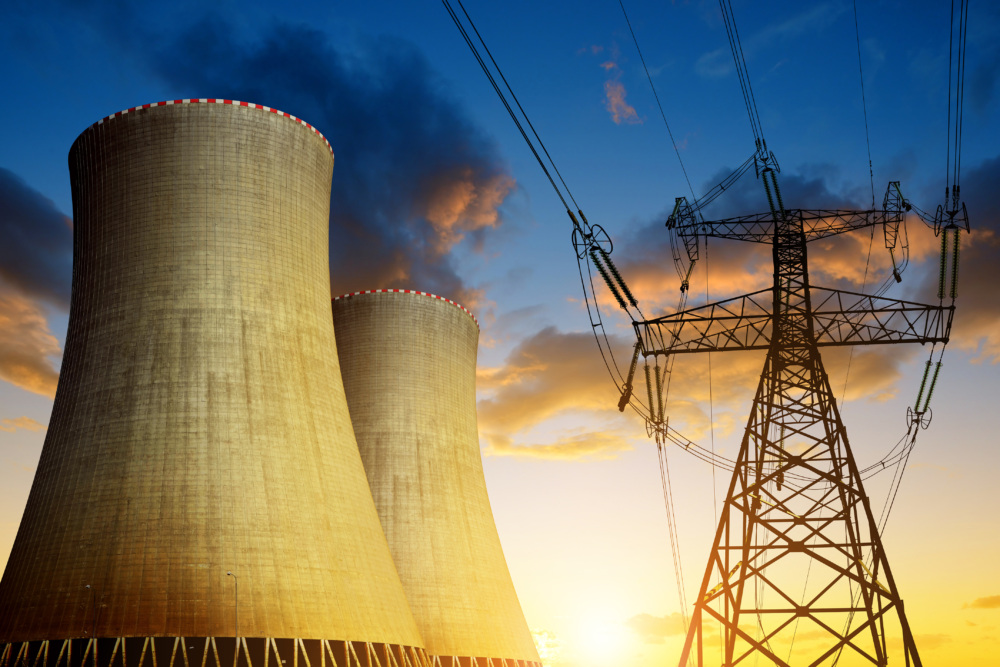
For nuclear power to be a problem solver rather than a problem maker, the international community must push for a smart brand of nuclear power that prioritizes safety and security.

"Far from being a burden to new nuclear energy projects, following common-sense security norms can actually help catalyze new growth."

While countries with existing enrichment capacity may be attracted to laser enrichment as a way to increase the efficiency of their operations, others could be attracted to it as a pathway to a covert weapons program.
Sign up for regular updates on innovative, real-world solutions to existential threats.