

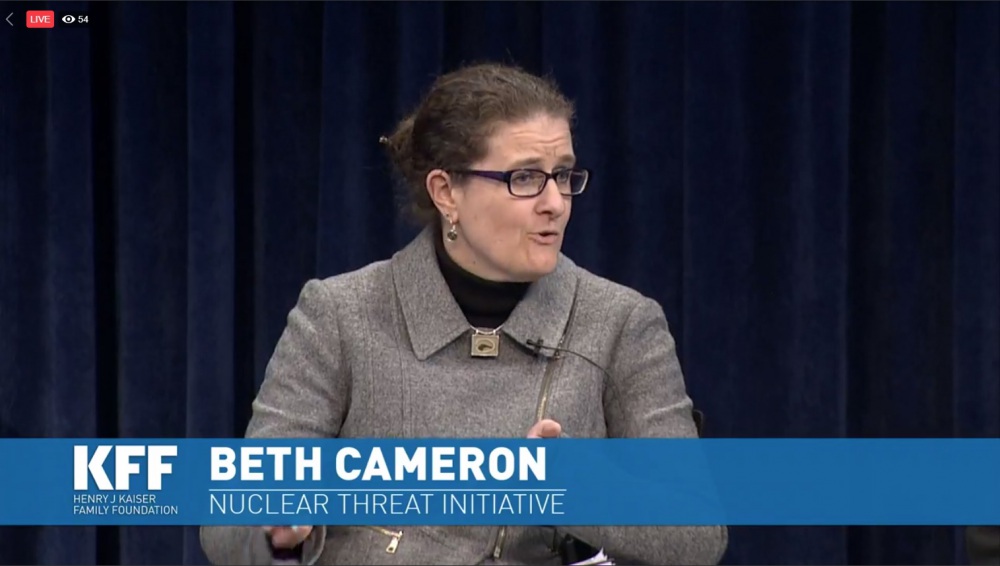
Experts from the Centers for Disease Control and Prevention (CDC),
Georgetown University, the Center for Strategic and International Studies (CSIS)
and NTI convened for a lively discussion on global health security as a
national security priority at a panel
hosted by the Kaiser Family Foundation earlier this week. The event was
streamed on Facebook Live, and you can find the video here.
Representing NTI, Vice President for Global Biological
Policy and Programs Dr. Elizabeth Cameron participated in the panel. Comparing
the impressive progress on health security made through global fora such as the
Global Health Security Agenda (GHSA) to the beginning phase of constructing a
building, Cameron likened previous U.S. leadership in this area to construction
of essential “scaffolding” – without the continuation of which “it will all
fall.”
The question of continued U.S. leadership on global health
security is front of mind for many experts due to a looming
funding cliff for CDC and USAID health security programs that puts past and
future progress at risk. Because a country’s preparedness can mean the
difference between an isolated outbreak and global catastrophe, the resources,
training, and infrastructure provided through U.S. programs abroad are
essential protections for stopping outbreaks at the source.
In a new video from NTI, you can learn more about the need
to protect U.S. investments in health security here.
In addition to highlighting the importance of U.S.
leadership, panelists at the Kaiser-sponsored event discussed methods for
sustaining the health security progress that has been made by the international
community thus far. As Rebecca Katz, Associate Professor and Co-Director of the
Center for Global Health Science and Security at Georgetown University, put it:
“There’s an incredible amount of work that still needs to be done, such as
starting with addressing the gaps that have been identified from the Joint
External Evaluations (JEEs) that have been done.” JEEs are voluntary,
collaborative evaluations used to assess countries’ ability to mitigate the
risk of public health emergencies of international concern.
Cameron reiterated the importance of using data
from such evaluations to determine health security priorities, calling metrics
“the hallmark of U.S. leadership” for global health security efforts. Cameron
also highlighted a new NTI initiative, the Global Health Security Index, which
intends to track country capacity to prevent, detect, and respond to biological
threats. Learn
more about this project here.
While the panelists discussed many challenges the global
health security community faces today, including the lack of government
resources and the difficulty of motivating people to work to prevent
emergencies like pandemics that have not yet happened, there is reason to be
encouraged.
On Tuesday, the U.S. government released a report, “Implementing
the Global Health Security Agenda: Progress and Impact from U.S. Government
Investments.” In an accompanying statement
expressing support for the Global Health Security Agenda, the White House said
the report “clearly shows how the investments made by taxpayers to improve
global health security are paying dividends.”
Watch
our new video to learn why we agree.
Sign up for our newsletter to get the latest on nuclear and biological threats.
Africa’s experience shows why climate change and health cannot be separated. A One Health approach is essential to managing growing risks at the intersection of people, animals, and the environment.
The AHS Index is an objective, evidence-based tool that helps countries and organizations set priorities and identify where investments can have the greatest impact. As health threats become more complex and interconnected, maintaining momentum will require sustained investment, stronger partnerships, and continued political commitment.
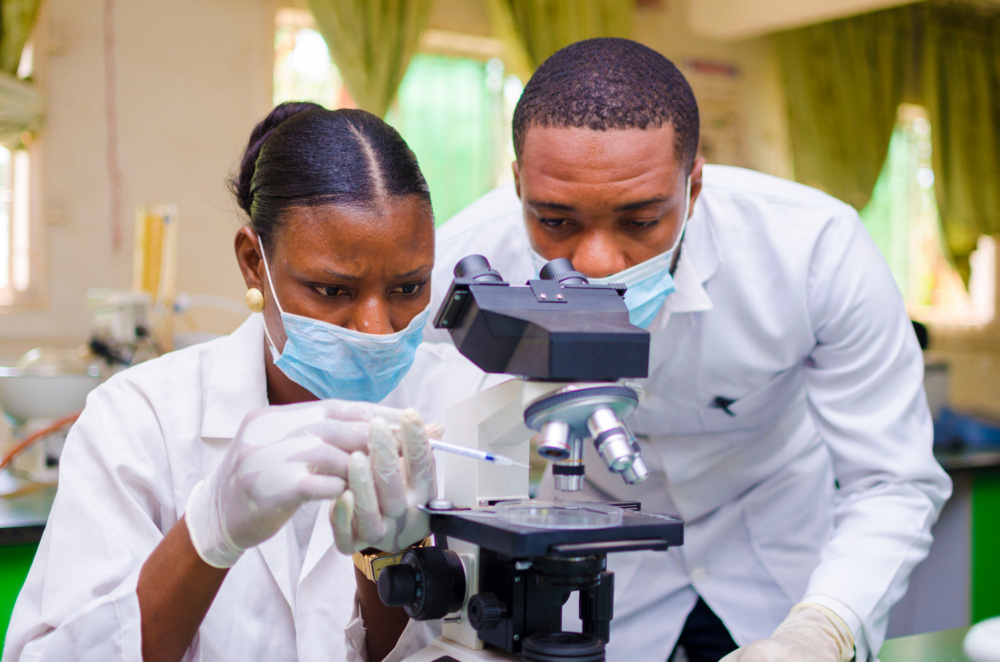
African countries are building stronger systems to advance health security and sovereignty. However, the scale and speed of rising health threats call for urgent action and increased investment.
Sign up for regular updates on innovative, real-world solutions to existential threats.