
Nathan A. Paxton, PhD
Senior Director, Global Biological Policy and Programs
Countries need to work together to control pandemics, but without an independent assessment of national health security capability, it is difficult to fully understand needs, identify gaps, and track improvements over time.
Create a Global Health Security (GHS) Index to assess national-level capacities to prevent, detect, and respond to high-consequence biological events.
The GHS Index highlights individual country needs, assesses compliance with international standards, and creates better understanding of global capabilities to address biological threats.
Senior Director, Global Biological Policy and Programs

Senior Director, Global Biological Policy and Programs

Executive Assistant & Events Coordinator, Global Biological Policy and Programs

Deputy Vice President, Global Biological Policy and Programs

Vice President, Global Biological Policy & Programs

Senior Director, Communications
The Global Health Security (GHS) Index is an assessment and benchmarking of health security and related capabilities across 195 countries.
The GHS Index measures health security in the context of other factors critical to fighting outbreaks, such as political and security risks, the broader strength of the country health system, and country adherence to global norms.
The GHS Index is designed to inform leaders of the foundational elements necessary to prepare their countries for future outbreaks and where they should prioritize planning and invest durable funding. By assessing these capacities, the GHS Index stimulates political will and action to prioritize addressing these gaps. The full methodology report explains how aggregating publicly available data helps to create a transparent picture of national level health security gaps.
The first two editions of the GHS Index were published in 2019 and 2021 and developed in partnership between the Nuclear Threat Initiative (NTI) and the Johns Hopkins Center for Health Security at the Bloomberg School of Public Health, working with Economist Impact. The 2021 Global Health Security Index assessed countries across 6 categories, 37 indicators, and 171 questions using publicly available information. The Index projects are currently a partnership of NTI, the Brown University Pandemic Center, and Economist Impact.
The results of the latest GHS Index show that even as many countries proved they could ramp up new capacities during an emergency—including setting up labs and creating cohorts of contact tracers to follow the spread of COVID-19—some responses were crippled by long-unaddressed weaknesses, such as lack of healthcare surge capacity and critical medical supplies.
Countries now have a more acute understanding of what this lack of preparedness means for their health and prosperity. The response to COVID-19 has shown that many factors—including public health and healthcare capacities, scientific understanding and countermeasure distribution, and social and economic resilience—play a pivotal role in how countries are able to respond during a pandemic.
Since the inaugural edition of the GHS Index, the International Panel of Experts have provided guidance in their personal capacities or in their capacities as representatives of advising organizations. The judgments and recommendations reflected in the GHS Index do not necessarily reflect the views of panel members or their respective employers, other affiliations, or governments. Download the list of the GHS Index International Panel of Experts.
For more information about the GHS Index, visit www.ghsindex.org.
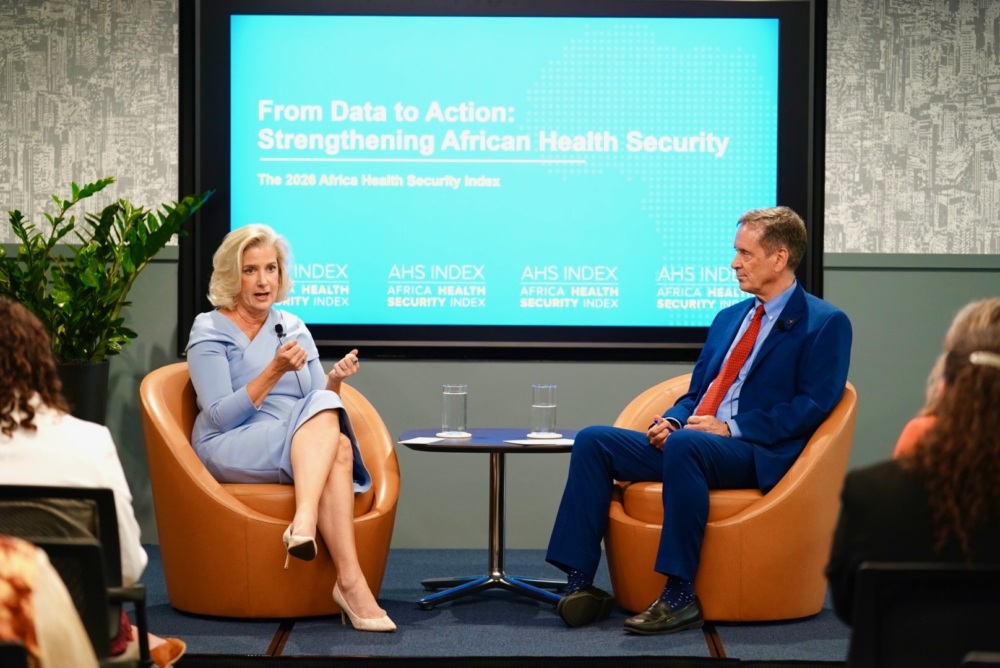
Ambassadors and officials from African embassies, U.S. government representatives, and health security and philanthropic leaders gathered at NTI on October 7 to discuss how data from the 2026 Africa Health Security Index can guide critical decisions to sustain preparedness across the continent.
Africa’s experience shows why climate change and health cannot be separated. A One Health approach is essential to managing growing risks at the intersection of people, animals, and the environment.
New Africa Health Security Index reveals how rising threats and health emergencies, including Central Africa’s current Ebola outbreak, could erode progress
Past Event
Webinar
|
3:30 – 5:00 pm EAT (8:30 am – 10:00 am ET)
As global resources become more constrained, evidence-based tools that guide investments toward maximum impact are more important than ever. This World Health Day, the WHO urges the world to embrace evidence, support science-led solutions, and advance global cooperation to turn evidence into action.

Global health security —the ability to protect against the negative impacts of disease outbreaks — is too important to be left solely to the public sector. Industry has a vital interest in helping countries better prepare for future epidemics and pandemics.

You might not expect a man in yellow tights eating syrupy spaghetti to teach you about global health security—but Elf offers surprisingly helpful lessons to understand the importance of addressing biological threats before they become global pandemics.

Past Event
San Francisco, California J.P. Morgan Healthcare Conference
|
9:45AM PT
Amid a combination of economic slowdown, reductions in official development assistance, rising biological threats, and climate change’s disproportionate impact on Africa, leaders and experts call for data-driven tools to guide strategic health security investments.

The Pandemic Agreement is a historic step toward strengthening global systems to prevent, detect, and respond to epidemic and pandemic threats. Yet many low- and middle-income countries face significant political and technical challenges in ratifying and implementing the agreement.

NTI applauds today’s announcement that the International Negotiating Body of the World Health Organization (WHO) has reached a deal on the language of the Pandemic Accord. Pandemics continue to pose a global threat, and this proposed agreement is proof that the world can unify to reduce the most catastrophic risks.
Each day brings alarming headlines—H5N1, measles, tuberculosis—but the quieter underlying issues of public health security rarely break through the noise. On this World Health Day 2025, as U.S. domestic and global health policies undergo a realignment, the world must recommit to address both the urgent and the underlying health challenges that shape our lives.

Through evidence-based investments in capacity building and the establishment of biosecurity best practices for life science research, the private sector can play a critical role in strengthening biosecurity and advancing pandemic preparedness.
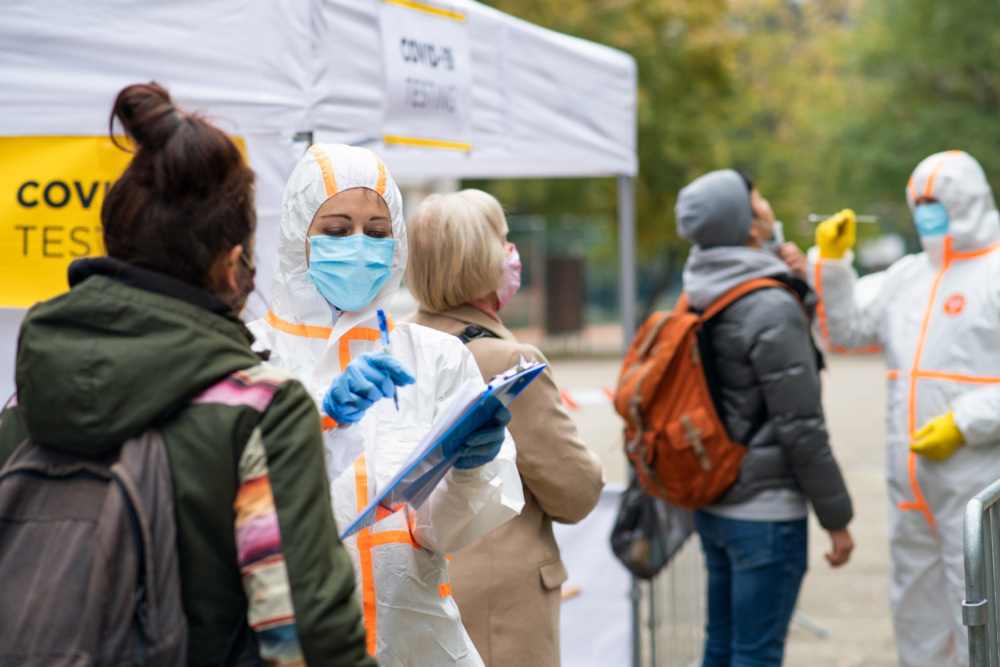
New study published in BMJ Global Health finds the pandemic was less deadly in countries that rank high on the Global Health Security Index.
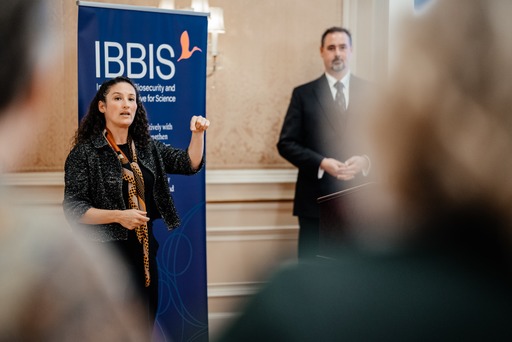
NTI experts briefed government representatives at a G7 working group meeting in Berlin.
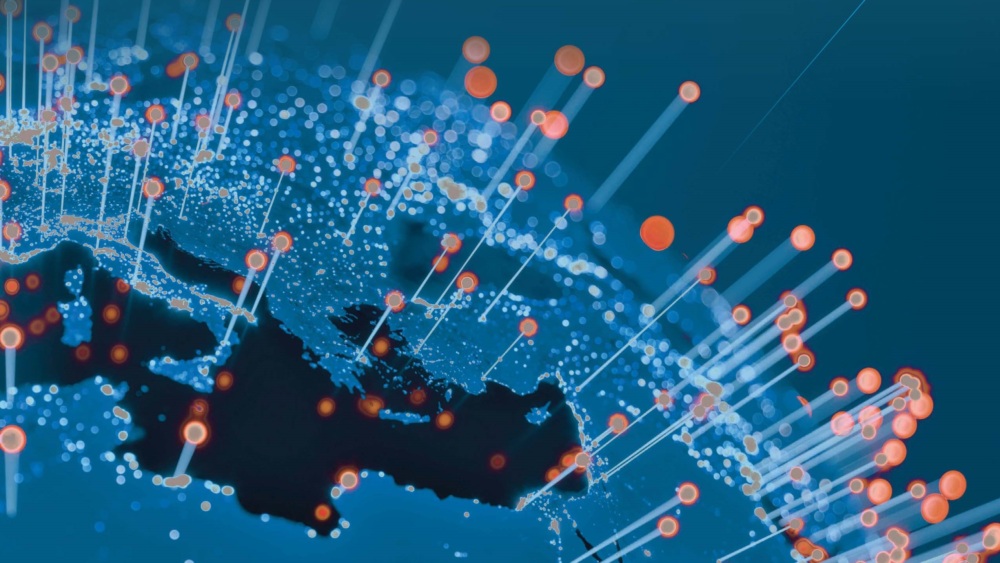
Examples from around the world of the Global Health Security Index in-use.
The World Bank launches a new fund to support pandemic prevention, preparedness, and response.
On April 21, 2022, immediately after G20 finance ministers and central bank governors reached consensus to establish a new Fund for preparedness at the World Bank, a group of leading experts and stakeholders from met to review progress and offer advice on next steps. This paper aims to inform next steps to structure, approve, and launch a new Fund, including the forthcoming consultative process led by the World Bank.
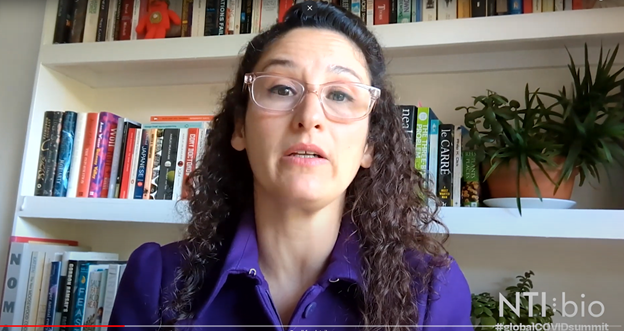
NTI joined governments and organizations from around the world for the 2nd Global COVID-19 Summit on May 12, 2022 and committed to provide $35,000 to the pandemic preparedness and global health security financial intermediary fund.
The first comprehensive assessment of global health security capabilities in 195 countries.
Report calls on national and global leaders to sustain and expand upon preparedness capacities developed to fight COVID-19
Despite significant steps taken by countries to respond to the COVID-19 pandemic, all countries remain dangerously unprepared to meet future epidemic and pandemic threats.
Past Event
Virtual | GHSIndex.org/2021launch
|
9 AM EST - 10:30 AM EST
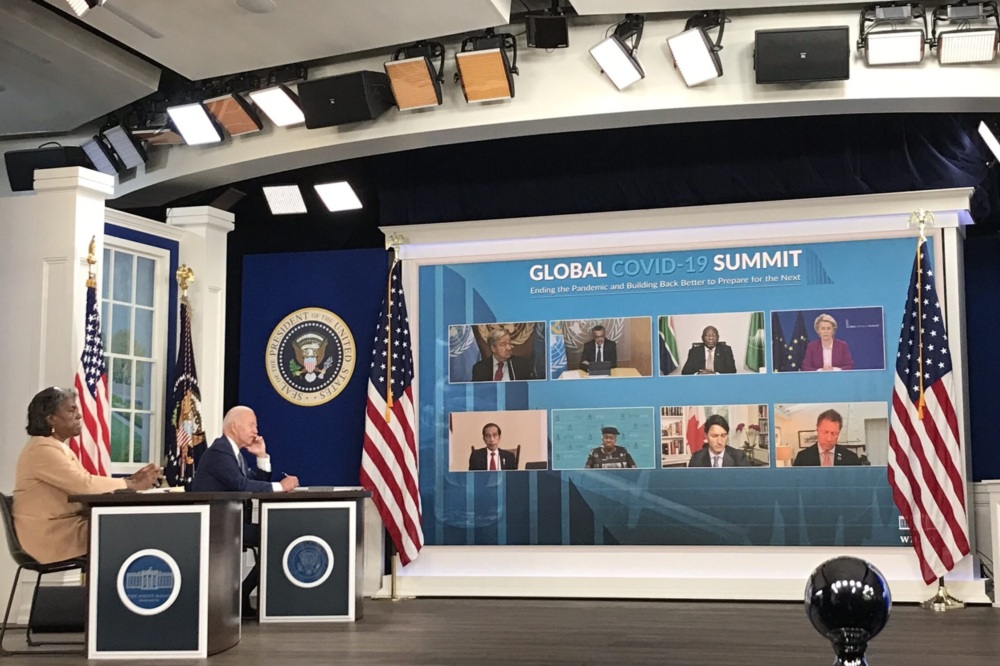
NTI submitted a statement to the virtual COVID-19 Summit convened by President Biden, calling for bold, decisive action to stem the devastating impacts of COVID-19 globally.
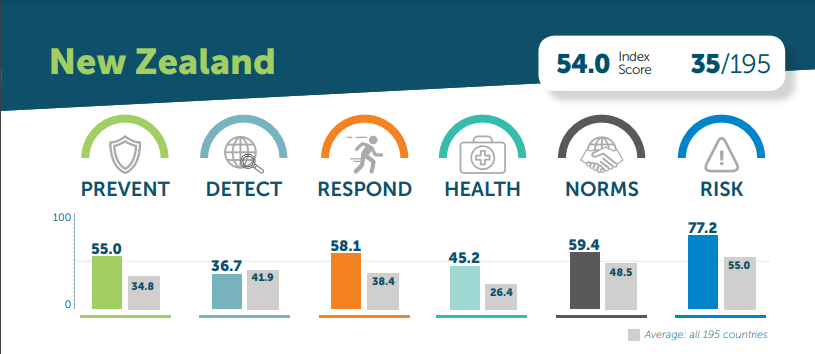
A leading biochemist and top health advisor to New Zealand’s government says the 2019 Global Health Security (GHS) Index was key to the country’s successful response to the COVID-19 pandemic.
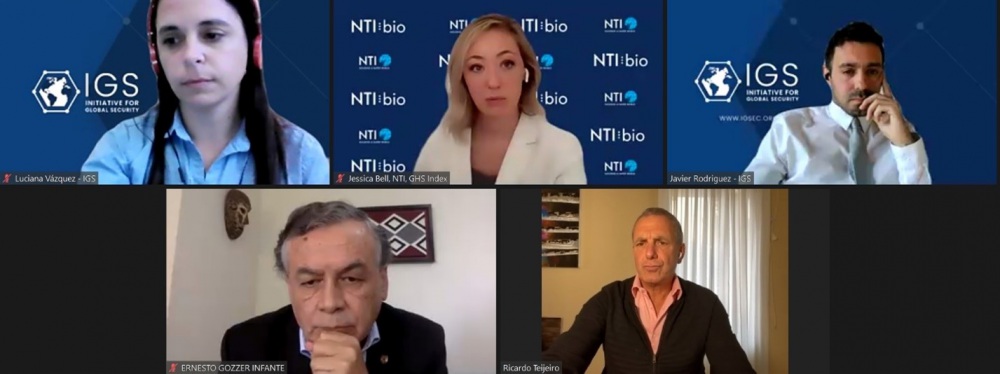
The webinar aimed to inform Latin American decision makers about the GHS Index and the depth of research and international collaboration behind it.
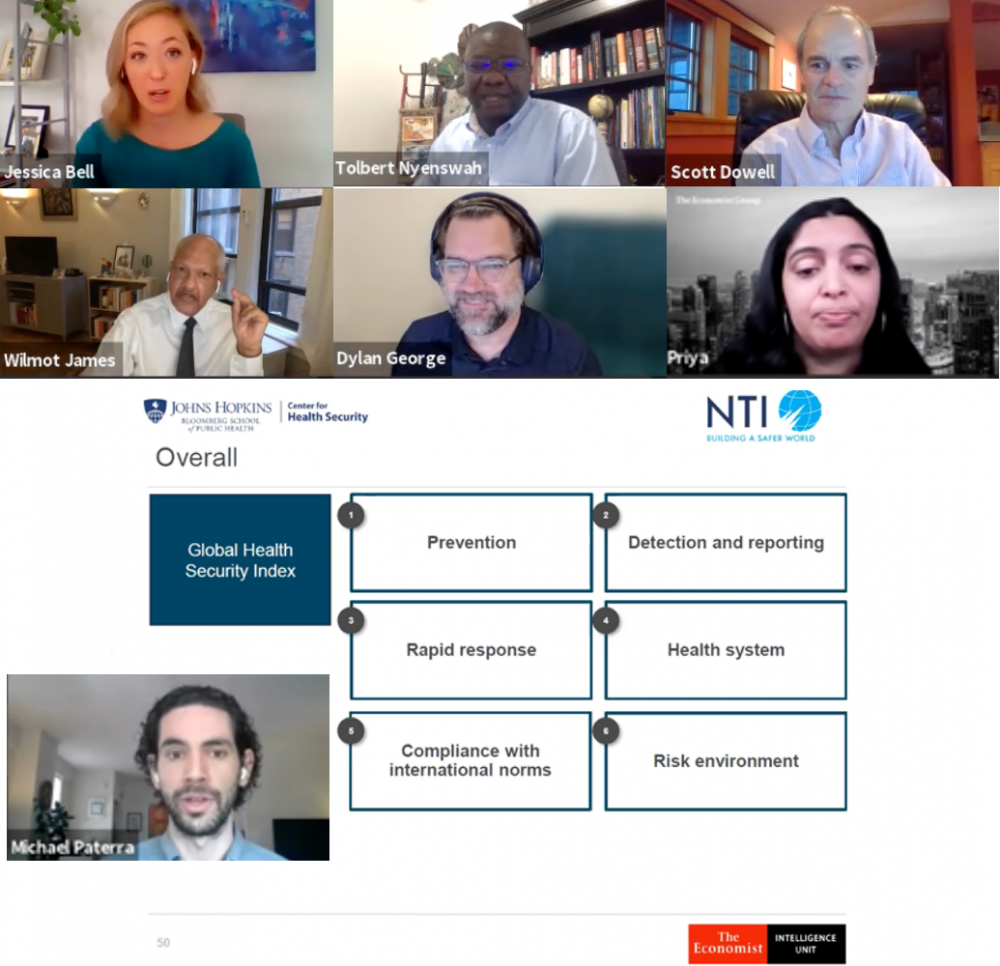
Panel members discussed the importance of laboratory capacity, contact tracing, and political risks in expanding and weighting the pandemic-conscious report.
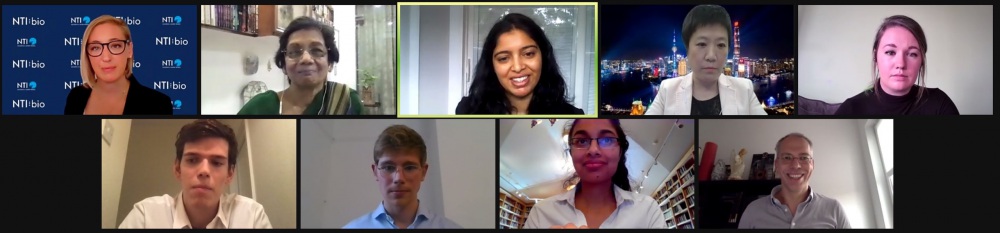
NTI and partners hosted virutal side events on using the GHS Index as a guide for responding to COVID-19 and on strengthening biosafety and biosecurity.
The Global Health Security Index website has been awarded for its creativity and digital excellence from leading communicators and creative professionals.

A 2020 commentary highlights the value of the Global Health Security Index as a practical tool that can help inform global policy makers and practitioners.
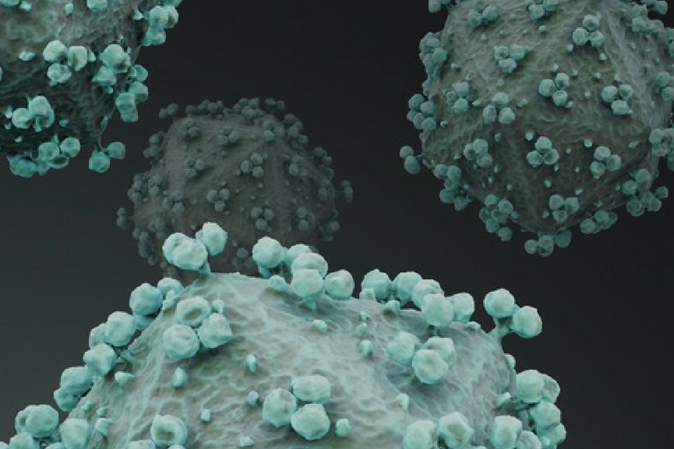
The U.S. was ranked first due to its high-quality labs and scientific staff, Strategic National Stockpile, and emergency distribution and communication plans.
To identify countries that are more vulnerable to the spread of an outbreak like COVID-19, the GHS Index team analyzed a subset of indicators within the GHS Index against global flight data.
The inaugural GHS Index finds severe weaknesses in countries’ abilities to prevent, detect, and respond to significant disease outbreaks and that no country is fully prepared.
The first comprehensive assessment and benchmarking of health security and related capabilities across the 195 countries that make up the States Parties to the International Health Regulations.
An NTI-Johns Hopkins article examines the full scope of academic literature to better identify evidence for measuring health security at the country level.
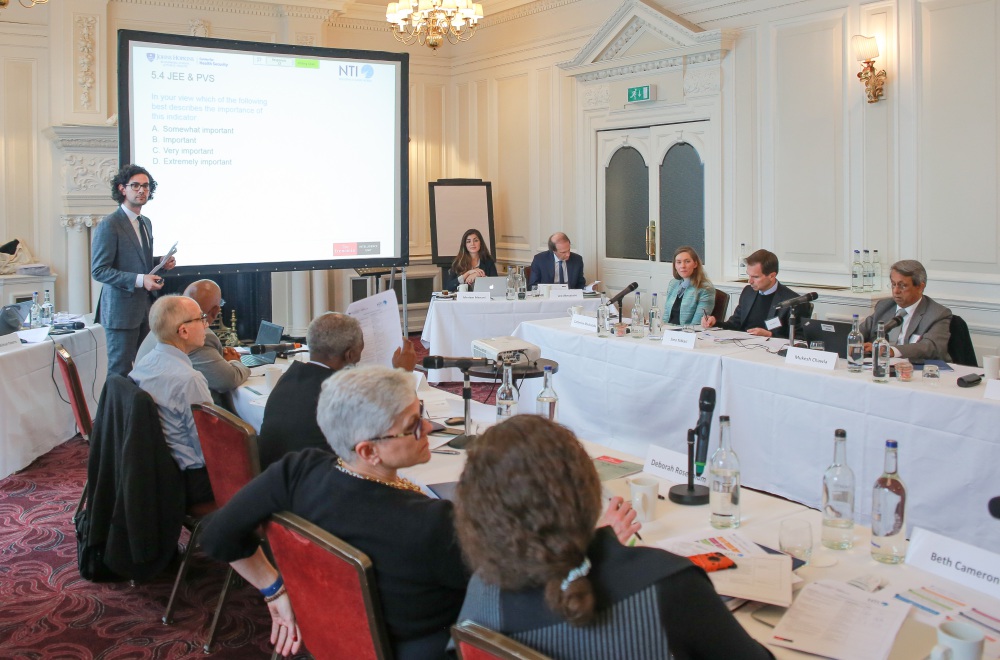
Past Event
London, UK
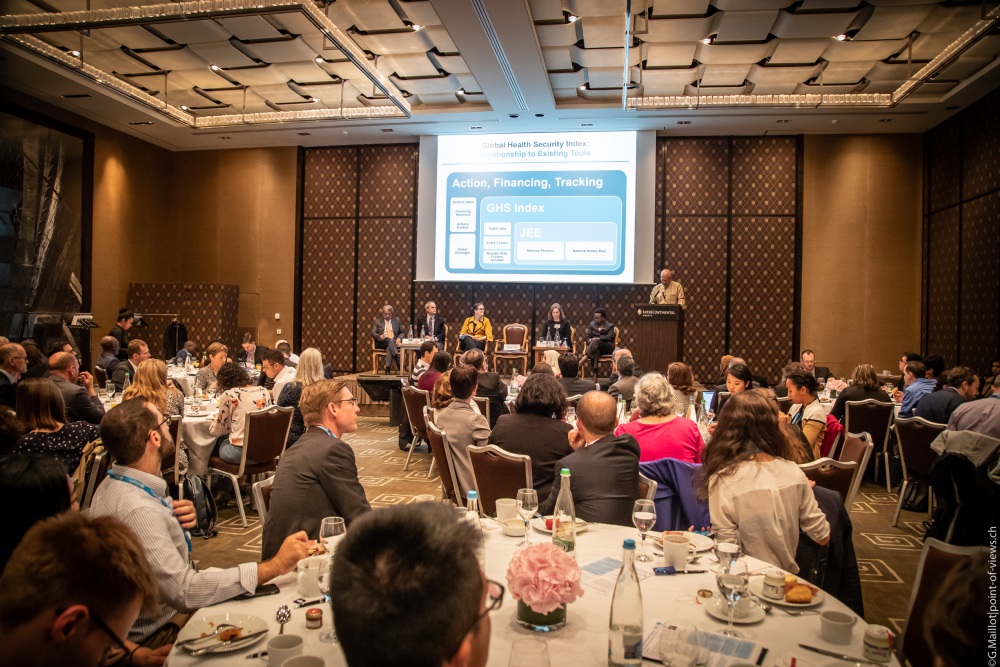
NTI | bio will create a Global Health Security Index to serve as an assessment of all countries’ capabilities to prevent, detect, and respond to biological events.
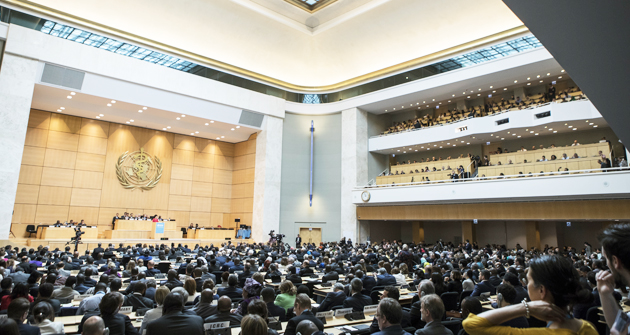
NTI experts Beth Cameron and Michelle Nalabandian will join hundreds of government officials and experts for the 71st World Health Assembly in Geneva.
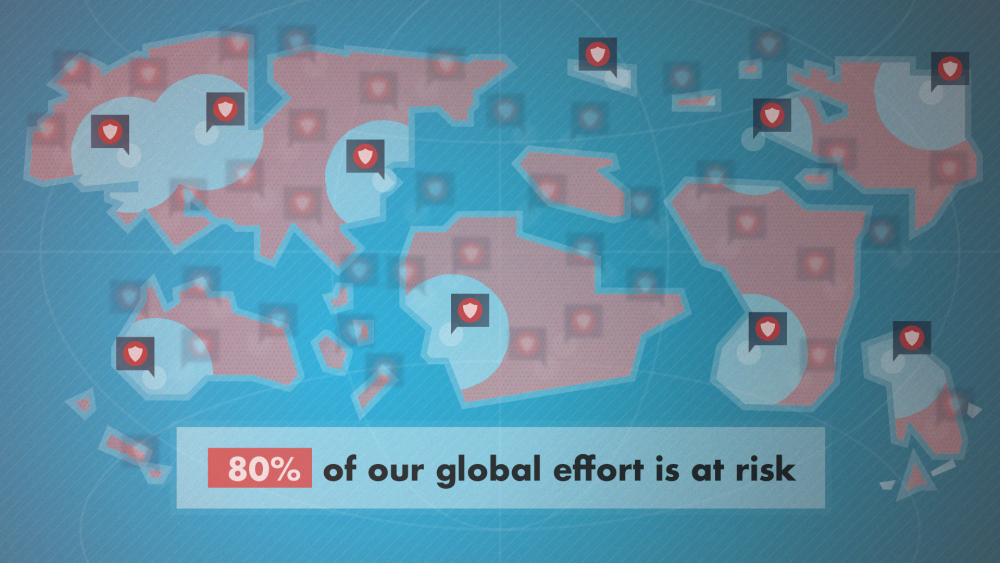
New video makes the case for protecting America’s commitment to global health security.
New Funding from the Bill & Melinda Gates Foundation Accelerates Global Health Security Index.

The interview covers the current state of play in disease control and offers advice on how to find a job where it’s possible to make an impact.
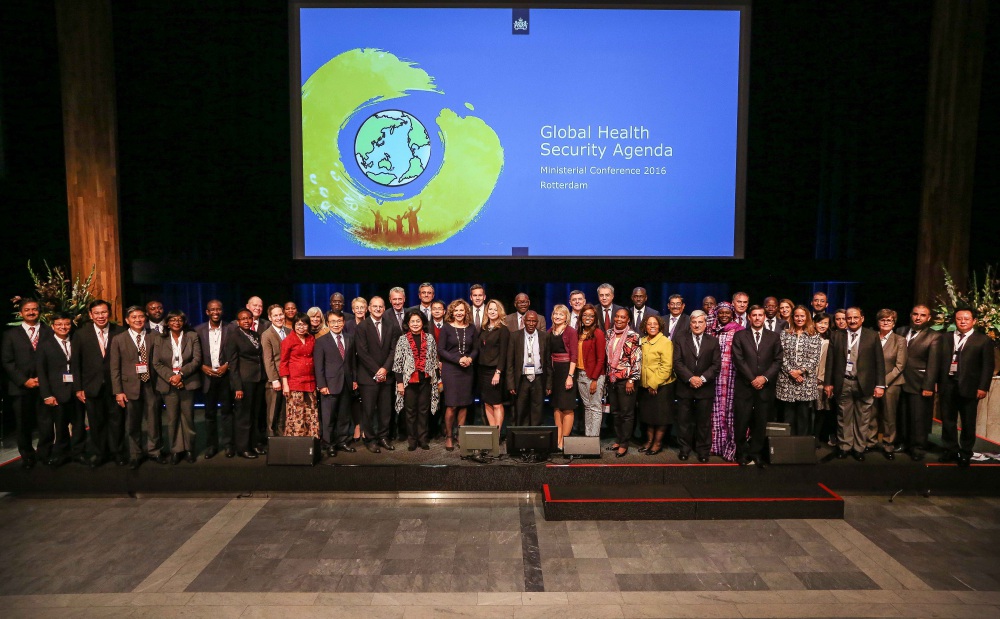
NTI's Biosecurity Program is partnering with the Next Generation GHS Network to launch a competition in preparation for the 4th Annual High Level GHSA Ministerial Meeting.
The Global Health Security Agenda is an irreplaceable and proven mechanism for promoting measurable change in preparedness to prevent and combat biological disease.
NTI's Beth Cameron was one of five advanced reviewers of the report which recommends aggressive action to analyze and finance gaps to stop outbreaks at the source.
NTI will partner on the Index with the Center for Health Security at the Johns Hopkins Bloomberg School of Public Health and the Economist Intelligence Unit.
Sign up for regular updates on innovative, real-world solutions to existential threats.