

Eric Brewer
Deputy Vice President, Nuclear Materials Security
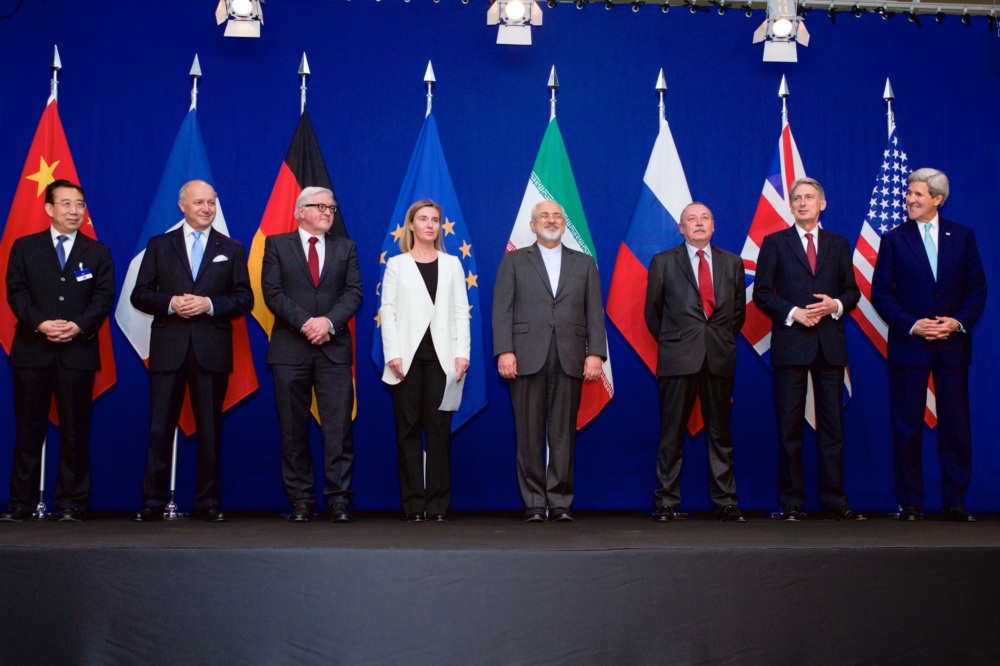
Love it or hate it, the 2015 Iran nuclear deal—formally known as the Joint Comprehensive Plan of Action (JCPOA)—is the benchmark against which any future deal with Iran will be measured. Indeed, U.S. officials, including President Trump, have claimed that the deal they expect to get with Iran will be “far better” than the JCPOA, which he withdrew from in 2018.
While talks between the United States and Iran have not yet yielded a new deal to pit against the JCPOA, it is still worth thinking through how we should do so. What are the most consequential issues? How did the JCPOA deal with them? And what might a future deal do differently—if not better?
The JCPOA limited Iran’s program to no more than 300 kilograms of 3.67 percent enriched uranium for 15 years (those limits would have expired at the end of 2030) and required Iran downblend or ship out material above those levels. It also specified the number and type of centrifuges Iran could use and in what ways; where those machines could be produced and stored; and the locations where enrichment could take place for a number of years.
Today, the United States is reportedly seeking a complete ban on enrichment for 20 years. Should Iran agree to it, such a ban would be a significant improvement on the JCPOA. But not addressing other enrichment-related issues in a future deal (the disposition of existing centrifuges, how they are monitored, etc.) would be a significant omission. Iran’s machines and skills are now more advanced than during the JCPOA era, meaning it could reconstitute an enrichment operation more quickly, either covertly or overtly.
The JCPOA also barred Iran for 15 years from having the ability to reconvert its enriched material in fuel form back into gas for further enrichment. A new deal that allows Iran to retain its 60 percent or 20 percent enriched material—even if converted to nuclear fuel—would be worse, especially without provisions stopping reconversion.
Reprocessing, the other pathway to the bomb, separates weapons-grade plutonium from spent nuclear fuel. The JCPOA prohibited Iran from developing a reprocessing facility or engaging in any related research and development for 15 years. The deal also committed Iran to shipping out all spent fuel (which could otherwise be reprocessed) for the full lifetime of its reactors, converting its heavy water research reactor to a light water reactor (which is less suited to making plutonium that could be used in a bomb), and relying on light water reactor technology for future reactors. A new deal that does not prevent Iran from reprocessing or pursuing reactors suited to plutonium production would leave the country with a pathway to the bomb.
The JCPOA included a 15-year ban on Iran’s engagement in specific activities that could help it build a nuclear device, like developing multi-point detonation systems and explosively driven neutron sources, and producing uranium metal. These restrictions are arguably more important under a new deal, given reports that Iran has recently made progress on some of these capabilities. Reports indicate the United States is seeking a commitment from Iran to not conduct weaponization-related activities. That is good, but the details matter. A new deal that includes specific restrictions and a strong monitoring mandate would be an improvement on the JCPOA. Ignoring them would make for a deal with a major weakness.
The JCPOA required Iran to allow continuous monitoring of its entire fuel cycle (including real-time monitoring of enrichment) by International Atomic Energy Agency (IAEA) inspectors for 15 years. It also mandated Iran’s adoption of the Additional Protocol (AP), a crucial measure which provides IAEA inspectors with enhanced monitoring tools and authorities. And there was no “sunset” on the AP—Iran had to adhere to it in perpetuity.
If the United States succeeds in negotiating a new deal with an extended ban on enrichment, then obviously things like real-time enrichment monitoring are unnecessary. But strict monitoring of whatever Iranian capabilities remain will continue to be crucial—from centrifuges and manufacturing equipment to uranium mining and conversion—to guard against a covert pathway. Not specifying these monitoring requirements in a new deal would be a notable gap; and not requiring the AP would make it significantly weaker, and much harder to verify, than the JCPOA.
The JCPOA established the Joint Commission—a body comprised of all JCPOA members that met regularly to manage implementation. If a new deal is less detailed and based on simple, high-level commitments, continuing to have such a body could be even more important, as Iran inevitably chooses to test the limits and interpret the language to its own advantage. The JCPOA also built in a structured, time-bound process to manage specific disputes. In the event that Iran stonewalled an inspection or another issue arose, the parties had a structured path forward—rather than delaying, deflecting, or abandoning the deal in its entirety. A new deal with no mechanisms for the United States and Iran to hash out disagreements (which are guaranteed to arise) could collapse under its own weight.
Of course, a number of non-nuclear issues will also be important when judging the value of any future deal. For example, the extent to which Iran’s missile program and support for terrorism are addressed, and the scope and sequencing of sanctions relief. But given the threats posed by Iran’s program and the potential Tehran could ultimately develop nuclear weapons, getting the nuclear issue right will be critical.
Sign up for our newsletter to get the latest on nuclear and biological threats.
The NTI Index team spent months poring over thousands of data points. Here are five especially worth knowing.
Beijing and Washington must be on the same page to avoid nuclear material from falling into the wrong hands. Continued Track II engagement on nuclear security is essential for preserving cooperation within a critical area of shared interest, even when diplomacy between political officials is at an impasse.

While countries with existing enrichment capacity may be attracted to laser enrichment as a way to increase the efficiency of their operations, others could be attracted to it as a pathway to a covert weapons program.
Sign up for regular updates on innovative, real-world solutions to existential threats.