

Philipp C. Bleek
The James Martin Center for Nonproliferation Studies
The James Martin Center for Nonproliferation Studies
Executive Summary
Terrorists and states hostile to the United States and its allies are pursuing nuclear weapons. The acquisition of even primitive nuclear weapons by terrorists willing to sacrifice their own lives to kill thousands of civilians would be catastrophic, while nuclear proliferation to hostile states poses grave dangers.
Obtaining fissile material, either highly enriched uranium (HEU) or plutonium, remains the single greatest obstacle to acquiring a nuclear weapon. A sophisticated terrorist organization could plausibly construct a rudimentary nuclear bomb if it obtained such material; a state almost certainly could. Yet dozens of insecure civil research centers scattered around the globe house HEU or plutonium, many protected by only the most rudimentary security measures. While security upgrades have a critical role to play, only by ensuring that there is nothing left at a site to steal can the threat of nuclear diversion be entirely eliminated.
The United States has conducted five operations over the past decade to “clean out” specific vulnerable civil nuclear material stockpiles supplied by the Soviet Union. These operations make clear the haphazard nature of past and current attempts to address this threat. Efforts to date have been characterized by a consistent pattern of passivity in site identification; incoherence in site selection; sluggish implementation due to ad hoc operations, the absence of clear lines of responsibility, and insufficiently empowered implementing officials (all of which stem in large part from a lack of awareness, engagement, and leadership by senior government officials); allowing Russia to effectively stymie progress; and failure to effectively engage third parties, including countries and perhaps non-state actors.
These shortcomings highlight the key ingredients of a viable “global cleanout” approach:
Sign up for our newsletter to get the latest on nuclear and biological threats.
“The bottom line is that the countries and areas with the greatest responsibility for protecting the world from a catastrophic act of nuclear terrorism are derelict in their duty,” the 2023 NTI Index reports.
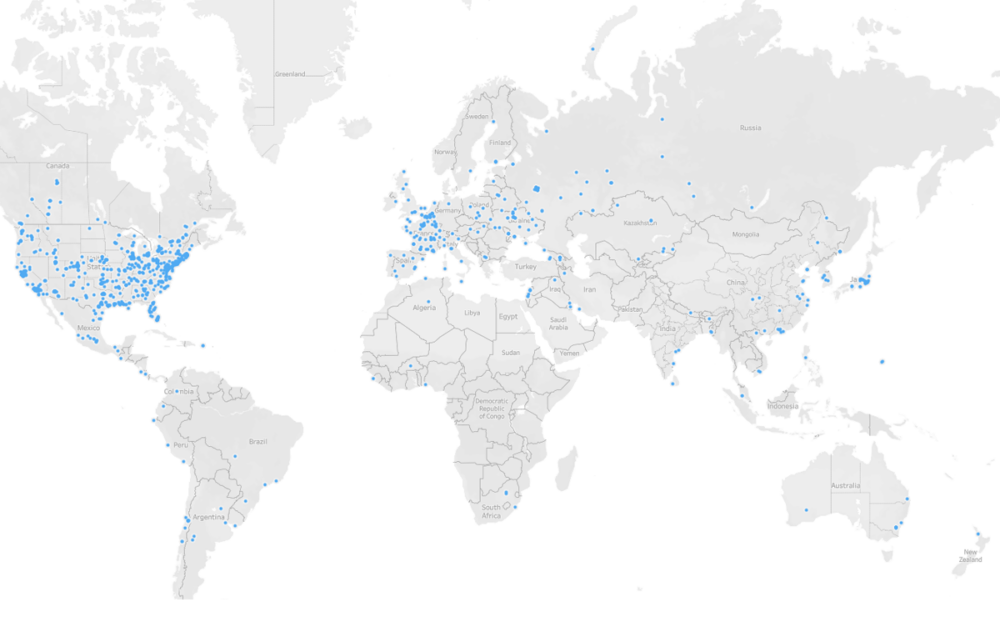
The only public database of its kind, includes global nuclear & radiological security trends, findings, policy recommendations, and interactive visualizations.
Archives of Global Incidents and Trafficking Database, 2013-2018. (CNS)
Sign up for regular updates on innovative, real-world solutions to existential threats.