
About the image
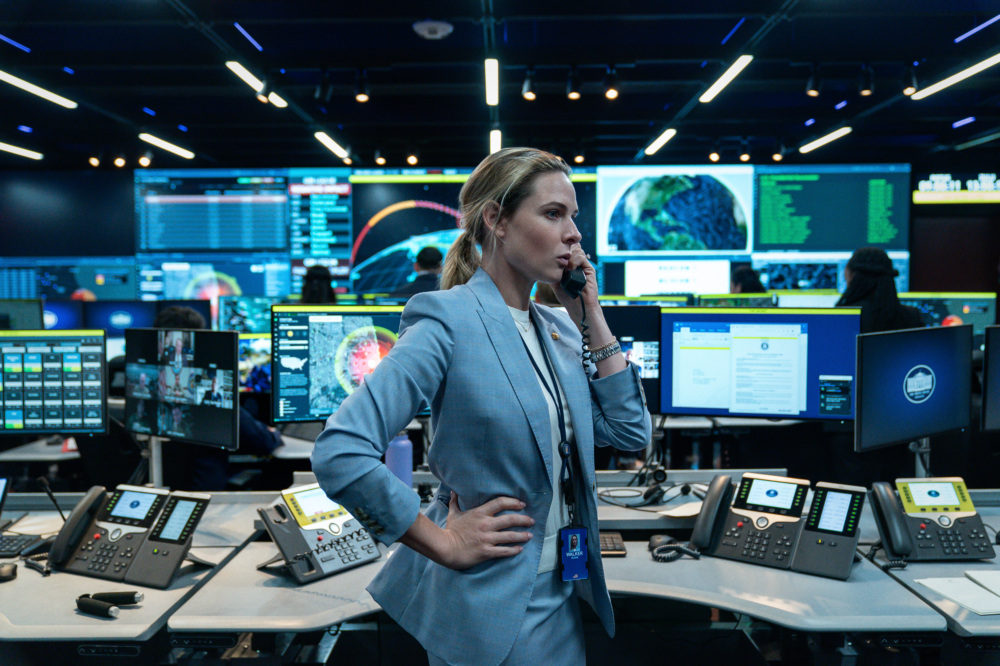
A HOUSE OF DYNAMITE, the riveting new thriller from Academy Award-winning director Kathryn Bigelow, provides a window into what might happen if our political and military leaders suddenly were informed that a nuclear weapon was headed for a major U.S. city. It highlights the risks we live with every day in a world with more than 12,000 nuclear weapons and how quickly life as we know it could change.
This explainer breaks down key themes and addresses questions that may come up while watching the film.
Yes, the movie may be fiction, but the scenario is plausible.
A nuclear launch could happen for a number of different reasons. It could be a deliberate attack, but it also could be a launch due to an accident or a terrible miscalculation. Multiple countries are capable of attacking the United States with a nuclear weapon, and others are currently developing long-range missile capabilities. Cyber and emerging technologies also could confuse or conceal the origin of the missile.
Yes.
Some nuclear-armed missiles (called intercontinental ballistic missiles or ICBMs) can reach the United States from the other side of the world in about 30 minutes. A missile launched from a submarine can take even less time. As depicted in the film, it would take a few minutes to detect, analyze, and confirm the launch, giving the U.S. president and their national security team only minutes to determine a course of action before the missile lands. Once a nuclear-armed missile is launched, there is no way for a country to recall or retarget it, and people living in an intended target zone would not have time to prepare or evacuate.
We don’t know.
As one of the characters in the film points out, relying on a system designed to intercept an ICBM is akin to hitting a bullet with a bullet. Missile defense systems have a 55 percent success rate against ICBMs in testing, so it’s very much a “coin toss.” It’s worth noting that these tests are performed under controlled conditions, which wouldn’t likely be replicated during an actual attack. In the event of a nuclear attack, an adversary might send more than one ICBM—some with multiple decoy warheads—which would further complicate the job of interception. Missile defense technologies are advancing, but so, too, are the technologies to bypass them.
The president has the sole authority to order a nuclear attack.
In the United States, the president has the sole authority to launch nuclear weapons. There are no required checks and balances on the decision. While they may consult national security and military advisors, there is no legal obligation to seek input—not from the Vice President, Congress, or even the Secretary of Defense. Any decision is supposed to comply with the laws of armed conflict, but ultimately, it is the president alone who bears the weight of this grave responsibility. And at any given time, hundreds of U.S. nuclear weapons are ready to launch at a moment’s notice.
Maybe. No one can predict what would happen in the chaos of conflict.
In the event of an incoming nuclear missile, the president will face immense pressure to act and “look strong.” Some advisors may demand a swift and forceful nuclear response, while others may urge restraint until they know the bomb went off or to avoid triggering all-out nuclear war. In the scenario depicted in the film where a single missile is incoming, there would be no risk of a decapitating “use-it-or-lose-it” situation, so the president could choose to wait until the missile lands.
Any use of a nuclear weapon risks escalation with catastrophic consequences. Our security—living in a world with 12,000 nuclear weapons—is fragile, and one snap decision could change everything. The choice to strike back ultimately rests with the president, who will need to balance imperfect intelligence and the emotional chaos of a rapidly unfolding crisis.
There would be unparalleled catastrophe and suffering with long-lasting effects.
If a nuclear weapon were detonated over a major city, the effects would be catastrophic. A fireball hotter than the sun would vaporize everything at ground zero. A blast wave would flatten buildings, and radiation would spread quickly, delivering fatal doses for those nearby. The fallout could contaminate large parts of the region, poisoning farmland, water, and food supplies for decades.
In addition, the economic, financial, and societal ripple effects would cascade nationwide, especially for a city vital to U.S. freight and transportation, finance, and food logistics. A strike like the one presumed to take place in the film would collapse national supply chains, disrupt markets, and trigger a humanitarian, economic, and financial crisis unlike any in modern history. Simulations of such a scenario are available on NUKEMAP, which visualizes the patterns of the immediate blast, heat, and fallout effects for a location of your choosing.
Unfortunately, yes.
The risk of a nuclear weapon being used is as high today as any time in modern history. We’re living in an age of disinformation and misinformation as tensions escalate and wars rage in regions with nuclear weapons. For the first time in 40 years, the number of nuclear weapons in the world is expected to go up. More countries are considering developing nuclear weapons, and the last remaining verifiable limits on nuclear weapons in the United States and Russia are set to expire in February. New technologies like cyber and AI are adding further complications to systems that already demand perfection from humans and machines every day.
In the past, we’ve had dozens of close calls— times when systems failed, initial reports were wrong, people made mistakes, or leaders felt pressure to act, as President Kennedy did during the Cuban Missile Crisis. As Princeton physicist Frank von Hippel has noted: “There’s nothing that makes the launch of nuclear weapons impossible. If the probability isn’t zero, it will happen.” Not if, when.
Here’s the good news: We can walk back from the brink.
It doesn’t have to be this way. Leaders have the power to shift the trajectory of nuclear risk. Through deliberate action, they can reduce the likelihood of nuclear conflict and help build the safe, sustainable future we all deserve. Concrete steps leaders can take right now include:
The future depends on the choices that our leaders make today, but they need to hear from you.
Here’s what you can do now to take action on the threat of nuclear weapons.
We live in a house of dynamite. Will we end nuclear weapons, or will they end us?


We’re working to defuse the house of dynamite. Together, we can reduce the risk of nuclear catastrophe and build a safer world for generations to come.
Sign up for our newsletter to get the latest on nuclear and biological threats.

Despite the high stakes, the economic and financial considerations of nuclear weapons use remain underexplored. This paper examines several decades of research on economic and financial effects of nuclear weapons use, and explores the key gaps in our understanding of effects in today’s interconnected world.

Christopher Nolan's Oppenheimer is the most high-profile film about nuclear weapons ever made.
Sign up for regular updates on innovative, real-world solutions to existential threats.