
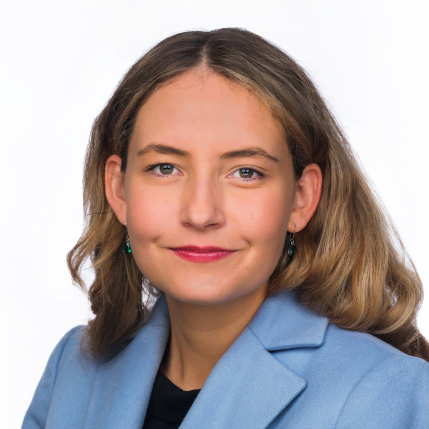
Grace Wankelman
Social Media Officer
Social Media Officer
Author, At the Tide’s Mercy: Voices from the Marshallese Exodus
NTI’s “Young Voices” series reflects NTI’s commitment to uplift a range of voices and ideas, help break down stereotypes that contribute to generational divides on security, and give a platform to young people to share creative ideas that address the evolving risks posed by nuclear, biological, and emerging technology threats.
Angela Guo is a high school student from Hong Kong currently studying at Phillips Academy Andover. She has spent the past year researching the impacts of nuclear testing on the Marshall Islands and recently published her first book, “At the Tide’s Mercy: Voices from the Marshallese Exodus”. The book tells a story of what it means to inherit a homeland remade by another nation’s weapons.
NTI social media officer Grace Wankelman spoke with Angela to discuss her research and how to engage younger generations in this work. This interview has been edited for length and clarity.
Thank you so much. I would say my interests began quite personally, and there are a few experiences that I can call back to. My family was my earliest influence. Some of my relatives do business in the Marshall Islands. So, growing up, I would overhear them talk about the country’s history and the way that people live there. Those were the memories that really stuck with me. I began with a desire to help more people encounter the Marshallese story. Going beyond political documents and scientific reports, and instead through the voices of the people, that was the starting point.
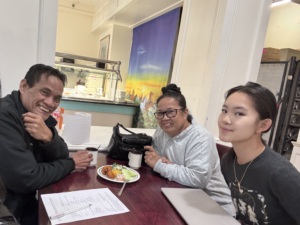 I did most of the research in the time that I had between school terms. I began in May of 2025. I did fieldwork in Majuro, the capital of the Marshall Islands, in July and August. During my spring break in March 2026, I did some additional fieldwork in Seattle.
I came away with 145 survey responses and 19 extended interviews. From those interviews, I chose 10 subjects for my book to focus on.
The surveys asked a range of questions related to contemporary Marshallese life. This included economic prospects, health care, the sustainability of their culture, as well as the nuclear legacy of the islands. Their lives reveal a rich history. It’s more complex and nuanced compared to only looking at this history through numbers or news stories.
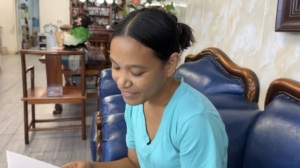
I think it’s important that readers pay closer attention to the economic and environmental circumstances surrounding these smaller island countries and how that connects to their nuclear legacy.
There are a lot of stories in the book talking about how, because the Marshall Islands have such a shortage of specialized medical care, many people go to the U.S. for treatment and then they just end up staying. These are some of the long-lasting consequences of these decisions. I hope the book can encourage thoughts about how these powerful technologies are harnessed and how global security can be improved.
There are a range of people that I talked to for the book, and it got me thinking about how different generations might encounter this topic. I would say my generation, in general, does care, but it’s not something we discuss every day. More immediate problems plaguing society tend to get more focus. I think some people see it as administrative or highly technical and feel individual students have little influence on the issue.
A lot of my classmates know about Hiroshima, but I would say relatively few know about how the U.S. conducted nuclear tests in the Pacific. This isn’t really something that’s talked about in U.S. history textbooks either.
However, a lack of conversation doesn’t mean that people are not concerned.
Education is an important aspect. The history of the United States is very expansive, but I think the history of nuclear testing and nuclear war, and especially the experiences of the communities that were directly affected by this, should surface more regularly in school curricula.
I also think a way of demystifying the issue is to connect nuclear risk to other issues that younger generations are more plugged into.
Amplifying youth voices is also important. People are often more open when someone from their generation or community shares their stories in their own language and style. In my research, I found a young Marshallese poet who uses poetry and storytelling to speak about nuclear trauma to audiences globally. The Marshallese Educational Initiative has also brought young Marshallese people’s artwork to the UN and Times Square. Their efforts are already succeeding and could be expanded.
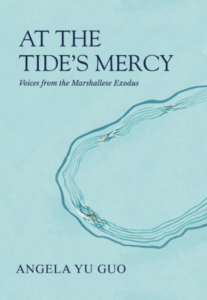
One of my favorite things to do is to make digital art. I’m taking a course at school right now
that’s a year-long independent studio art course, and it’s really fun!
I actually designed the cover of my book. It’s a ring-shaped atoll, overlaid on a blue expanse which represents the sea. I thought about the symbolism. The ring shape is also like an ocean current. It implies the book’s subject matter, with the people who are swept by the currents of history and forced to disperse. I added a detail of three points of connection, or intertwined threads, that represent the communities that Marshallese migrants have rebuilt far from home, but also their commitment to their cultural heritage.
Sign up for our newsletter to get the latest on nuclear and biological threats.
If you want to learn more about Oppenheimer’s bomb and what we must do to protect the world today and for future generations, NTI’s online library is the perfect place to go.
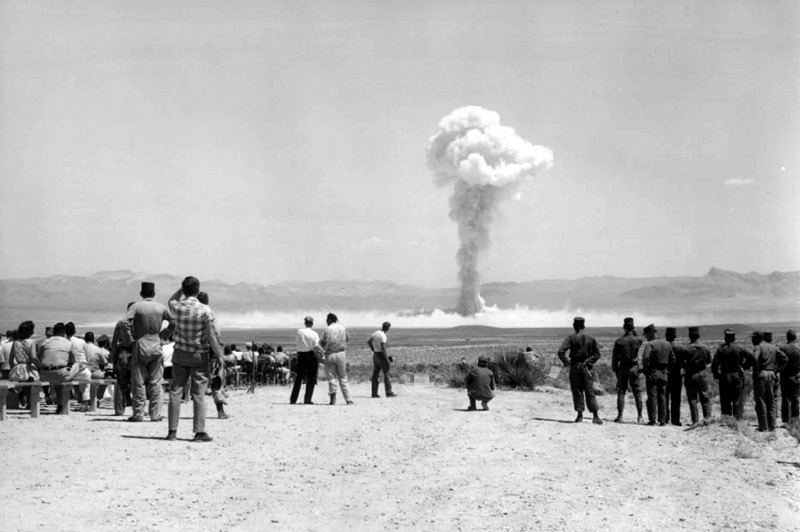
In recent months, the Trump administration appears to have been flirting with a return to underground nuclear weapons testing, a decision that could have serious environmental and security implications.
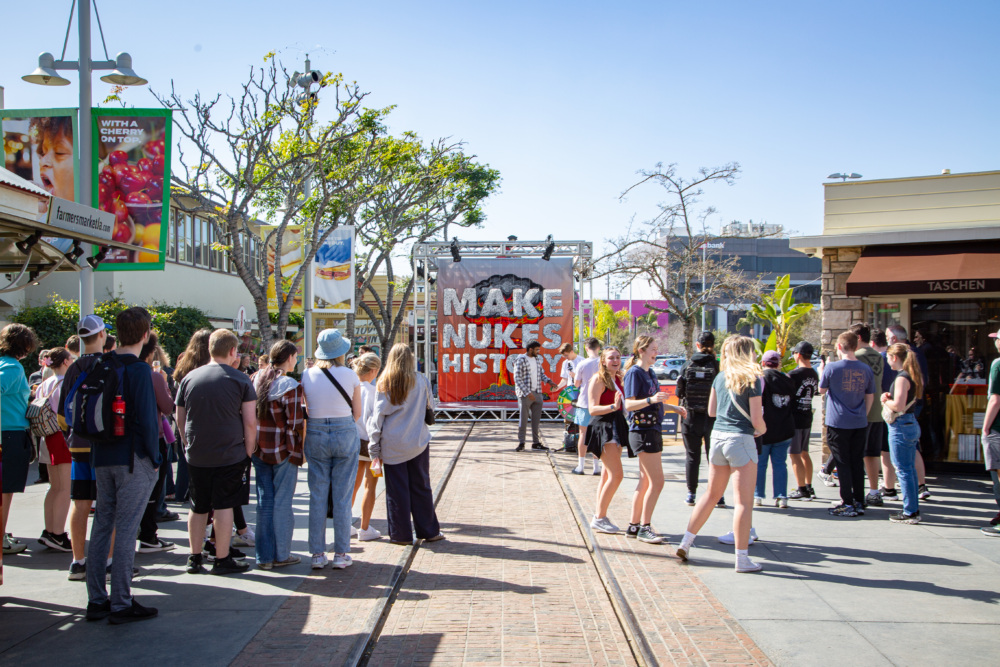
August 29 is the International Day Against Nuclear Tests—a time to recognize the devastating toll of nuclear weapons tests and to recommit to a future without them.
Sign up for regular updates on innovative, real-world solutions to existential threats.