
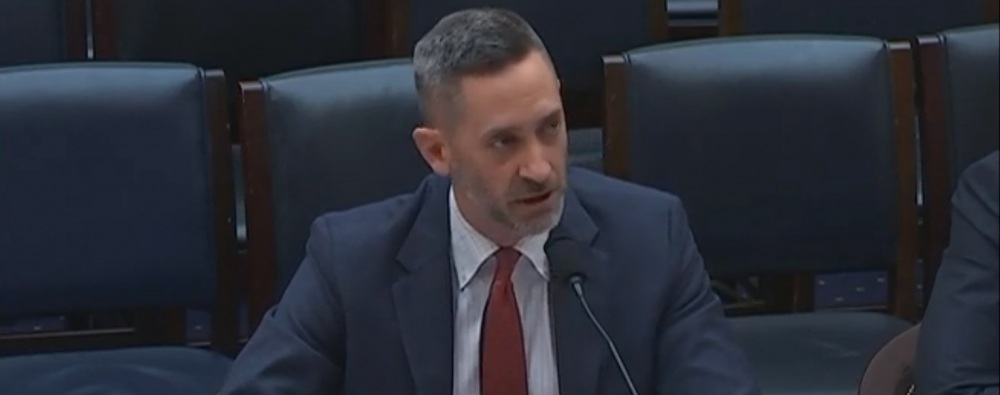
Richard Johnson, Senior Director for Fuel Cycle and Verification at NTI, testified before the House Foreign Affairs Committee regarding the Treaty on the Nonproliferation of Nuclear Weapons (NPT) on Tuesday.
Johnson argued that the NPT has been the cornerstone of the nuclear nonproliferation regime but that it is currently “under strain” due, in part, to growing frustration among the non-nuclear weapon states about the
perceived slow pace of nuclear disarmament. He noted that North Korea and Iran are
clear exceptions that provide lessons for how to strengthen the treaty’s
implementation.
You can watch the full testimony below, or read the remarks here.
The NPT is a multilateral treaty aimed at limiting the spread of nuclear
weapons including three elements: (1) non-proliferation, (2)
disarmament, and (3) peaceful use of nuclear energy. These elements
constitute a “grand bargain” between the five nuclear weapon states and
the non-nuclear weapon states.
Sign up for our newsletter to get the latest on nuclear and biological threats.

New START, the last remaining arms control treaty capping U.S. and Russian nuclear arsenals, expires on February 5. This marks the beginning of a dangerous new era. For the first time in several decades, there will be no limits on nuclear weapons, less visibility into Russian nuclear weapons activities, and fewer tools to manage a crisis between the world’s two largest nuclear powers.

NTI encourages the United States and the Russian Federation to continue to abide by New START’s limits on intercontinental-range nuclear weapons past its scheduled expiration on February 5, 2026.

Participants examined how NWFZs can be productive geopolitical tools amid mounting challenges, including great power competition, disruptive technologies, and a weakening global nonproliferation and disarmament architecture.
Sign up for regular updates on innovative, real-world solutions to existential threats.