Minimizing Weapons-Usable Nuclear Material: A Nuclear Security Success Story Still in Progress
One of the most significant achievements in reducing the risk of nuclear terrorism over the past two decades is something that rarely makes headlines.
Here we highlight the work of NTI and share knowledge, ideas, and viewpoints addressing the crosscutting challenges our world faces—addressing risks while supporting innovation—to make our world safer.
One of the most significant achievements in reducing the risk of nuclear terrorism over the past two decades is something that rarely makes headlines.
Sign up for our newsletter to get the latest on nuclear and biological threats.
In a political climate that feels more divided than ever, it seems nearly impossible to agree on anything—except, as it turns out, arms control. A YouGov poll commissioned by NTI and ReThink Media found that 91 percent of Americans support capping U.S. and Russian nuclear arsenals, including 89 percent of Trump voters.
By revamping its strategy, the United States can help build a safer future and prevent a new wave of proliferation.
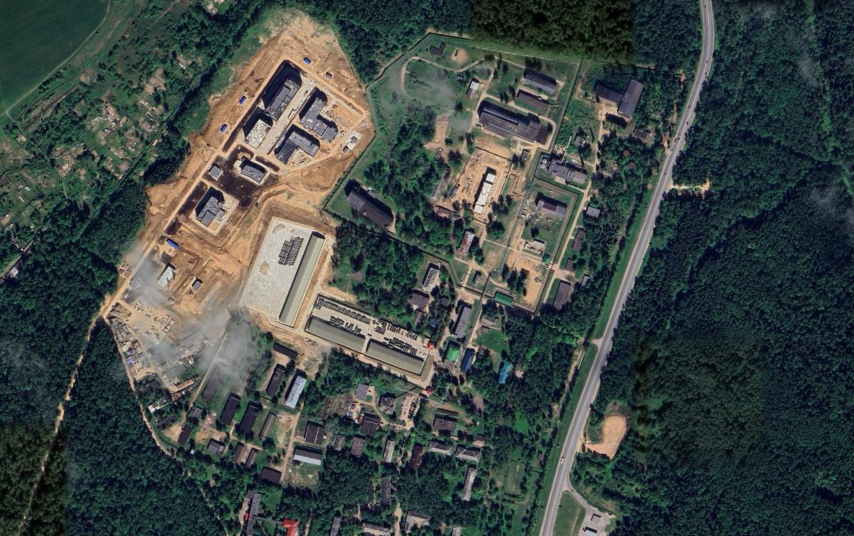
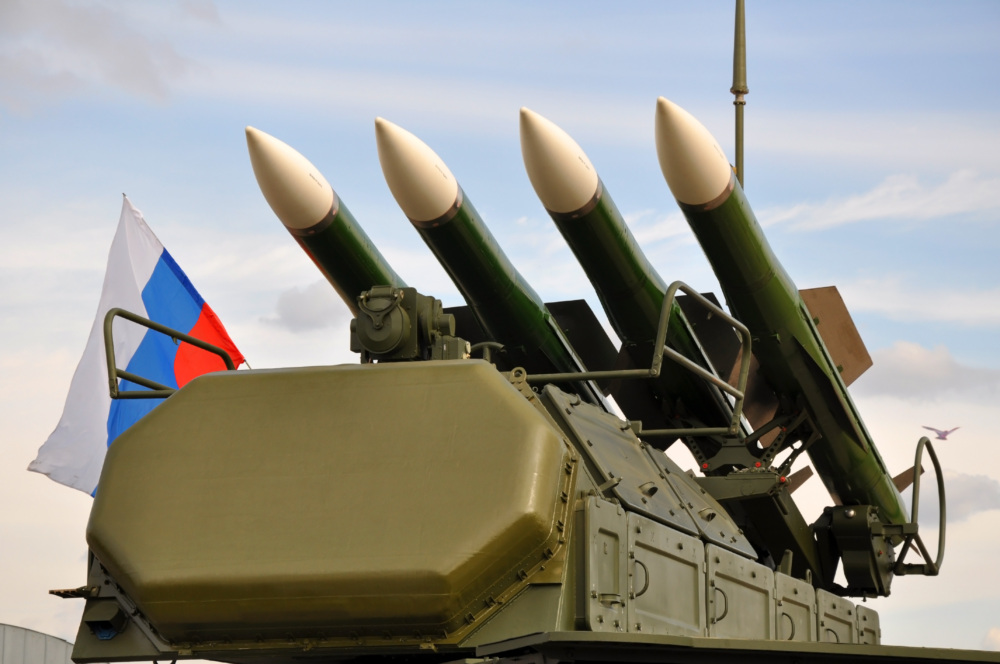
The Washington Post’s chilling report on major activity at a former bioweapons research site where the Soviets once weaponized biological agents — including ones that cause Smallpox, Ebola, and other hemorrhagic fevers — is another dangerous development potentially related to Russia’s war on Ukraine.
What does the future hold for Ukraine’s survival, Putin’s grip on power, and the shape of the international order?
Putin’s announcement is a significant blow to the last remaining strategic arms control agreement between the world’s two largest nuclear powers and to the fraying Euro-Atlantic security architecture more broadly.
In an NTI seminar, Dr. Gregory Koblentz explored how Russia seeds the ground with disinformation to create doubt around Ukrainian laboratories and outlined solutions for how the world can prepare for and prevent this sort of dangerous diversion in the future.
Vladimir Putin’s invasion of Ukraine is a prime example of a regional conflict that could inadvertently escalate beyond any of the protagonists’ expectations. History is replete with similar instances of humanity stumbling into devastating conflict.
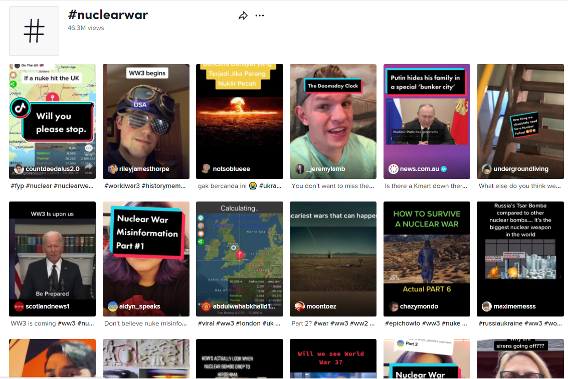
Russia’s war in Ukraine may be playing out in far-away cities, but social media platforms like TikTok and Twitter are bringing the dangers home for people all over the world.
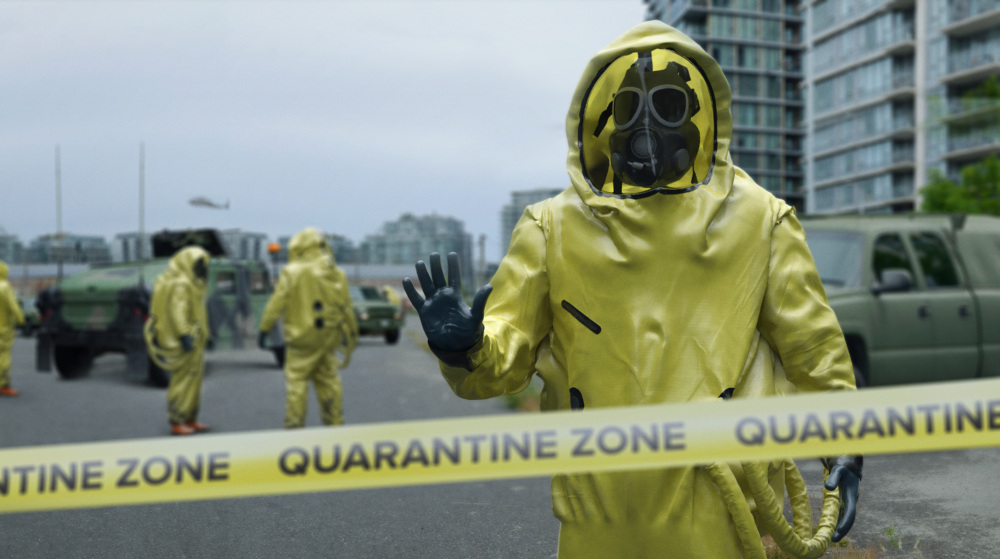
The Russian invasion of Ukraine has exacted a terrible toll with hundreds of civilians confirmed dead. The number could climb precipitously if biological or chemical weapons were introduced to the warzone, as the U.S. and UK governments have warned. Russian propaganda networks have been laying the groundwork to justify such an attack for years and this propaganda has recently been parroted by some U.S. news media outlets, further inflaming tensions and mainstreaming lies. This is dangerous and must stop.
Nickolas Roth, senior director for NTI’s Nuclear Materials Security program, explains what happened at the Zaporizhzhia nuclear power plant that terrifying night, what could have happened, and what the long-term implications are for nuclear security and nonproliferation efforts around the world.
Senior Director, Communications
Director, Communications
Sign up for regular updates on innovative, real-world solutions to existential threats.
{ location = 'https://www.nti.org/get-updates/' }, 300);">Get Updates