

Rachel Staley Grant
Senior Director, Global Biological Policy and Programs
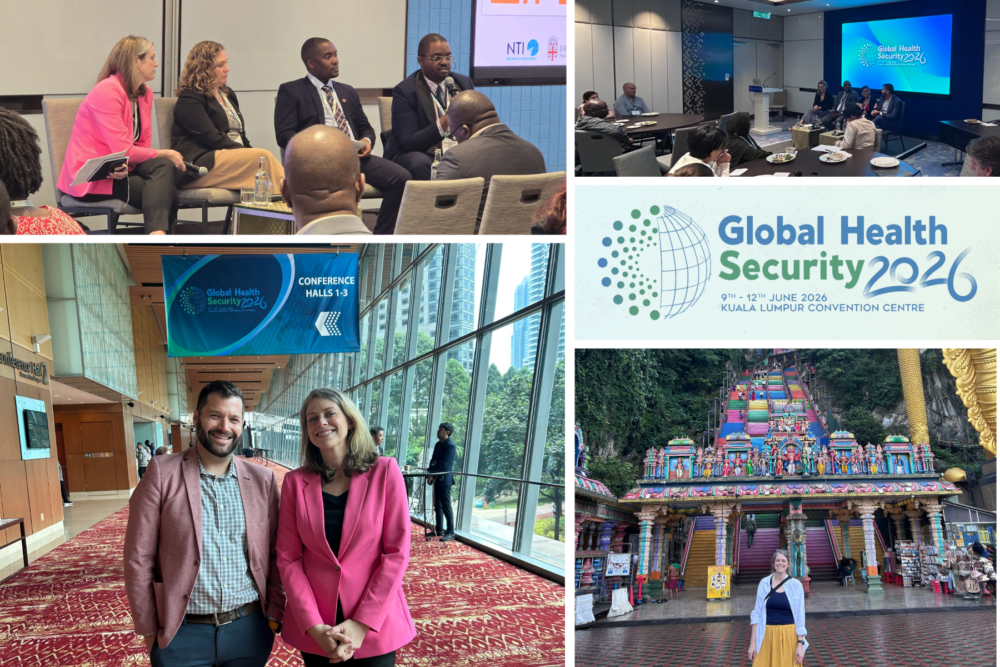
I arrived in Kuala Lumpur equal parts energized and jet-lagged. The humidity hit me first, and my hair was frizzed before I cleared customs (and it’s a shame my hair straightener didn’t make it through security). 
After 32 hours of travel plus a quick trip to the Batu Caves with David Stiefel (300 colorful steps, temples, plus monkeys, roosters, and bats), I joined more than 1,200 global health security experts and policy leaders for the 2026 Global Health Security Conference. Right from the start, participants leaned in—engaged, connected, and ready to do the work.
Increasing threats, fewer financial resources
Convening under the shadow of the Bundibugyo Ebola outbreak in the Democratic Republic of the Congo was a real-time reminder of what’s at stake. The message from the outset was sobering. Without proper plans for prevention, countries continue a cycle of panic, scrambling for resources only after a crisis hits.
The threat landscape is expanding. Naturally occurring outbreaks remain frequent and are coupled with deliberate threats, rapid advances in biotechnology, and the growing ability to engineer pathogens. And yet, the funding necessary to keep us safe and healthy is disappearing. This paradox surfaced repeatedly: more risk, fewer resources. Prevention, often described as foundational and the most effective investment to address health threats, remains underprioritized. Response capacities are just as critical, but by the time the world is responding to an epidemic or pandemic, systems have already failed.
No country, no institution, can manage these threats alone
One consistent takeaway from my conference experience was the notion that multisectoral collaboration is a fundamental requirement for stronger health security.
 This was a running theme during a lunch session organized by NTI, Beyond Silos: Bridging Health and Security in an Era of Shifting Threats and Investments. The discussion revealed that while concepts like One Health are widely embraced in theory, they are still incomplete in practice. Human and animal health, agriculture, environment, and defense sectors and governing bodies are increasingly interconnected. They overlap in ways that are now impossible to ignore, but rarely do they function together. Some sectors are often overlooked, left out, or operate on their own, but it’s important to bring all relevant actors to the table as equal partners and recognize unique perspectives and advantages that can help solve shared problems.
Cross-sector systems can often operate informally through trusted relationships. Sometimes it is more important to strengthen existing channels than to build new solutions. Even more critically, we need to recognize communities are central actors for health security, not just recipients of response.
AI changes the game, but not the fundamentals
Artificial intelligence was present in nearly every conversation I had. It has profound potential to accelerate vaccine development, strengthen surveillance, and enable early detection of outbreaks.
But AI is a tool, not a solution. It can compress timelines and expand capabilities, but it can also introduce new risks. The same technologies that enable rapid innovation can also lower barriers to misuse, and technology development is outpacing governance. Systems must be built with safeguards, managed access, and an understanding of real-world use.
At the same time, the value of AI (or any innovation), depends on whether it reaches and works for those most at risk, and if it can address vulnerabilities that may occur in under-resourced areas. Systems that fail to function in fragile and constrained environments are not just inequitable, they are ineffective. Tools are being built faster, smarter, and more securely, but they also need to work and reach where the risk is greatest.
Partnerships are the most important enabler of success
The importance of partnership was also a central throughline of the conference. During discussions, progress across this field was often linked to the strength of relationships, ongoing communication, mutual respect, and familiarity among partners. These relationships allow for faster problem-solving, greater flexibility, and more effective coordination.
 This felt personal during our panel, Previewing the 2026 Africa Health Security Index: Transforming Health Security Through Data. It was a privilege to join partners from the Brown University Pandemic Center and collaborators from our Africa Health Security (AHS) Index Reference Group to reflect on how the AHS Index is shaped through collaboration with African public health leaders, technical experts, and sustained dialogue across institutions. Our ambition with the index is to provide data that decisionmakers can use to strengthen preparedness, allocate resources, and track progress.
In particular, the insights from Peter Babigumira Ahabwe and Ian Peter Busuulwa underscored both the promise of the AHS Index and the importance of continued engagement with stakeholders across the continent. Their emphasis on feedback, usability, and policy relevance captured exactly what this effort aims to achieve.
We look forward to releasing the Index next month.
What comes next
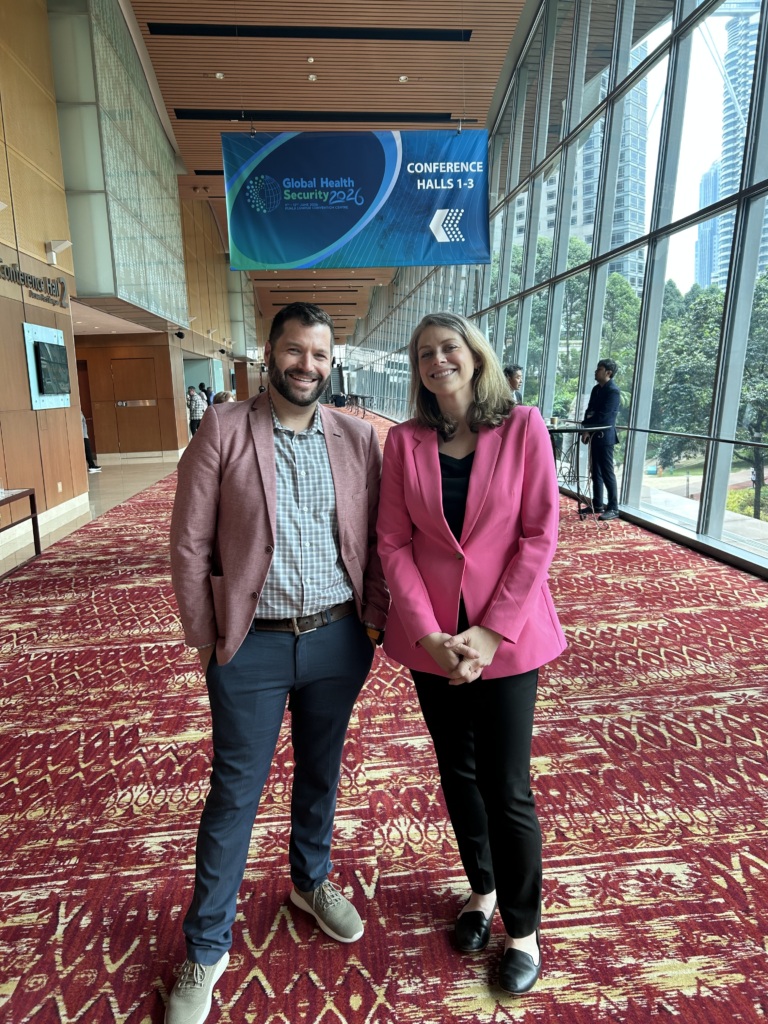
There are many elements that need to come together to strengthen global health security: stronger partnerships, increased investment, and better systems. The work is complex and constraints are real, but so is the collective commitment in this field. (And speaking of commitment, David Stiefel deserves special mention. If a panel was happening, chances were he was moderating it.)
Global health security should not be defined by the crises we respond to, but by the ones we prevent together.
Sign up for our newsletter to get the latest on nuclear and biological threats.

As NTI celebrates 25 years of impact, we remain committed to reducing the risks of accidental release and deliberate misuse of life science innovations, strengthening global biosecurity, and guiding efforts to govern emerging technologies.

The policy challenge ahead is ensuring that safeguards, governance frameworks, and security practices continue to responsibly scale alongside the technology. If they do, society can capture AI's enormous benefits while keeping emerging risks firmly under control.

The AI-biology convergence offers enormous benefits but also brings about risks as we’ve never seen before. Without action from multiple disciplines, the race for AI development and dominance could become a race to the bottom when it comes to safety and security.
Sign up for regular updates on innovative, real-world solutions to existential threats.