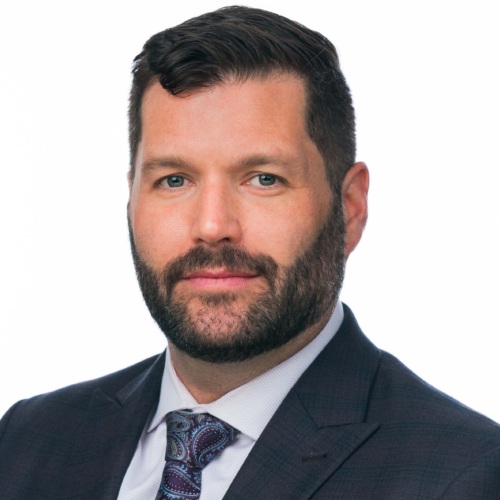
About the image
David Stiefel serves as a Director for NTI’s Global Biological Policy and Programs team (NTI | bio). Stiefel joined NTI in 2024 having previously held various roles at the White House and U.S. Department of Agriculture. He spoke with NTI’s Communications Intern Cristina Panaguta about his work in biosecurity and creative pursuits. The interview has been edited for length and clarity.
Cristina Panaguta: Before entering the field of biodefense, you toured full-time in a band; there was even some billboard success. What was that experience like, and how did you pivot from music to national security work?
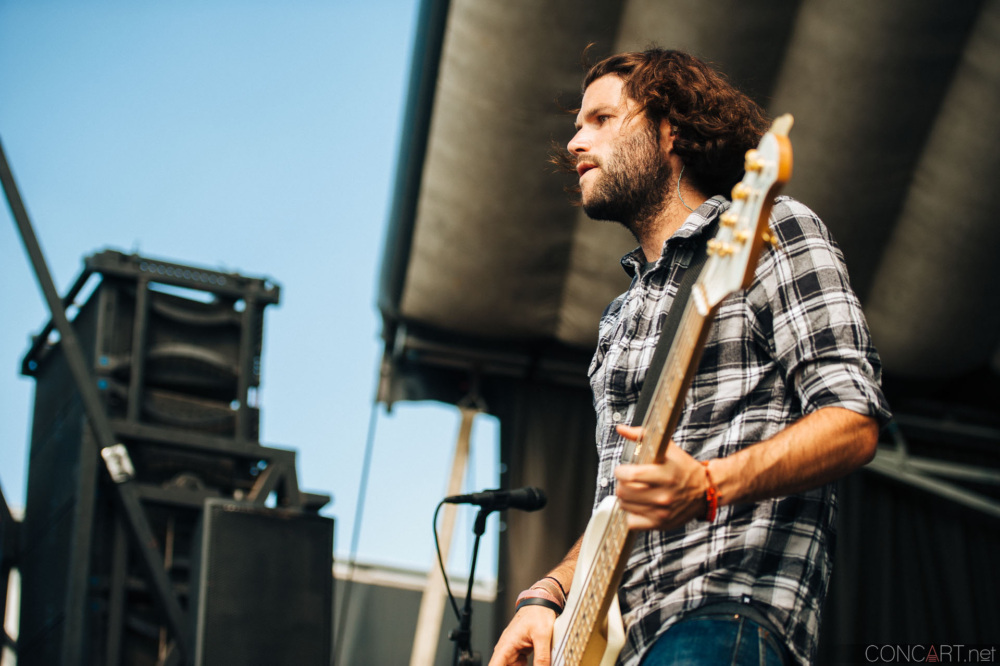
David Stiefel: During my undergrad, I joined a band that started performing locally and eventually toured nationally. As we gained momentum—even being on stage with bands like Alice in Chains and Jane’s Addiction—I left my full-time job to tour full-time for six years. It was surreal sharing the stage with artists I grew up idolizing, living on little money but having the time of my life. We stayed independent and unsigned but eventually hit a wall. We trusted the wrong person and had to pause touring. After that, I applied to several master’s programs, deciding I’d pursue whichever accepted me. I ended up starting two, but one was clearly a better fit, and I’ve been working in biodefense ever since.
CP: You’re currently pursuing a PhD with a research focus on the biological weapons taboo. I’m curious what drew you to this topic and how your research informs your work at NTI?
DS: My academic curiosity eventually led me to the intersection of political science and biology. As the field of bioweapons remains under researched, I saw an opportunity to contribute to an area with limited literature.
Currently, the NTI | bio team is working on a project called Disincentivizing Bioweapons, which focuses on making the development and use of bioweapons unattractive. This can be approached through different strategies such as emphasizing that bioweapons have no critical value, attributing the use of bioweapons to the user and enforcing the consequential nature of their use, and establishing their development as taboo. This work aligns closely with the research and programs led by NTI. Now, I just need to finish my dissertation!
CP: What are some other projects that you’re currently working on?
DS: We work on strengthening biosecurity in Southeast Asia, particularly in developing strategies to prevent both the deliberate misuse and accidental release of biological agents.
There’s been a lot of discussion around the 50th anniversary of the Biological Weapons Convention (BWC) and how to reinforce its effectiveness. The Ninth Review Conference initiated a broader evaluation of efforts by States Parties to uphold and advance the Convention. Our role is to support these efforts by identifying practical options they can implement—such as pilot projects that demonstrate actionable steps both within and outside the UN system.
These pilot initiatives aim to build trust in biological research, increase the opportunity cost of developing biological weapons, and promote transparency. Transparency plays a key role in countering misinformation. If we can successfully pilot these concepts and show proof of concept, it could lower the barrier for adoption—whether by the UN, individual States Parties, or the private sector.
CP: You recently wrote a piece for USA Today about the biological security threats facing U.S. agriculture. You mentioned that agriculture biosecurity programs are significantly underfunded compared to their public health counterparts. Why do you think that is the case?
DS: It’s all about what grabs public and political attention. Imagine the front page of The Washington Post showing three images: a sick child, a cow with a runny nose, and a wilting plant. The child is going to get the most emotional response. Yet, it’s more difficult to tell a compelling story around plant diseases or livestock infections, even though the economic and food security implications are enormous.
In America, we largely take food for granted. The U.S. is a major agricultural powerhouse—we produce so much food that our food waste levels are staggering. And because of that abundance, it’s hard for lawmakers to grasp just how vulnerable we could be.
Agricultural incidents can have enormous economic impacts. Just one pig infected with African Swine Fever could cost an estimated $50 billion in losses. So, there is a case to be made, and there are real-world examples that demonstrate the risks. But it’s up to us to make those stories resonate—to show that food security is national security.
CP: With everything you have going on professionally, do you still find time to play music or explore other creative outlets?
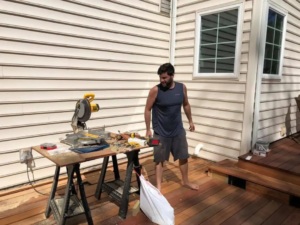
DS: My band was supposed to put a new album out, and we were scheduled to go into the studio in March 2020. By the time the pandemic eased, I had started working at the White House. Later, I had another baby. Nowadays, my lead singer lives in Florida, while the drummer is in Denver. If I were to do music, I’d want to do it right. But these days, with a full-time job and teaching at two universities, I carve out time for woodworking. When I was at the White House, I used to handcraft cutting boards as goodbye gifts, engraved with names and titles. I also love cooking—anything that lets me work with my hands.
Sign up for our newsletter to get the latest on nuclear and biological threats.
In a world where motivated actors can use biological AI tools to evade DNA synthesis screening, how can DNA providers be more confident that the sequences they assemble and ship are safe? Google DeepMind’s biosecurity and provenance teams have developed SynthID Bio, a technical proof-of-concept for watermarking AI-generated protein sequences and structures without degrading their function.
The Trump and Xi summit today may offer an opportunity to begin filling the leadership vacuum on AI advances, especially with respect to bioweapons. If the reports from AI companies are correct, it’s imperative that Presidents Trump and Xi start this work now.
Africa’s experience shows why climate change and health cannot be separated. A One Health approach is essential to managing growing risks at the intersection of people, animals, and the environment.
Sign up for regular updates on innovative, real-world solutions to existential threats.