

Grace Wankelman
Social Media Officer
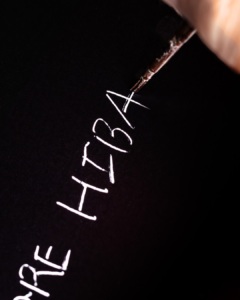
Kei Ito is the grandson of a Hiroshima atomic bomb survivor, and his interdisciplinary art explores the legacy of that trauma through themes of memory, identity, and the invisible impacts of nuclear war. NTI’s Grace Wankelman connected with Ito to discuss a powerful new piece of art he created for this year’s #CranesForOurFuture campaign.
Grace Wankelman: You have mentioned how your work is rooted in the trauma and legacy passed down from your late grandfather, a survivor of the atomic bombing of Hiroshima, and the loss of many other family members from the explosion and subsequent radiation poisoning. Can you share how you came to use art as a way to process such memories, and the impact this has had on your work?
Kei Ito: My journey with art began as a deeply personal and visceral response to an inherited silence. My grandfather was a survivor of the Hiroshima atomic bombing, and while he spoke publicly around the world as a representative of the Hibakusha community and a passionate peace activist, there was still a quietness surrounding those memories within our family. Having spent half of my life in the U.S., I often felt caught between cultures—carrying the weight of an unspoken history that was both distant and intimately mine. That silence, though unarticulated, shaped me. Art became the space where I could begin to process these complex emotions—grief, memory, longing, and resilience—through a language beyond words.
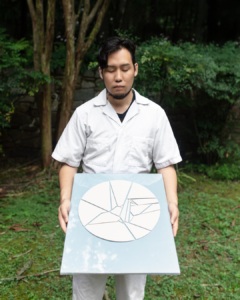 The unique cameraless photographic process I use—exposing light-sensitive paper to sunlight and timing the exposure with the rhythm of my breath—was deeply inspired by something my grandfather once said in his testimony: that “hundreds of suns lit up the sky” at the moment of the bombing. That metaphor stayed with me, and I’ve sought to reclaim that blinding flash of destruction by using the same light—the sun—as a creative force rather than a destructive one.
The physicality of this process connects the impermanence of breath and light with the ephemeral yet enduring nature of memory and loss. Each work becomes a quiet meditation on absence and presence, on what has vanished and what still lingers.
But alongside inherited trauma, my grandfather also passed down a powerful sense of hope. Through his activism—his speeches at the United Nations, his involvement with Hidankyo, and his lifelong dedication to nuclear disarmament—I came to understand that remembrance and resistance are acts of love. His life gave me a foundational belief in the possibility of peace—not as an abstract concept, but as a real, tangible pursuit shaped by compassion, persistence, and storytelling.
My practice is rooted in that dual inheritance: the shadow of what was lost, and the light of what could still be. That tension continues to shape both the emotional and visual language of my work.
GW: Can you walk us through how you approached this piece and explain the symbolism you used?
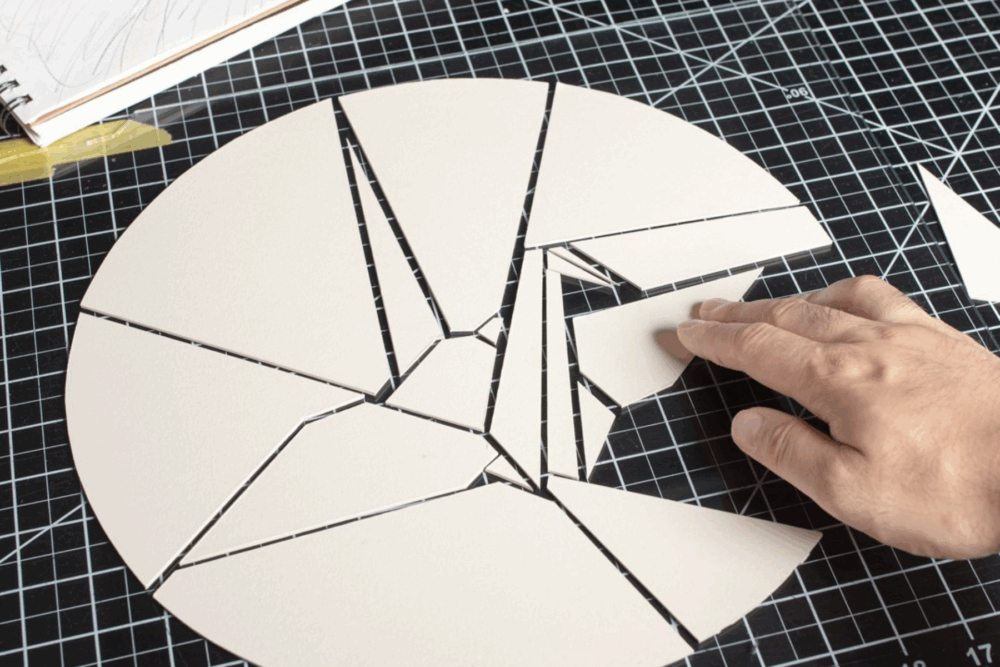
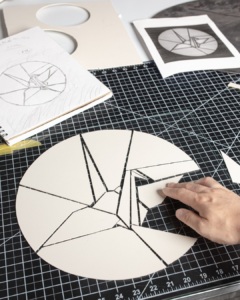 KI: My approach to a piece often begins through conversations—meeting people, listening to their stories, and connecting with lived experiences. One of the most profound recent inspirations came from my trip to Japan this year, where I had the honor of meeting the main members of Hidankyo (被団協) and Toyukai(東友会), including Terumi Tanaka, who spoke at the Nobel Peace Prize ceremony this year. Many of these individuals were close friends of my late grandfather, and speaking with them felt like continuing a dialogue that began long before I was born. During these conversations, I was struck not only by their words but also by the symbols they carried—especially the iconic Hidankyo Crane Pin, a quiet but powerful emblem of peace, and the glint of the Nobel Peace Prize medal. These visual elements—steeped in history, resilience, and hope—inspired symbolic forms within this work.
I often incorporate motifs like these into cameraless photographic processes, using sunlight to expose paper for the duration of my breath. The sun, for me, is both life-giving and destructive—a metaphor that echoes the blinding flash of the atomic bomb and the warmth of collective memory. In harnessing this duality, I aim not for spectacle, but for reflection—an invitation to sit with history, with grief, and with the persistence of hope.
GW: What is the impact you would like this piece to have?
KI: I hope this piece fosters a sense of shared humanity across time, geography, and ideology. The nuclear narrative is often seen as limited to Japan, centered solely on the bombings of Hiroshima and Nagasaki. But nuclear violence is a global issue—with deep and ongoing consequences that extend far beyond those two cities. Through my work, I want to expand this narrative to include American Downwinders, Navajo uranium miners, Pacific Island Downwinders, and many others whose lives have been shaped by nuclear testing, extraction, contamination, and political neglect.
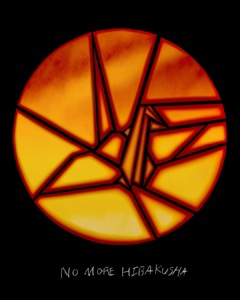 By weaving together these fragmented histories, I hope this piece will generate empathy and connection—helping viewers confront uncomfortable truths while also recognizing the shared burdens carried by communities across the world. Ultimately, if someone walks away with a more expansive awareness of the state of our current world—or even just a quiet moment of reflection—I feel the piece has done its work.
GW: Why is art an important tool to drive social change? What role do you feel art has played in sharing the lessons we can take away from the horrors of Hiroshima and Nagasaki?
KI: I believe art is a space where personal stories can connect with larger collective experiences. Through that connection, we can begin to approach global-scale issues in a way that feels intimate and human. My own work often starts with a personal narrative—my grandfather’s experience as a Hiroshima survivor and my own experience as a third generation A-bomb victim have lived in the US for half of my life, for example—but it’s through art that this story finds resonance with others and becomes part of a broader conversation.
Art allows us to feel history rather than just observe it. It has the power to translate complex and overwhelming subjects—like nuclear violence—into something we can hold, reflect on, and respond to. By grounding global issues in individual memory and emotion, art creates a pathway for empathy, awareness, and, ultimately, dialogue across communities and generations.
Social change doesn’t happen solely through facts; it requires shifts in empathy and imagination. Art can open those emotional and imaginative pathways in ways that policy or protest alone sometimes can’t.
GW: When certain threats feel so existential, what gives you hope?
KI: What gives me hope is the act of remembering itself. Every time someone engages with my work—whether they’re a young student, a historian, or someone with no prior knowledge—I feel a small disruption in the forgetting that often surrounds these histories. I also find hope in the community—in the solidarity among artists, survivors, and activists who continue to fight for a world free of nuclear weapons and environmental violence. The fact that people still care, still resist, and still create—that gives me hope.
Join others around the world August 6–9 to call for peace by sharing a paper crane on social media and go to CranesForOurFuture.com to learn more.
Sign up for our newsletter to get the latest on nuclear and biological threats.
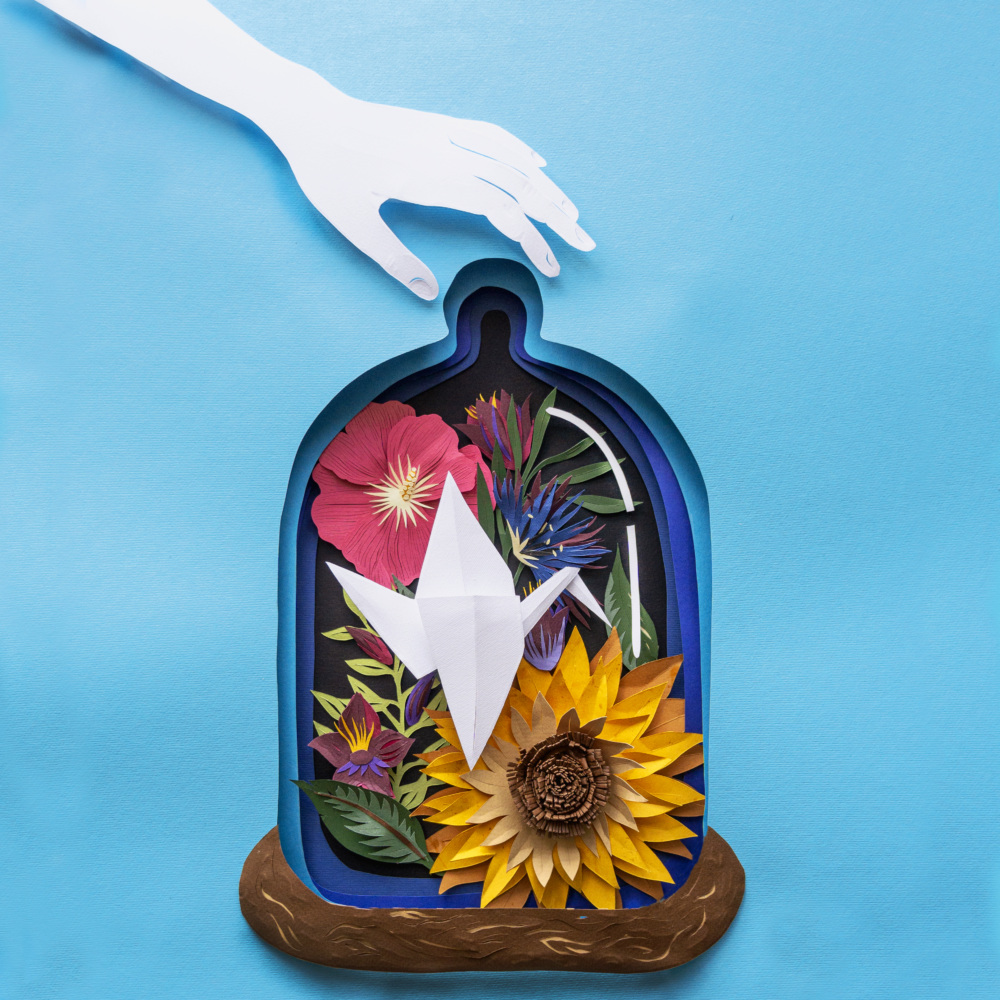
Eugenia Zoloto is a Ukrainian artist who specializes in paper cutting, collages, and illustrations, in addition to working with oil paints and mixed mediums. She lives in Kyiv with her husband and two children and is participating in the 2023 #CranesForOurFuture campaign by contributing a beautiful floral sculpture featuring an origami crane.
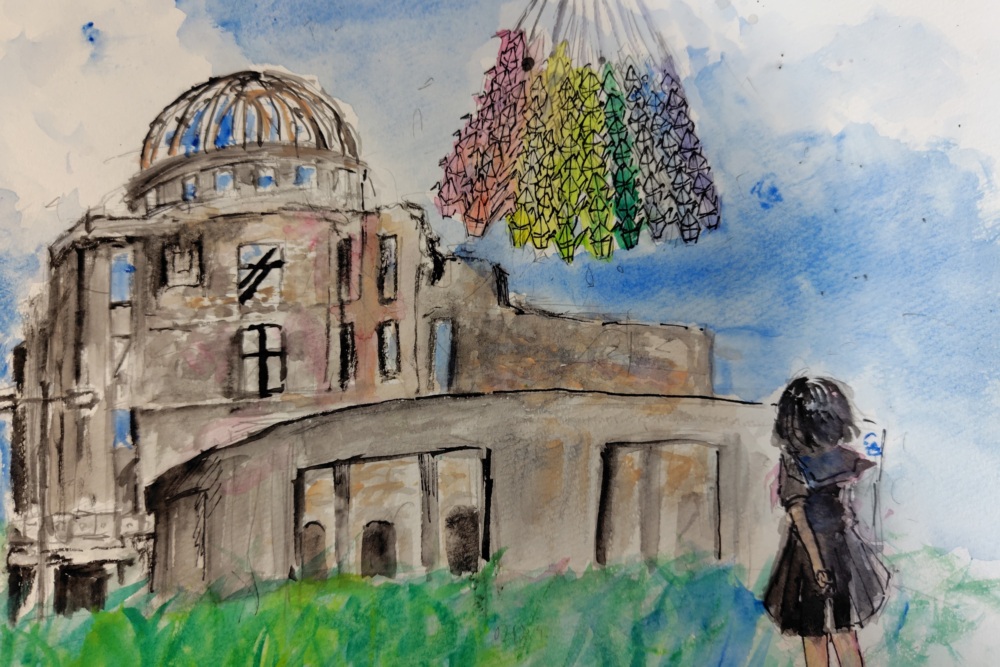
NTI’s Hiroshima and Nagasaki commemoration activities this year centered on the theme of passing the torch to the next generation. The result was an intergenerational connection reflected in two artists: 88-year-old Hiroshima survivor Toshiko Tanaka, and 13-year-old painter Kotone.
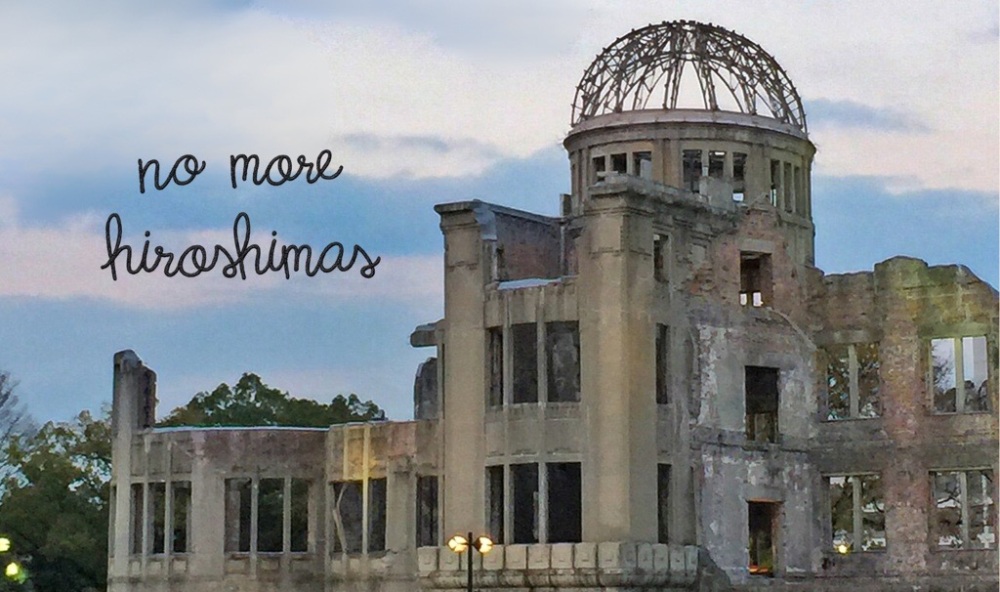
On the morning of August 6, 1945, in Hiroshima, Japan, parents shared breakfast with their children and sent them off to school. Some never came home. NTI is commemorating Hiroshima and Nagasaki through a series of activities that encourage remembrance, reflection, and wider awareness.
Sign up for regular updates on innovative, real-world solutions to existential threats.