

Elise Rowan
Deputy Vice President, Communications
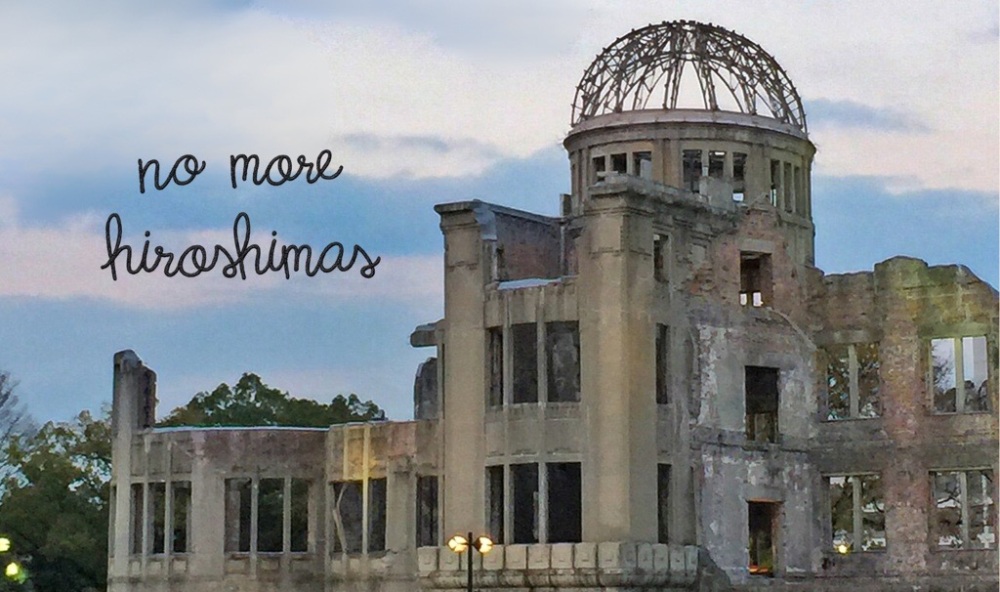
On the morning of August 6, 1945, in Hiroshima, Japan, parents shared breakfast with their children and sent them off to school. Some never came home.
As a mom, that’s what comes to mind when I think of Hiroshima and Nagasaki. More than 80 years after the atomic bombings, we still live in a world where this could happen—because of a miscalculation, an accident, or an act of war.
We can’t let it happen again.
For us at NTI, August 6 is a day of remembrance and reflection. We remember the victims and survivors—many who have bravely told their stories repeatedly so that people never forget the human toll of nuclear weapons. It’s also a day of reflection. It’s a day to consider the world we live in, the one we want to build, and the one we want to leave for future generations.
It’s also a day to bring others into the movement—disrupting social feeds with reminders of what happened to real people on August 6 and 9, 1945 and what could happen again (at a frighteningly larger scale) if we look away.
NTI is commemorating Hiroshima and Nagasaki through a series of activities that encourage remembrance, reflection, and wider awareness.
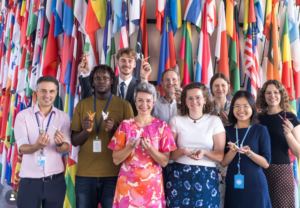
The Cranes for Our Future campaign took flight again this year, inspired by Sadako Sasaki, the young girl who survived the
Hiroshima bombing and went on to fold more than 1,000 origami cranes while battling radiation-induced leukemia. In partnership with the prefectures of Hiroshima and Nagasaki, we encourage participants to fold cranes in her honor as a symbol of peace and hope for a safer world.
This year’s campaign had young 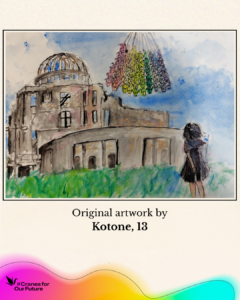 artists at the center. Kotone, 13, won our first-ever Cranes Art Contest, with a beautiful piece that conveys the despair of a child witnessing the horror of nuclear weapons and hope for a brighter future. Runners up Olivine, 8, and Nicole, 17, impressed us with their submissions, “Nature” and “Flight!” respectively. Kids from around the world submitted their take on the origami crane as a symbol of hope and peace, and we were flooded with paintings, sculptures, mixed media creations, and digital masterpieces. Truly the embodiment of hope.
We launched a collaboration with Lingua Franca, a New York-based socially conscious fashion brand. This collab has been on my personal vision board since we at NTI’s Critical Mass project first asked, “How do we make caring about nuclear weapons cool?” The “No More Hiroshimas” collection honors the lives lost and forever changed by the atom ic bombings in Hiroshima and Nagasaki. A sweater is on its way to Hiroshima to its new owner and our model for the collaboration, an 88-year-old survivor.
The collaboration includes partnerships with celebrities like Lisa Rinna and Alan Cumming who leaned into their own personal brands to share what they think about nuclear weapons on this dark day.
This work is a reminder that humor, heart, art, culture, and creativity should all have a spot at the table when we remember what’s at stake: our one precious world, all of its children, and the risks we face when we ignore lessons of the past.
No more Hiroshimas. Let Nagasaki be the last.
Sign up for our newsletter to get the latest on nuclear and biological threats.
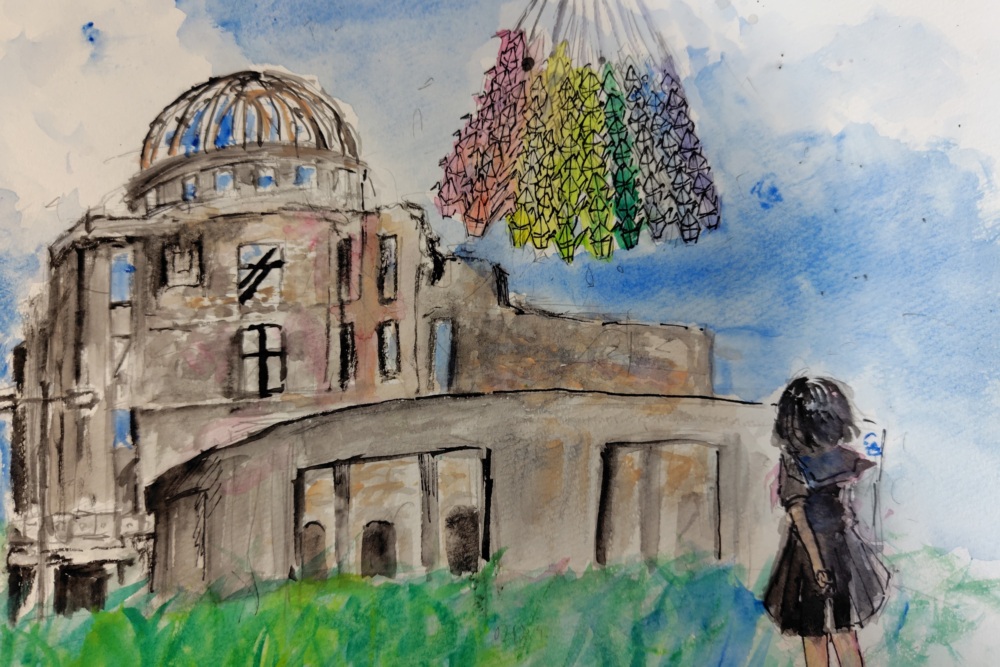
NTI’s Hiroshima and Nagasaki commemoration activities this year centered on the theme of passing the torch to the next generation. The result was an intergenerational connection reflected in two artists: 88-year-old Hiroshima survivor Toshiko Tanaka, and 13-year-old painter Kotone.
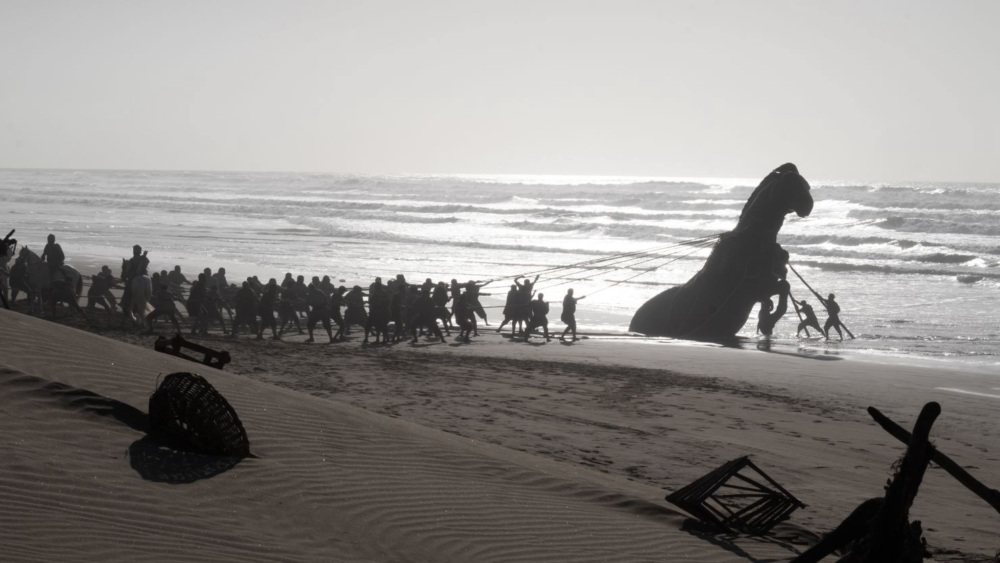
In Nolan’s new film, The Odyssey, he gives Odysseus the reckoning he never gave Oppenheimer. The parallel he appears to be drawing is that the same tunnel vision that produced the Trojan Horse produced the Manhattan Project, and each comes with the same casualty: civilians treated as collateral damage in order to win a war.

Elise Rowan serves as the deputy vice president of NTI’s Communications team. She co-leads the organization’s Critical Mass project, which harnesses the power of culture and campaigns to change the narrative on nuclear weapons and shift political incentives toward policies that reduce nuclear risks.
Sign up for regular updates on innovative, real-world solutions to existential threats.