

Grace Wankelman
Social Media Officer
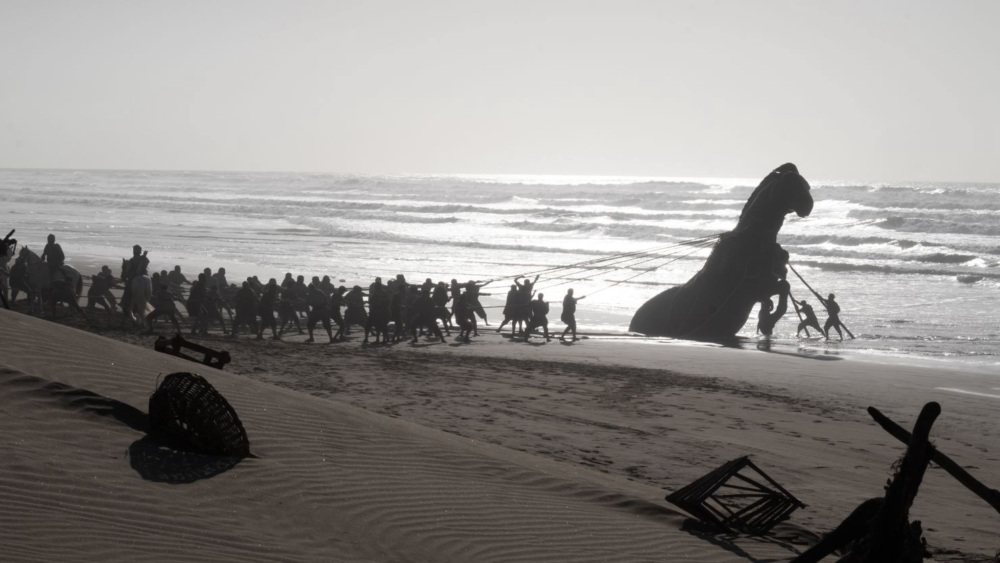
About the image
J. Robert Oppenheimer is frequently remembered for one line: “Now I am become Death, the destroyer of worlds,” a phrase he recalled from the Bhagavad Gita. Christopher Nolan’s Oppenheimer includes it but doesn’t follow through on what it truly means. We never see a clear depiction of what the bomb did to Hiroshima and Nagasaki, nor its human cost. Additionally, the 2023 film never gives its protagonist a clear reckoning with his guilt; it ends instead on a mysterious, half-heard conversation between Oppenheimer and Einstein.
In Nolan’s new film, The Odyssey, he gives Odysseus the reckoning he never gave Oppenheimer. Homer’s Odysseus looks back on the Trojan Horse as his masterstroke, the trick that won an unwinnable war, but Nolan’s Odysseus doesn’t look back on it that way.
Odysseus spends the film returning to the fall of Troy in flashbacks, and he doesn’t view the horse with Homer’s triumph. When he’s forced to confront what actually happened, he wants to eat a lotus flower and forget the whole thing. Where Homer frames the trick that won the war as ingenuity, Nolan frames it as the death of wisdom, literally placing Athena, the goddess of wisdom and warcraft, as a priestess killed in the siege of Troy.
The parallel Nolan appears to be drawing is that the same tunnel vision that produced the Trojan Horse produced the Manhattan Project, and each comes with the same casualty: civilians treated as collateral damage in order to win a war.
Before bombing Japan, the U.S. military had explicit criteria for choosing where to target: a large urban area, over three miles in diameter, that had been largely spared from prior firebombing so the blast’s destructive power could be clearly measured and demonstrated. The size and intactness of the civilian population wasn’t an unfortunate side effect of target selection; it was one of the criteria.
The parallel to Troy is clear. The Greeks didn’t stumble into a slaughter of civilians as an unintended consequence. Their plan required getting into a fully populated city undetected, and the scale of what followed was baked into the approach from the start.
Towards the end of the film, Odysseus tells Penelope that the horse ploy everyone remembers as his greatest victory is the thing he’s least able to live with.
“We left them a gift, an offering of peace, that they took into their home,” he said. “We violated all that’s ever sacred between people. It turned a fight into a hunt. To burn the walls of Troy was to burn the world-entire.” He’s certainly not a pacifist, and he’s not reflecting guilt for being a fearsome warrior who fought and killed. Rather, Odysseus is recognizing that when we break the norms of war, target civilians to win at any cost, and push the envelope on what’s acceptable conduct in conflict, there will never be an end in sight.
The film’s portrayal of Odysseus’ PTSD and struggle with moral responsibility is a substantive diversion from the original text and arguably tells a different story than Homer intended. However, Nolan’s retelling through The Odyssey is still an important tale for our atomic age. The deliberate reframing of Odysseus as haunted by the Trojan horse answers the questions that the audience may have walked away from following Oppenheimer. At times, Oppenheimer suggests that its protagonist was tortured by his creation, but any guilt and moral responsibility he may have felt are not central themes of the film.
That’s the power of storytelling. The Odyssey has survived 3,000 years because it’s a story about what war does to the people who fight it, long after the fighting comes to an end. While Homer depicts this through themes of hubris and homecoming, Nolan instead shows this through Odysseus’ PTSD and grief. In this reinterpretation, Nolan reminds us that these weapons were built and used by human beings against other human beings, and their legacies do not just remain in the history books.
Most people alive today weren’t around when Hiroshima and Nagasaki were bombed, and as the generation that was disappears, their stories must carry their memories forward.
This is the role storytelling plays more broadly. Homer left Odysseus’ reckoning out of his story, but thousands of years later, Nolan reinterpreted the story and added that in. Such stories remind people of the humanity on the other side of a battle-driven decision and help people practice imagining a different world before they work to build one.
The film The Day After is a good example. U.S. President Ronald Reagan watched a TV movie about nuclear war and came away rethinking his own assumptions about whether that war could ever be “won.” He later went on to support policies that led to the reduction of global nuclear stockpiles by 80%.
Watching Odysseus acknowledge what the horse cost him is uncomfortable in a way that “hero wins the war” never is. That discomfort is the point. It’s hard to imagine a safer world until you’ve fully pictured what the current one costs, and Nolan makes the audience see it through the person who caused it, not just the people who suffered it.
That’s the case for stories like this one. Helping people understand the human cost of war, whether through those who make the destruction possible or the innocents victimized, is how you get them to want something different badly enough to act on it. This is how a critical mass takes shape: not all at once, but one audience at a time. As more people begin to imagine a safer world, building it begins to feel possible.
Sign up for our newsletter to get the latest on nuclear and biological threats.
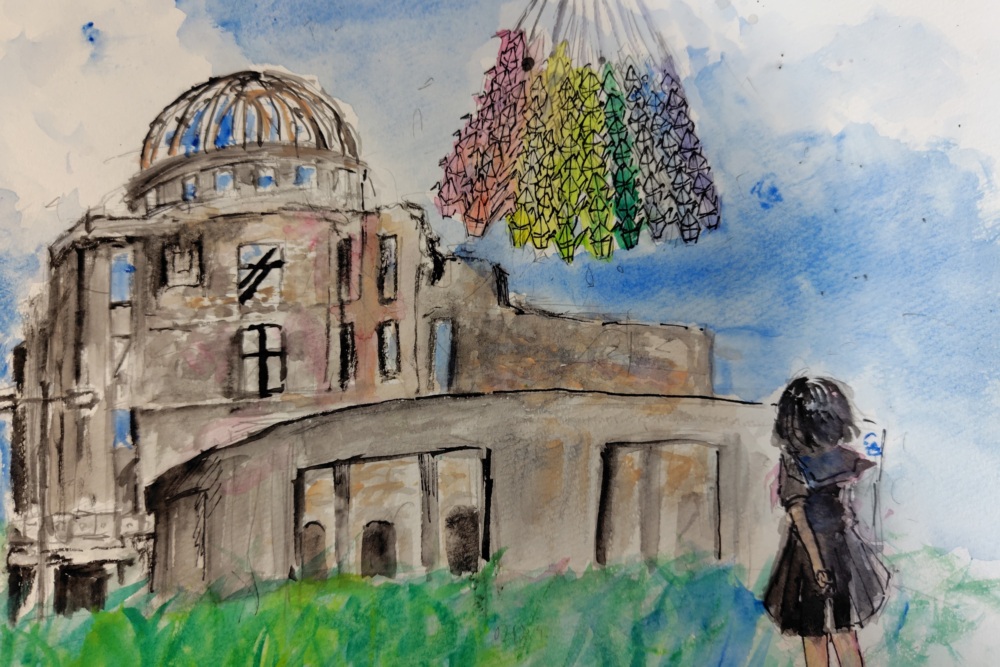
NTI’s Hiroshima and Nagasaki commemoration activities this year centered on the theme of passing the torch to the next generation. The result was an intergenerational connection reflected in two artists: 88-year-old Hiroshima survivor Toshiko Tanaka, and 13-year-old painter Kotone.
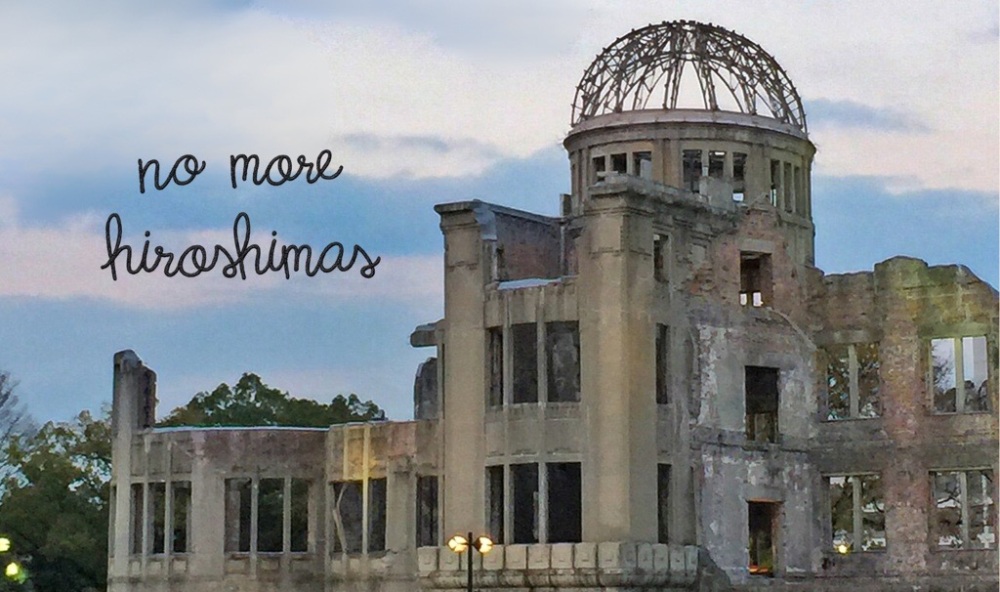
On the morning of August 6, 1945, in Hiroshima, Japan, parents shared breakfast with their children and sent them off to school. Some never came home. NTI is commemorating Hiroshima and Nagasaki through a series of activities that encourage remembrance, reflection, and wider awareness.

Elise Rowan serves as the deputy vice president of NTI’s Communications team. She co-leads the organization’s Critical Mass project, which harnesses the power of culture and campaigns to change the narrative on nuclear weapons and shift political incentives toward policies that reduce nuclear risks.
Sign up for regular updates on innovative, real-world solutions to existential threats.