

Elizabeth Smith
Communications Officer
Eighty-one years after the atomic bombings of Hiroshima and Nagasaki, a dwindling number of firsthand survivors, or Hibakusha, remain willing and able to share with the world what they experienced on those dark days in 1945.
It is no coincidence that, as this history fades from memory, the public has grown increasingly desensitized to the dangers of nuclear weapons use.
Against this backdrop, NTI’s Hiroshima and Nagasaki commemoration activities this year centered on the theme of passing the torch to the next generation. The result was an intergenerational connection reflected in two artists: 88-year-old Hiroshima survivor Toshiko Tanaka, and 13-year-old painter Kotone.
This year, the fifth iteration of the #CranesForOurFuture campaign looked a little different. Instead of commissioning an artist to create this year’s signature image, we hosted an art contest to mobilize the most creative group we could imagine: children.
The inspiration for the contest was Sadako Sasaki, the twelve-year-old girl who initially survived the Hiroshima bombing but, 10 years later, succumbed to radiation-induced leukemia.
While battling the disease, Sadako folded more than 1,000 paper cranes in the hope that her wish to live would be granted. Although she did not survive, the movement that she inspired lives, and a global community continues to fold cranes in her honor.
The memory of Sadako often overlooks the fact that she was more than a victim or a survivor. She was an artist in her own right.
Sadako’s tiny cranes not only demonstrated meticulous craftsmanship but also imbued new meaning into a centuries-old cultural symbol. Her story is about more than the unjust tragedy of a dying child: it is proof that artistic expression is a medium through which anyone, even children, can raise their voices.
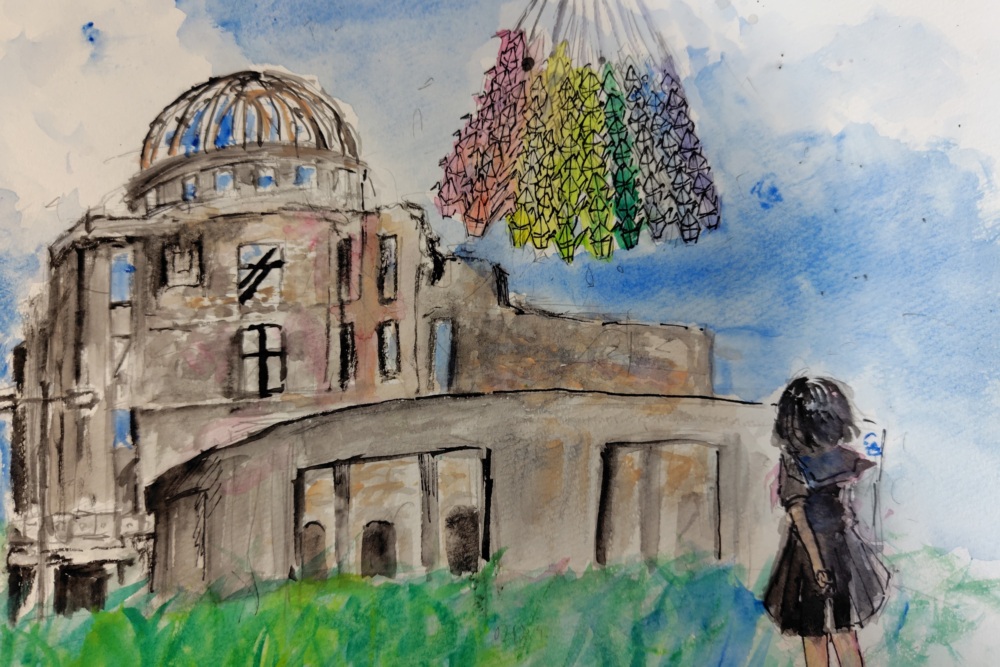
The winner of the #CranesForOurFuture art contest is 13-year-old Kotone from Japan.
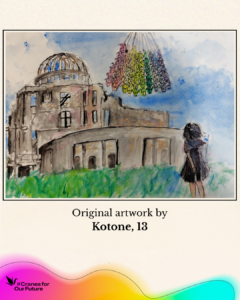
She submitted a poignant watercolor painting of a young girl standing before the Atomic Bomb Dome in Hiroshima as a string of paper cranes floats in the wind above her. The piece evokes both the despair of a child witnessing the destruction caused by nuclear weapons and the hope for a world in which nuclear weapons are never used again.
It is particularly moving that Kotone’s piece is untitled. The viewer is left to wonder: who is the girl?
In Japan, it’s common for schoolchildren visit Hiroshima on class trips around age 13. The child in the picture could be Sadako, but she also could be any child visiting Hiroshima for the first time.
She might even be the artist herself.
The ambiguity of the painting’s subject underscores two key lessons from Sadako’s story.
First, no one, not even the most innocent child, is safe from the harms caused by the use of nuclear weapons. And second, no voice is too small, too young, or too vulnerable to be heard.
Sadako was not the only, nor the last, hibakusha to use art to call for peace.
This year, NTI partnered with Toshiko Tanaka, an 88-year-old artist and survivor from Hiroshima in our collaboration with fashion brand Lingua Franca.
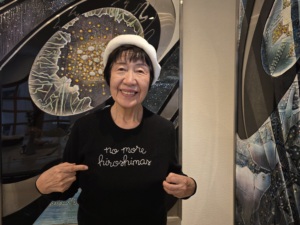 Tanaka-san generously agreed to wear and be photographed in a custom, hand-stitched “No More Hiroshimas” sweater, taking part in a campaign that also featured Lisa Rinna and Alan Cumming in sweaters that brought levity and heart to the message of nuclear risk reduction.
Over a virtual cup of tea, I spoke with Tanaka-san about her life, her work, and her hope for the future.
Tanaka-san, who went to school with Sadako, shared that, for most of her life, she kept her memories of the bombing to herself.
For decades, her story felt too painful to share, and she worried about facing stigma as a Hibakusha. Instead of focusing on public advocacy, she devoted herself to the work of raising two children while building a career as an enamellist.
It wasn’t until the age of 70 that Tanaka-san began to speak openly about her experiences—and since then, she has worked tirelessly to share her story.
Today, Tanaka-san frequently travels the world to deliver her testimony in the hope that humanity never loses sight of the catastrophic toll of nuclear weapons use.
In addition to her speaking engagements, she uses art to express what words cannot. Her work, which depicts the connections between humans and nature, has been displayed worldwide, including at the Peace Culture Museum in Hiroshima.
Tanaka-san’s courage in sharing her story, as well as her background as an artist, made her the perfect partner for our Lingua Franca collaboration. We were thrilled to work with someone who has poured so much of her heart into her work and shares our belief in the power of art to inspire action and shape how people see the world.
During our conversation, I told Tanaka-san that I often struggle to maintain hope in a world of rising nuclear risks. Like many others, I sometimes lose faith that I, or even Kotone, will inherit a world free from the threat of nuclear catastrophe.
“Keep fighting the long game,” she told me. “You never know, maybe you’ll see the impact when you’re 88.”
Sign up for our newsletter to get the latest on nuclear and biological threats.
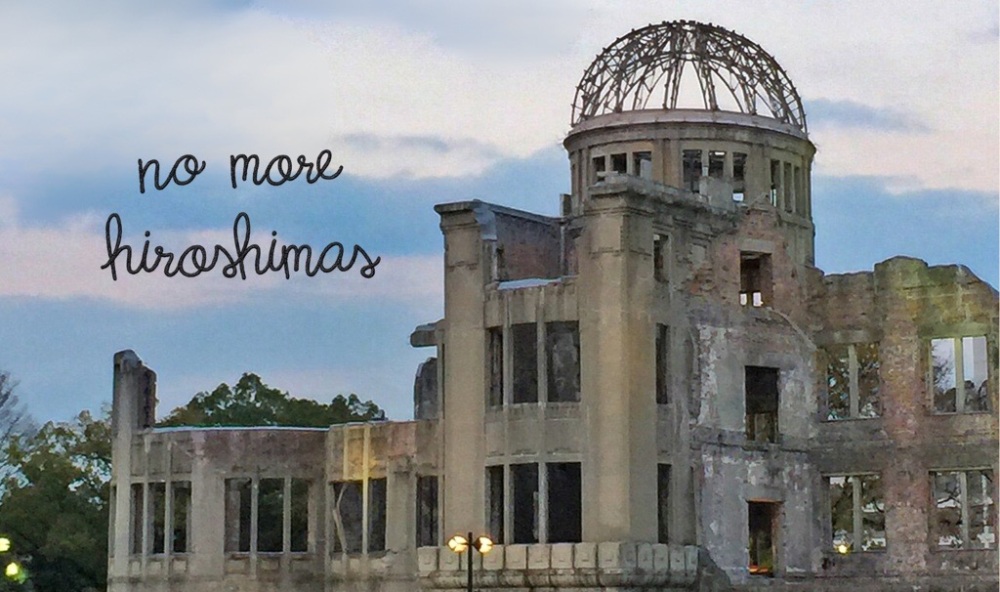
On the morning of August 6, 1945, in Hiroshima, Japan, parents shared breakfast with their children and sent them off to school. Some never came home. NTI is commemorating Hiroshima and Nagasaki through a series of activities that encourage remembrance, reflection, and wider awareness.
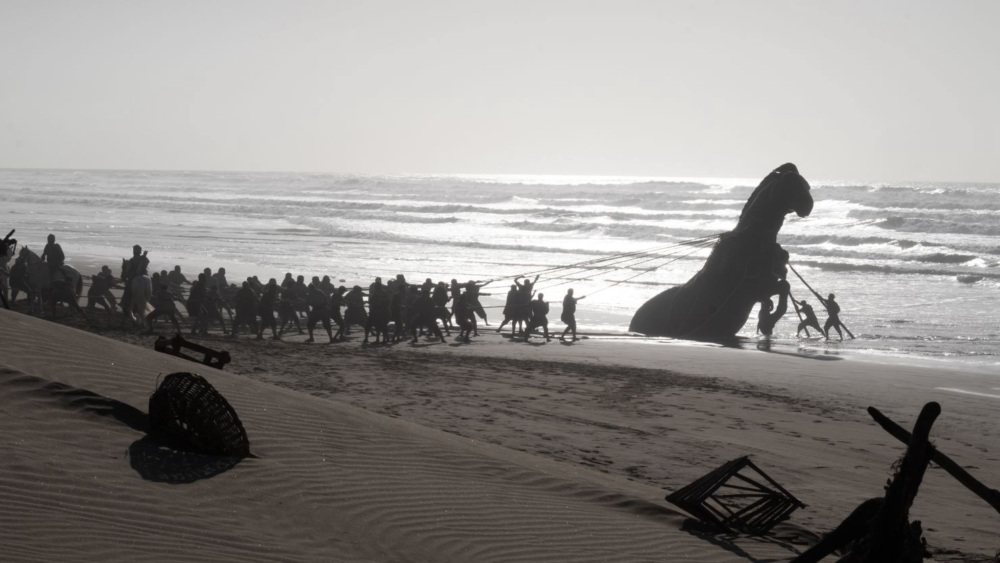
In Nolan’s new film, The Odyssey, he gives Odysseus the reckoning he never gave Oppenheimer. The parallel he appears to be drawing is that the same tunnel vision that produced the Trojan Horse produced the Manhattan Project, and each comes with the same casualty: civilians treated as collateral damage in order to win a war.
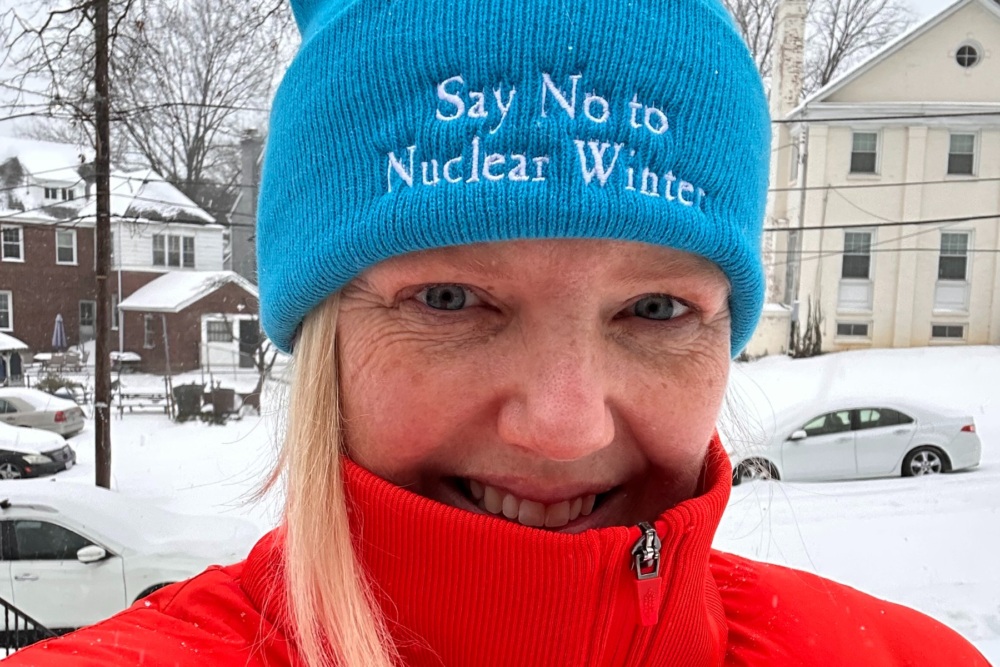
Elise Rowan serves as the deputy vice president of NTI’s Communications team. She co-leads the organization’s Critical Mass project, which harnesses the power of culture and campaigns to change the narrative on nuclear weapons and shift political incentives toward policies that reduce nuclear risks.
Sign up for regular updates on innovative, real-world solutions to existential threats.