

Gabrielle Essix
Senior Program Officer, Global Biological Policy and Programs
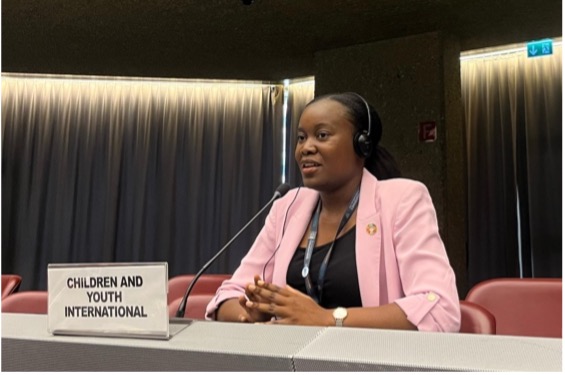
NTI’s “Young Voices” series highlights early-career professionals making their mark as part of the community of experts tackling today’s existential threats. This series reflects NTI’s commitment to uplift a range of voices and ideas, help break down stereotypes that contribute to generational divides on security, and give a platform to young people to share creative ideas that address the evolving threats imperiling humanity.
Gabby Essix, senior program officer on NTI’s Global Biological Policy and Programs team (NTI | bio) spoke with Delfina Hlashwayo, a faculty member and researcher in the Department of Biological Sciences at Eduardo Mondlane University in Mozambique. Delfina’s journey into biosecurity and nonproliferation is a powerful example of how scientific passion, global collaboration, and youth leadership can converge to shape a safer world. This interview has been edited for length and clarity.
Gabby Essix: To start, can you share a bit about your background and what initially drew you to biosecurity and nonproliferation?
Delfina Hlashwayo: My path into science and public health started early when I was 17 and joined a scientific initiation program at Mozambique’s National Institute of Health. Over the years, I’ve earned degrees in biology and health, food safety, and a PhD in biosciences and public health. My work has always been rooted in public health—from HIV and chronic diseases to food safety and infectious diseases.
Even though my formal introduction to biosecurity came in 2024, the groundwork was laid much earlier. Early research with human blood samples taught me the importance of safe lab practices and preventing accidental exposure—core elements of biosecurity.
What really deepened my engagement with biosecurity was attending a Science Diplomacy, Biosecurity, and Virus Detection course in Italy, followed by the Youth for Biosecurity Fellowship both hosted by the United Nations Office for Disarmament Affairs (UNODA). These experiences opened my eyes to the policy dimensions of biosciences and the global nature of biological threats.
But my commitment to biosecurity is also deeply personal. I’m the daughter of a veteran who fought in Mozambique’s War of Independence. Though born after the war, my father’s stories instilled a deep sense of responsibility to contribute to peace and security through science. I see my work in biosecurity as a continuation of that legacy, using research and policy to protect lives and promote stability.
GE: This year marks the 50th anniversary of the Biological Weapons Convention (BWC). How would you assess its evolution and impact, and what do you think is needed to keep it effective?
DH: The BWC is the cornerstone of global efforts to prevent the development and use of biological weapons. States continue to join the Convention, reflecting sustained political will to address biological threats. Over the decades, the BWC has evolved into a dynamic mechanism that supports national legislation, encourages transparency through confidence-building measures, and fosters international collaboration on biosecurity, biosafety, disease surveillance, and scientific exchange.
From my own experience, I’ve seen how the BWC’s emphasis on cooperation and capacity building has tangible impacts, especially in the Global South. Programs like the Youth for Biosecurity Fellowship are cultivating the next generation of experts to contribute to the Convention’s goals. Regional workshops, like the one I participated in, demonstrate the BWC’s active role in strengthening biosecurity frameworks.
However, the Convention faces significant challenges. The rapid advancement of technology introduces dual-use risks that outpace existing regulatory frameworks. That’s why integrating scientific expertise into decision-making processes is critical. Many decisionmakers may not have technical knowledge of biological threats, so bridging the gap between science and diplomacy is essential.
GE: In a field defined by high-stakes risks, what gives you hope?
DH: The strong foundation for international cooperation the UN provides. I believe that bringing diverse stakeholders to the table is one of the most effective ways to manage risks and move forward. I’m also encouraged by the genuine commitment I see across generations. From experts to youth, there’s a shared goal of global safety.
Additionally, more professionals are getting trained in relevant fields. In Mozambique, for example, we now have a PhD program in biosciences and public health, and I see more young people entering the field with enthusiasm and purpose. This growing expertise strengthens our ability to prevent and respond to biological risks effectively.
GE: What unique strengths do you think the next generation brings to this field?
DH: Our passion. We’re deeply invested in biosecurity. That energy drives us to take initiative and push for meaningful change. We also bring a strong understanding of our local contexts helping us design solutions that are practical and tailored to real-world needs.
We’re also incredibly tech-savvy. We’re comfortable using digital tools, like AI, to address biological threats. And because many of us come from diverse academic and professional backgrounds, we’re able to work together in ways that foster more holistic and creative approaches to problem-solving.
Most importantly, we’re eager to learn. We may not have all the answers, but we’re open to new ideas and collaboration. That openness paired with the experience of senior professionals creates powerful partnerships. I’ve seen this drive lead young people to become powerful advocates—mobilizing communities, influencing policy, and raising awareness in ways that truly amplify global biosecurity efforts.
GE: What advice would you give to young professionals aspiring to enter this field?
DH: Be passionate—passion gives you purpose, and when your work is driven by genuine interest, it doesn’t feel like a burden, it feels like a mission.
Seek knowledge—UNODA offers a range of courses and resources through platforms like Disarmament Education. Training programs like the European Science Diplomacy Online Course, provide useful foundations. Postgraduate education in international affairs, public policy, security, or in related fields can be valuable.
Stay informed—following newsletters and official channels from organizations The World Academy of Sciences, the Geneva Science and Diplomacy Anticipator, the InterAcademy Partnership, and the International Science Council helps you stay informed about new opportunities. There are also mechanisms for youth engagement in diplomacy, such as UN youth delegate programs and initiatives like NTI’s Next Generation Biosecurity Delegation. Where such programs don’t exist, young people can advocate for their creation. Internships within the UN system also offer practical experience and exposure to global processes.
Build and engage your network—engage in dialogues, join working groups, and build networks on platforms like LinkedIn. Follow experienced professionals working at the biosecurity and nonproliferation interface to learn from their journeys.
Don’t be discouraged by limited resources—think about what you can do here and now. Even small actions, like joining consultations or proposing ideas, can make a difference.
Sign up for our newsletter to get the latest on nuclear and biological threats.
As the world marks the 50th anniversary of the Biological Weapons Convention (BWC), Next Gen contest participants have an opportunity to move the needle by introducing an updated way for professionals in the field to address the current and emerging threats that bioweapons pose.
The Trump and Xi summit may offer an opportunity to begin filling the leadership vacuum on AI advances, especially with respect to bioweapons. If the reports from AI companies are correct, it’s imperative that Presidents Trump and Xi start this work now.
As scientific and technological advances accelerate, the Biological Weapons Convention (BWC) faces a defining test. The BWC’s future depends on whether the world can match the pace of biological innovation with equally ambitious efforts to prevent catastrophe.
Sign up for regular updates on innovative, real-world solutions to existential threats.