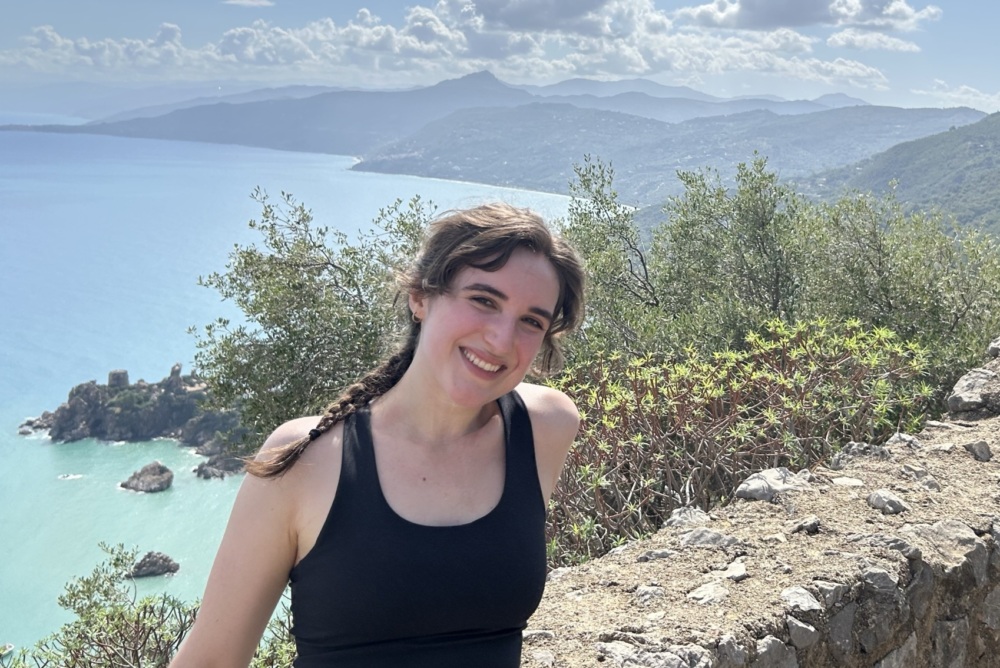
Amanda Krieger is an officer with NTI’s Development team, where she builds relationships and leads strategic engagement efforts to secure major philanthropic support for NTI’s mission. Amanda spoke with NTI intern Ryan Takeji Adams about her work in fundraising, past experiences, and hobbies. This interview has been edited for length and clarity.
 I first got started in the student involvement office at Washington State University, where I worked on fundraising and helped clubs fundraise. I also started the Shark Conservation Club. It aligned with my major, and it got a lot of people talking about something you never thought about in Pullman, Washington.
After graduating, I wanted to stay in something that aligned with my passions and interests, which is the environment, and so I went to a bird sanctuary and did fundraising. Then I set my sights on international development, because I really enjoyed the mission — and it also meant being a little closer to home.
NTI came along at kind of a serendipitous time. What I love about it is that it blends all of my interests: international development, helping people, and environmental conservation. And to be true, if a nuclear bomb goes off everybody is impacted. Some communities and environments are affected more than others, but it’s a unique issue that really brings all those passions together.
On the development team, we’re focused on finding people who connect with NTI’s work. That often requires a little creativity because nuclear issues are not something most people think about every day, and it’s scary, there’s been a lot of fear mongering, and a lot of times that’s what people go to and say, “I don’t have a place in this because I can’t do anything, if a nuclear bomb goes off, it’s going to be the government, I have no say in that.” The work requires finding the people who understand the risks and communicating effectively. We try to match them with a program that they’re interested in. For example, the Critical Mass project is a great fit for people who are drawn to social impact aspect. I spend a lot of my time communicating with individuals about NTI’s work in a way that resonates.
As someone who’s worked in the humanitarian sector and international development, I think nuclear threats and biosecurity is a harder issue space to communicate in.
It can be challenging to help people understand both how important our issues are and how much overlap they have with other global challenges. A great example is an event we hosted this year with CARE. Michelle Nunn, CARE’s CEO, joined NTI President and CEO Christine E. Wormuth to talk about how, even though our organizations have different focuses, we’re ultimately working toward a similar goal.
That communication element is definitely one of our biggest fundraising challenges — helping people understand the risks without overwhelming them to the point that they don’t want to engage. We want people to recognize the importance of the issues and see that there’s a role for them in addressing them.
It is definitely the people we work with and their dedication. I can sit in Ross’s office and ask, “Why is this happening?” When I started, I probably asked him 100 questions about nuclear energy, and he was always so approachable and willing to explain it. I think that’s a big part of why I’ve stayed in this issue space. There is this dedicated group of people who spend their time focused on building a safer world.
But I also like the challenge of this work. Our issues impact everyone. That gives us an opportunity to engage with people from all stages of life.
One challenge, though, is reaching younger generations. People who didn’t live through Hiroshima or the Cold War can sometimes have a harder time connecting to nuclear risk. They’re also focused on so many other major issues in the news, from humanitarian crises to other global challenges. I think we have a responsibility to help educate people about those risks — hopefully without them ever having to experience them firsthand. It’s about helping people understand that these threats exist and what we’re doing to reduce the risks.
 The Shark Conservation Club started in my freshman year. I had gone across the country for school, so I didn’t know many people. I went to an academic banquet where they basically told us, “Okay, you’re getting good grades, but what else are you doing?” Someone suggested I start a club, and I thought, “What club would I even start?” One of my friends joked, “A shark conservation club,” and I was like, “No, actually, you’re right.” It was weird enough that people were curious. We were in Pullman, Washington — we weren’t exactly surrounded by sharks. But it got people talking, and it ended up becoming one of the most successful clubs on campus.
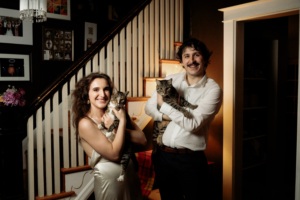
For my cats, I had a cat named Oliver when I was 12, and she literally went to college with me. When I met my husband, he’d never really been around cats. One time I had to go home for a week and asked if he’d watch her. By the time I got back, he was completely in love with her. Not long after that, we found a kitten outside. My husband asked, “Can I just take him?” We did and named him Holden. We fostered a cat named Norman and immediately failed as fosters because we kept him. I also serve on the board of Shadow Cats TNR, which focuses on trap-neuter-return efforts and adoptions.
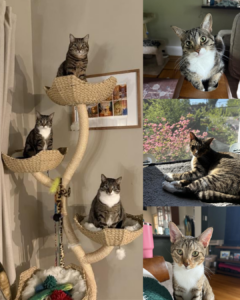
Through them, I’ve fostered way too many cats and adopted most of my own. We also provided hospice care for an 18-year-old cat named Miriam, who just needed a safe place to spend her final days. Then came Jude and Prudence, two kittens named after Beatles songs from Across the Universe. And finally, Harriet, who was supposed to be a foster. She stayed for six months, and eventually I realized I’d be devastated if she left, so she became part of the family too.
Now we have five cats. They have a catio, pet insurance, and a cat sitter who comes three times a day when we travel. One time she told me, “You’re the most prepared pet parent I’ve ever met,” and I was like, “Thank you.”
I love indoor cycling. I try to be a really active person, so it feels like I pick up something new every few months. For a while, I was really into shadowboxing and rucking. I also love to read. My goal this year is to read 100 books, and I’m at exactly 50 so far, so we’re on track.
Sign up for our newsletter to get the latest on nuclear and biological threats.
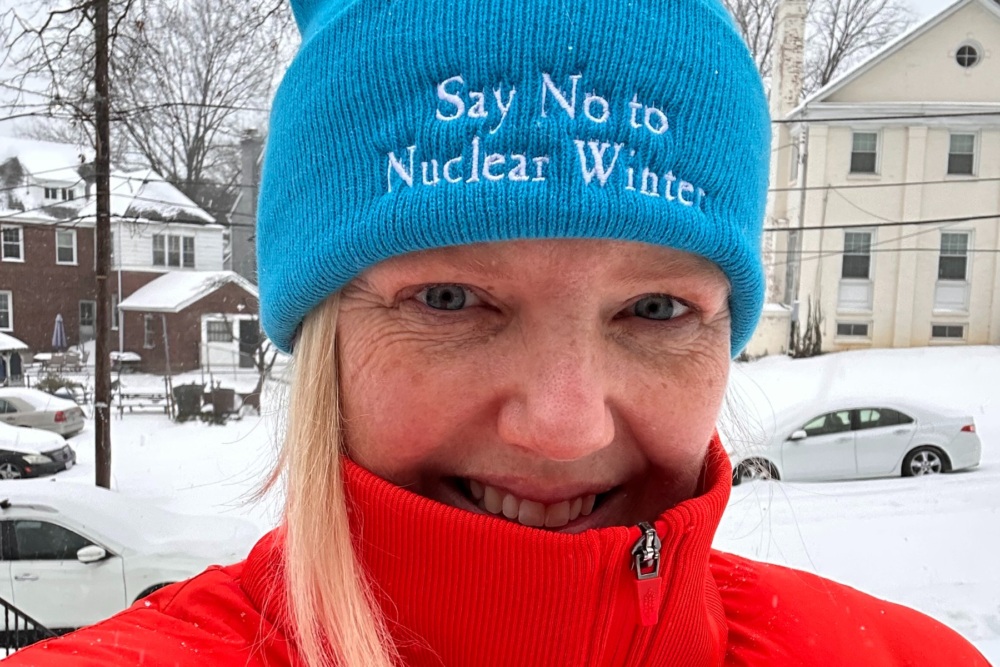
Elise Rowan serves as the deputy vice president of NTI’s Communications team. She co-leads the organization’s Critical Mass project, which harnesses the power of culture and campaigns to change the narrative on nuclear weapons and shift political incentives toward policies that reduce nuclear risks.
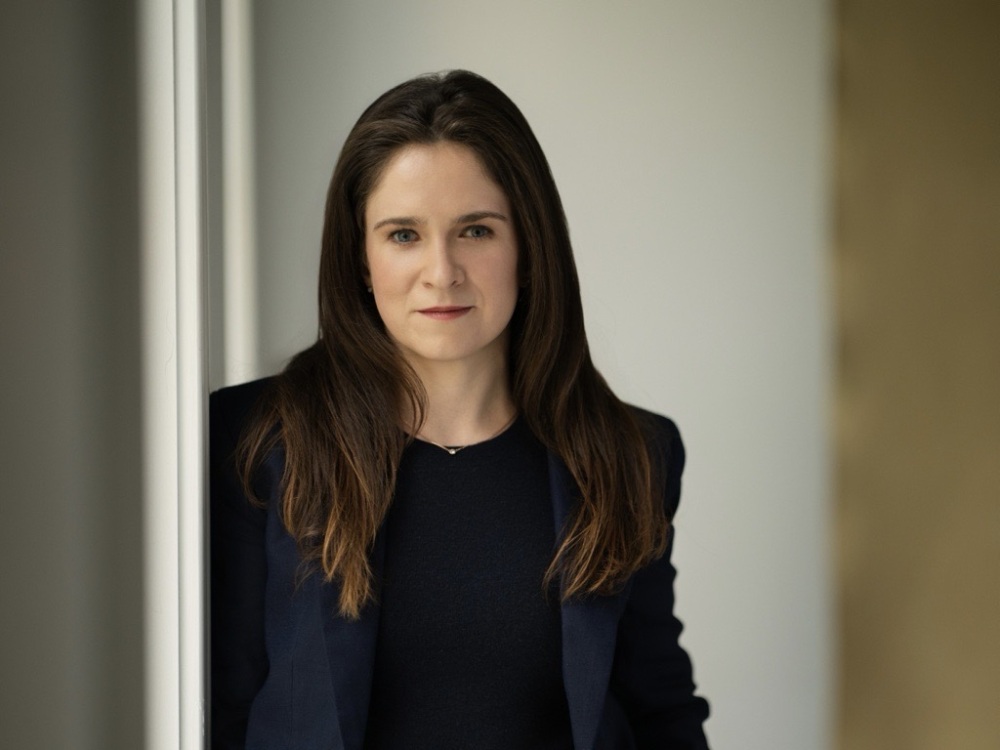
Cassandra Varanka is NTI’s director of legislative affairs. Since joining NTI in July 2025, she has focused on developing and advancing legislative strategies to shape impactful policy outcomes that further the organization’s agenda in the U.S. government.

The way we talk about risk shapes what gets done and who plays a role. Hugh Sullivan, NTI’s vice president for development explores how storytelling, tailored messaging, and a focus on agency can turn risk into action—and why optimism is essential for impact in global security.
Sign up for regular updates on innovative, real-world solutions to existential threats.