Background
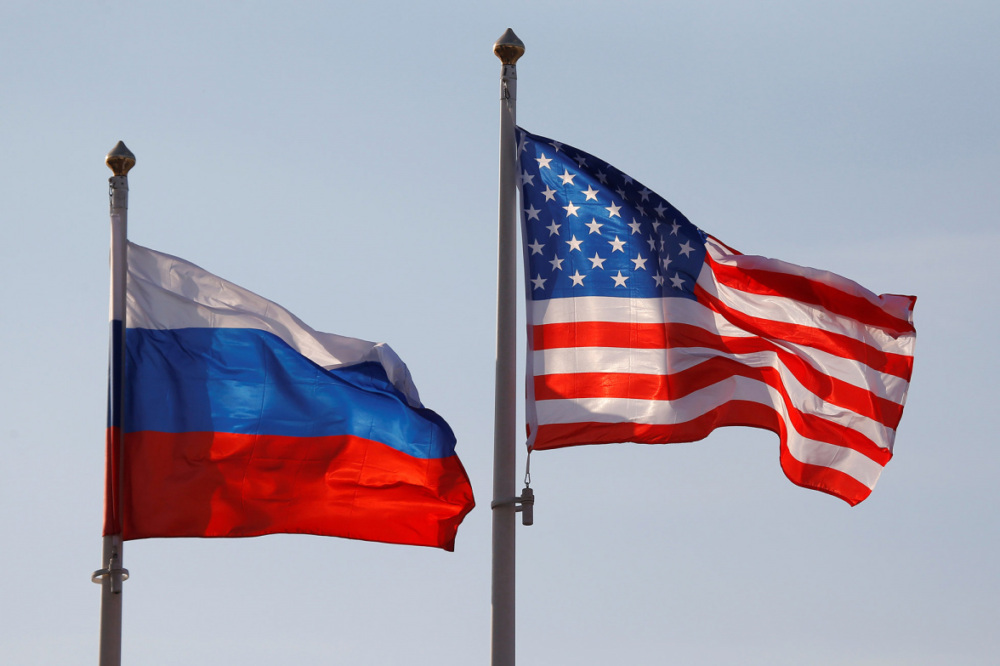
On February 5, 2026, decades of legally binding limits on global nuclear weapons stockpiles will come to an end with the expiration of the New Strategic Arms Reduction Treaty (New START), the last remaining bilateral treaty constraining Russian and U.S. nuclear forces. Unless the two countries agree to maintain limits on their forces, the world will enter a period of potentially unconstrained nuclear build-ups—one that is more complex than the Cold War nuclear arms race given the additional dynamics of China’s nuclear expansion and destabilizing emerging technologies.
New START entered into force in 2011 after bipartisan approval from the U.S. Senate. It had an initial duration of 10 years, with an additional five-year extension option that the U.S. and Russia agreed to adopt in early February 2021. The treaty capped U.S. and Russian strategic nuclear arsenals and established an important on-site inspection and monitoring regime. It is the latest in a string of treaties that facilitated reductions in the global nuclear warhead stockpile from a high of 70,000 in the mid-1980s to roughly 12,000 today.
What is New START? The details.
New START limits the United States and Russia each to 1,550 deployed strategic nuclear warheads; 800 deployed and non-deployed strategic launchers; and no more than 700 deployed intercontinental ballistic missiles, submarine-launched ballistic missiles, and heavy bombers.
The treaty provides extensive verification and transparency measures, including:
- Short notice on-site inspections at each other’s nuclear bases
- Regular data exchanges and notifications regarding the number and status of each side’s treaty-accountable systems
- Exhibitions of new types and variants of treaty-accountable systems
- The obligation not to interfere with the other’s national technical means for monitoring compliance
- The establishment of the Bilateral Consultative Commission (BCC), a compliance and implementation body that is required to meet at least twice per year.
How did we get here? New START’s last chapters.
The United States and Russia mutually agreed to halt on-site inspections and BCC meetings during COVID-19. In the second half of 2022, the United States sought to restart such measures and have both countries mutually implement New START in its entirety. Russia rebuffed those efforts, and, in February 2023, Putin announced the country’s suspension of New START, citing U.S. support for Ukraine and “other hostile actions of the west.”
Although Russia committed to adhere to the treaty’s central limits, it stopped fulfilling New START’s verification provisions and participating in the BCC. The United States deemed Russia’s suspension “irresponsible and unlawful,” and has found Russia to be noncompliant with New START since 2022 due to its refusal to allow inspections, meet in the BCC, and provide the United States with information and notifications on the status of Russia’s nuclear forces. In response to Moscow’s violations, the United States implemented countermeasures and began withholding U.S. treaty data and denying Russia the ability to conduct on-site inspections of U.S. nuclear bases.
According to the U.S. State Department’s annual reports on New START implementation, the United States has not detected any Russian breakout from the treaty’s central limits. However, the last three consecutive reports have stated that Russia’s failure to fulfill its verification obligations, in particular by not allowing on-site inspections at its nuclear bases, has prevented the United States from confirming that Russia remained in compliance with the warhead limit throughout the past three years.
Why does New START’s expiration matter?
New START’s expiration marks the removal of caps on U.S. and Russian long-range nuclear forces for the first time in decades. This risks increasing unpredictability and instability in the U.S.-Russia nuclear relationship at a time of intensifying strategic competition. When fully implemented, New START’s verification regime provided both sides with insights into the other’s nuclear forces and posture. The loss of information-sharing measures, as well as an established channel for dialogue in the BCC, opens the door for worst-case scenario planning and misunderstandings that fuel uncontrolled arms races.
What comes next?
In late September 2025, Putin proposed in public remarks that the United States and Russia mutually observe New START limits for one year after the treaty’s lapse in February 2026. The United States has yet to provide a formal public response to this proposal. President Trump initially commented in October 2025 that the proposal sounded “like a good idea.” But in a New York Times interview published on January 8, 2026, he noted that “[i]f [the treaty] expires, it expires. … We’ll just do a better agreement.”
What about China?
China is not a party to New START and has never been party to an agreement to limit strategic nuclear arms. The U.S. Department of Defense estimates China’s nuclear warhead stockpile to be in the low 600s (having nearly tripled in size since 2020) and projects that China is on track to reach a stockpile of 1,000 nuclear warheads by 2030.
In 2020, the first Trump administration sought, unsuccessfully, to engage China in arms control talks. In late 2023, the Biden administration held talks with China on nuclear risk reduction and nonproliferation issues, but no subsequent discussions took place.
President Trump has said he thinks there is a new opportunity and wants a successor agreement to New START to include China. He told The New York Times in that January 8 interview, “I actually feel strongly that if we’re going to do it, I think China should be a member of the extension. China should be a part of the agreement.” He added that he has spoken to President Xi about it “and I think he’d be a willing participant.”