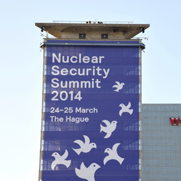
Last week's summit in The Hague marked the third gathering of world leaders to develop solutions to prevent nuclear terrorism. The 2014 Nuclear Security Summit was significant in several ways:
-
Individual and group commitments by countries offered actionable—and ambitious—steps to reduce the risk of nuclear terrorism.
-
A growing number of countries recognize the need for an international architecture, or global system, which holds all states accountable to a common set of standards and best practices.
Principles that NTI developed in advance of the Summit were reflected in the Summit Communiqué and key initiatives, such as agreement to measures that build the confidence of others about the effectiveness of security without disclosing sensitive information. This is a significant change in the nuclear security field.
The clock is already ticking on what may be the last Nuclear Security Summit, which will be held in the United States. Leading up to this event, the consensus on key principles that emerged in 2014 must be turned into actions that create a sustainable nuclear materials security system.
Read NTI's take on the 2014 Nuclear Security Summit and the work ahead for 2016.