Humidity, Hard Truths, and the Future of Global Health Security
Multisectoral collaboration is a fundamental requirement for stronger health security.
Here we highlight the work of NTI and share knowledge, ideas, and viewpoints addressing the crosscutting challenges our world faces—addressing risks while supporting innovation—to make our world safer.
Multisectoral collaboration is a fundamental requirement for stronger health security.
Sign up for our newsletter to get the latest on nuclear and biological threats.
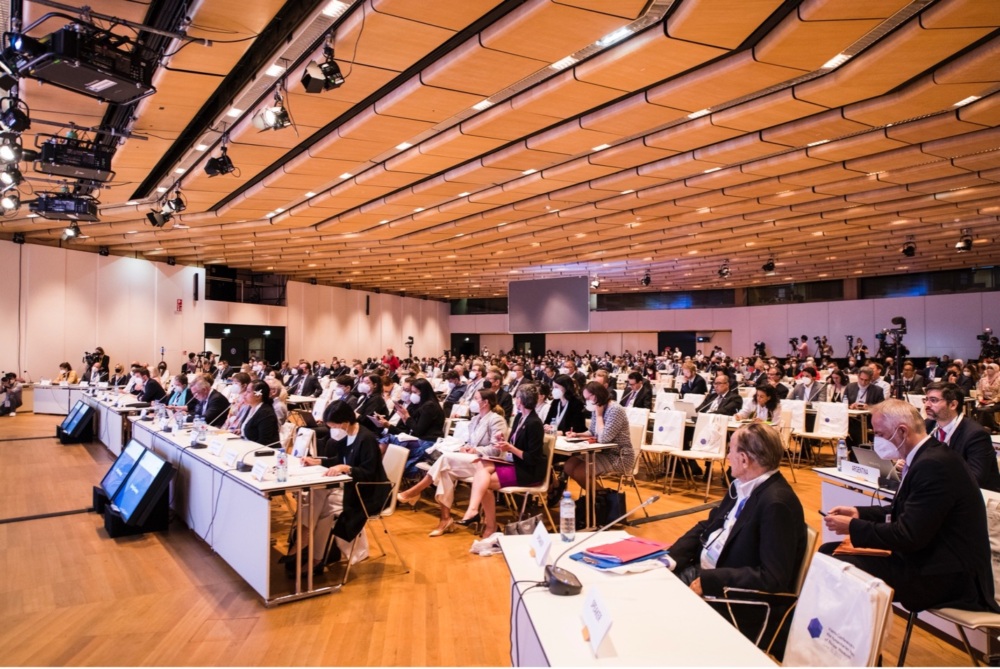
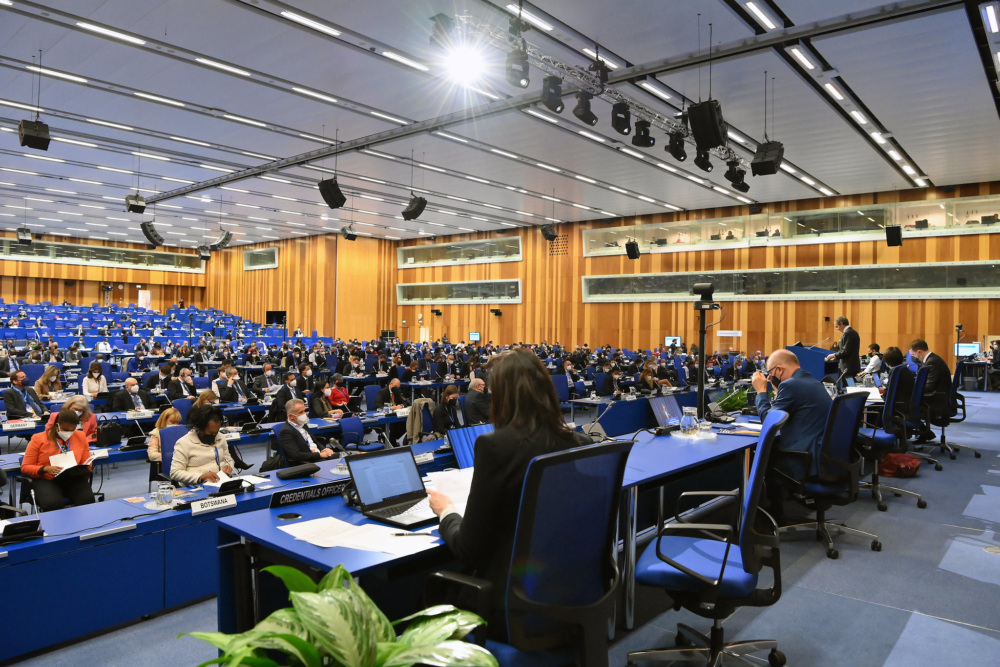
This week in Vienna, experts from the Nuclear Threat Initiative are joining government officials and experts from international organizations, non-governmental organizations, academia, and the nuclear industry for the first-ever review of the only legally binding treaty on nuclear security—the amended Convention on the Physical Protection of Nuclear Materials (A/CPPNM).
Vladimir Putin’s invasion of Ukraine is a prime example of a regional conflict that could inadvertently escalate beyond any of the protagonists’ expectations. History is replete with similar instances of humanity stumbling into devastating conflict.
Russia’s war in Ukraine may be playing out in far-away cities, but social media platforms like TikTok and Twitter are bringing the dangers home for people all over the world.
Nickolas Roth, senior director for NTI’s Nuclear Materials Security program, explains what happened at the Zaporizhzhia nuclear power plant that terrifying night, what could have happened, and what the long-term implications are for nuclear security and nonproliferation efforts around the world.
NTI's Global Enterprise to Strengthen Nonproliferation and Disarmament (GE), a Track 1.5 initiative that regularly convenes officials from more than 20 countries, along with several non-governmental experts, convened officials from Latin America, Africa, and Asia Ahead of 10th NPT RevCon.
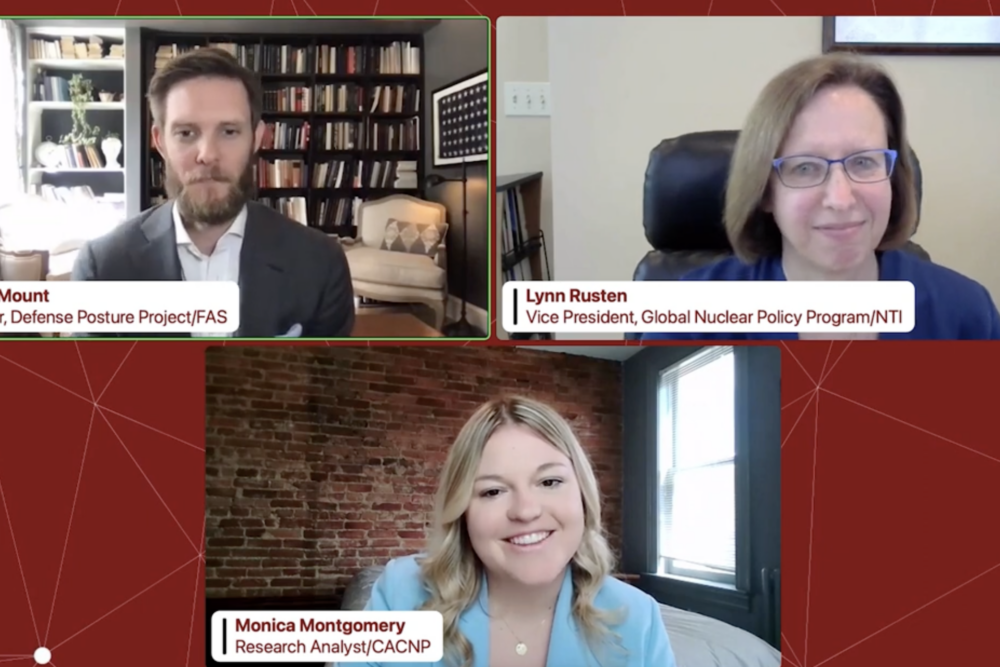
NTI's Lynn Rusten joined Rose Gottemoeller and Gerald Brown on a panel hosted by the Arms Control Association to discuss the ways in which the U.S. can foster an effective dialogue with China on confidence building measures and nuclear risk reduction.
From D-Day to Little Rock, from the Korean War to Cold War crises, from the Red Scare to the Missile Gap controversies, few people have made decisions as momentous as Dwight D. Eisenhower.
The scope of the Global Nuclear Policy Program (GNPP) at NTI is vast: Reducing reliance on nuclear weapons, preventing their use and their spread, and ultimately ending them as a threat to the world. Lynn Rusten isn’t daunted.
We hear from Steve Andreasen, whose career has taken him from the State Department and the National Security Council to the University of Minnesota to NTI.
Reaching agreement on what to do with left-over nuclear material has eluded many scientists and engineers, politicians and publics for decades.
Senior Director, Communications
Director, Communications
Sign up for regular updates on innovative, real-world solutions to existential threats.
{ location = 'https://www.nti.org/get-updates/' }, 300);">Get Updates