
Elizabeth Smith
Communications Officer
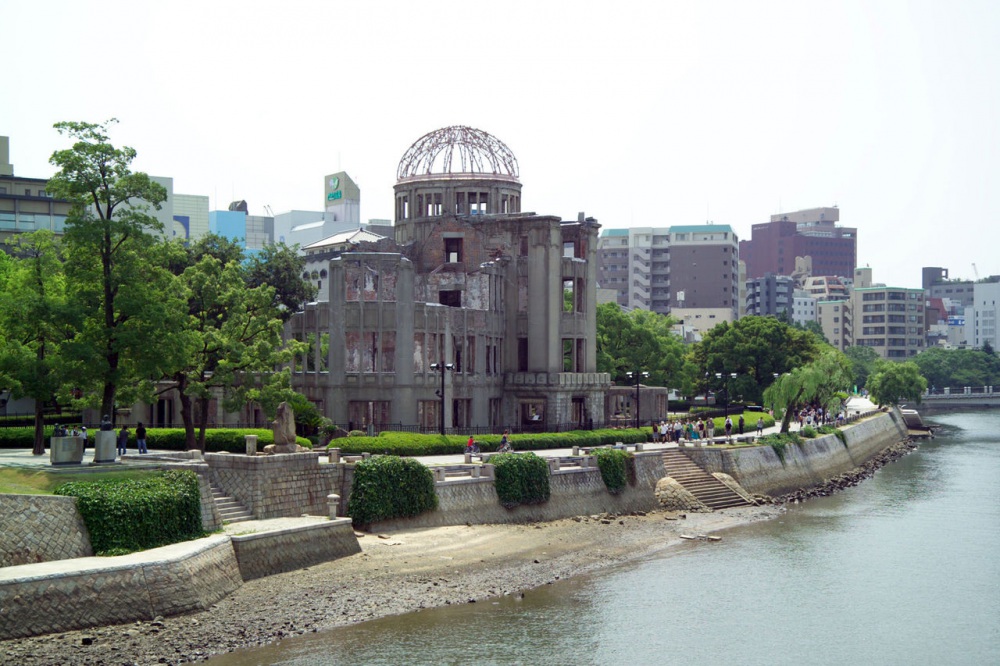
Eighty years since the U.S. bombings of Hiroshima and Nagasaki, the world looks to Japan’s example in processing the reality of nuclear weapons use. For many who have lived in or visited Japan, witnessing the commemoration of the atomic bombings is powerful and formative in shaping their views on nuclear weapons.
Three of NTI’s staff members have spent significant time in Japan, where their experiences have influenced their engagement in the nuclear field, often in unexpected ways. In this post, they share their deeply personal reflections on what the commemoration means to them.
 As I added a crane to the flock of thousands at the Hiroshima memorial, I recalled cherished memories folding origami with Ba. She drilled into me that the task of crane making wasn’t to be taken lightly; every fold had to be as precise as possible, a painstaking labor of love. In the diaspora, Japanese communities fold cranes for all sorts of reasons—weddings, to decorate Christmas trees, for sick loved ones. Japanese visitors leave them at the Nanjing Massacre memorial. I’ve folded them in honor of families separated at the U.S.-Mexico border and at Manzanar, where Japanese Americans were incarcerated during the war.
In grief and in protest, in celebration and in solidarity, origami cranes are always a slow, intentional manifestation of hope. When I saw the cranes in Hiroshima, I could palpably feel the labor and care that went into each one. I thought of those who folded them for Sadako as she battled radiation-induced leukemia—they were likely grieving loved ones and fearing for their own health, too.
There is a stark contrast between the raw humanity I bore witness to in Hiroshima and the deep dehumanization of the bomb victims that is so often normalized in the U.S. In high school, my classmates wore shirts with phrases like “USA: Back-to-Back World War Champs,” with no regard for the civilian lives that paid the price at the end of the war. I recently heard a grown man make a gleeful reference to “HiroSHEEma,” not as a site of tragedy and atrocity, but as proud evidence of U.S. military dominance.
These attitudes rely on a refusal to engage with the Hibakusha’s stories, and by extension, their humanity. Maybe some people are too afraid to look the truth in the face.
In Hiroshima, you can’t just look away from humanity’s capacity for violence and destruction. But the cranes are also a reminder of our ability to hope for a better future. We owe it to war’s victims to bear witness to their suffering, whether it comes in the form of direct bombing, radiation sickness, or manmade famine.
My grandmother folded cranes with love, hope, and grief. I felt the same in the thousands of cranes left for Sadako. And today, I urge us all to engage deeply with the humanity of the hibakusha’s stories.
Or risk losing ours.
 I can still vividly recall the makeshift banner hanging in the Hiroshima City Hall auditorium the very first time I visited the city. On that hot, humid day 25 years ago, these simple words put a frame around my experience—七転八起 (nana korobi ya oki); Fall Down Seven Times, Get Up Eight. While didactic proverbs can sometimes feel trite, this one seemed to impart enormous meaning and truth. Hiroshima has fallen, under the weight of a single weapon that brought forth blood and bone and disease with such visceral violence that Death could have been mistaken as a welcome houseguest. And yet the city rose, brick by brick, block by block, propelled by the calloused hands of those who not only survived, but lived. Always looking forward while never forgetting the past, recognizing a brighter future within our grasp, with no one here to build it but us.
For anyone who has an opportunity to go to Hiroshima or Nagasaki, my advice is this: Visit the museums and the peace parks but also pay attention to the people. Look at how they bear history while shaping the future. Observe the direction their gaze settles. Watch their eyes.
 For four years, I had the privilege of calling Japan “home.” I practiced wadaiko and the koto on weekends, discussed politics with coworkers over drinks, and picnicked with friends under the cherry blossoms and autumn leaves. I tried to engage with the culture as fully as I could. And while I always knew how central Hiroshima and Nagasaki were to Japan’s modern history, I never took advantage of my proximity. I kept pushing it off, thinking I had time.
Before I knew it, I was moving back to the United States—and that procrastination became my one regret, especially after starting my career in nuclear security. Even before joining this field—but unbearably more so afterwards—I realized what a unique and priceless opportunity I had let pass me by. I had missed the chance to observe firsthand the long-term impact of nuclear weapons—the only time they’ve ever been used in war, and what we all continue to fear in today’s tense geopolitical environment. I missed the opportunity to witness the lived memory of the only communities who have experienced what we so often abstract in policy debates. For a while, I felt I had done a disservice to a culture I admired by engaging so deeply with its present yet overlooking one of the most defining parts of its past. And for a while, that regret left me feeling unqualified to speak about the bombings in any meaningful way.
But in the years since leaving Japan, and in watching how Japanese voices continue to take the lead globally in advocating against nuclear risk and annihilation, I’ve come to see that the legacy of the bombings isn’t confined to Hiroshima and Nagasaki. Though I didn’t realize it at the time, it was there even in Tokyo—in the national holidays that commemorate peace, the silence observed on August 6, the restrained way my coworkers and neighbors spoke of the war. It was there in the careful language people used around grief and responsibility, and it remains in the country’s deep, sometimes baffling, commitment to pacifism. As we commemorate 80 years since the bombings, what I wish more people outside Japan understood is that Hiroshima and Nagasaki are not just historic symbols of tragedy. They are part of a living story that continues to shape how Japan carries its past and how it leads by example in imagining a future without nuclear weapons.
Sign up for our newsletter to get the latest on nuclear and biological threats.
By revamping its strategy, the United States can help build a safer future and prevent a new wave of proliferation.

The NTI Index team spent months poring over thousands of data points. Here are five especially worth knowing.

The integration of AI into nuclear systems is underway. The guardrails, safety, and security frameworks needed to understand and manage the consequences are not. A new generation of AI-informed nuclear fail-safe reviews is urgently needed in all countries with nuclear weapons.
Sign up for regular updates on innovative, real-world solutions to existential threats.