
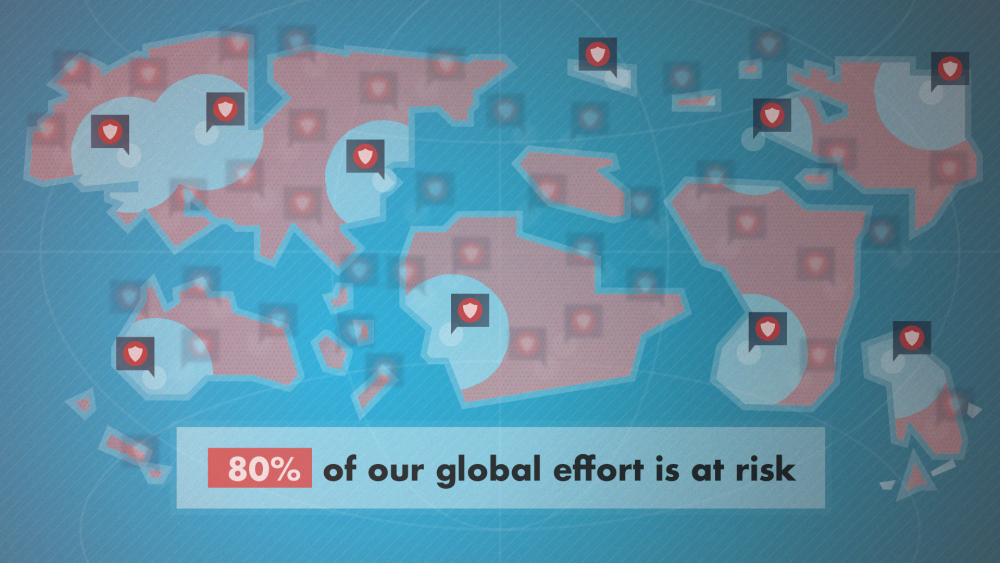
New NTI Video Calls for Protecting U.S. Commitment to Global Health Security
New video makes the case for protecting America’s commitment to global health security.
New video makes the case for protecting America’s commitment to global health security.
Article
NTI and partners developed the Global Health Security Index, a public benchmarking of health security and related capabilities across the 195 countries.

NTI and Emory University hosted a workshop in Georgia on radiological security which included representatives from the CDC, the NNSA, the FBI, and others.
NTI at the 2018 Munich Security Conference

Browne, Ischinger, Ivanov and Nunn publish new op-ed; Statements from members of The Euro-Atlantic Security Leadership Group (EASLG).
Reducing and eliminating nuclear risks is an existential common interest for all nations.
We have crossed over to a new nuclear era in which cyber capabilities transform the nuclear risks.

NTI released a report addressing the security risks, credibility, financial and political costs of maintaining NATO’s current nuclear posture.
Article
Nuclear and military risks are compounded by heightened tensions between NATO and Russia—with little communication between military and political leaders
In the Euro-Atlantic region today, the risks of a fateful error leading to nuclear conflict are compounded by heightened tensions between NATO and Russia – and little communication between military and political leaders. In the absence of some positive initiative, we will continue to drift toward danger.
Sign up for regular updates on innovative, real-world solutions to existential threats.