Minimizing Weapons-Usable Nuclear Material: A Nuclear Security Success Story Still in Progress
One of the most significant achievements in reducing the risk of nuclear terrorism over the past two decades is something that rarely makes headlines.
Here we highlight the work of NTI and share knowledge, ideas, and viewpoints addressing the crosscutting challenges our world faces—addressing risks while supporting innovation—to make our world safer.
One of the most significant achievements in reducing the risk of nuclear terrorism over the past two decades is something that rarely makes headlines.
Sign up for our newsletter to get the latest on nuclear and biological threats.
NTI | bio Senior Program Officer Dr. Aparupa Sengupta on why efforts to strengthen global biosafety and biosecurity must prioritize diversity and inclusion.
What does the future hold for Ukraine’s survival, Putin’s grip on power, and the shape of the international order?
Laura Kiefer, NTI's director of operations, sat down with Mary Fulham for the latest in Atomic Pulse’s “Get to Know NTI” series.
Lynn Rusten, vice president of NTI’s Global Nuclear Policy Program, shares her reaction to the 2023 Strategic Posture Report during a panel event at the Atlantic Council.
There is no noise at first, only a flash so bright that the soldiers see their own bones and blood vessels through their skin, as if they have x-ray vision.
On October 11, NTI hosted Dr. James Johnson for a virtual seminar moderated by Senior Advisor to the NTI President Douglas Shaw to learn more about the consequences of AI technology for the nuclear age and what governments and experts should do in response.
NTI’s Mary Fulham and Rachel Staley Grant interviewed Tina Cordova about her advocacy work—including recent breakthroughs in Congress—and her take on the recent attention that Oppenheimer has brought to the history of nuclear weapons in New Mexico.
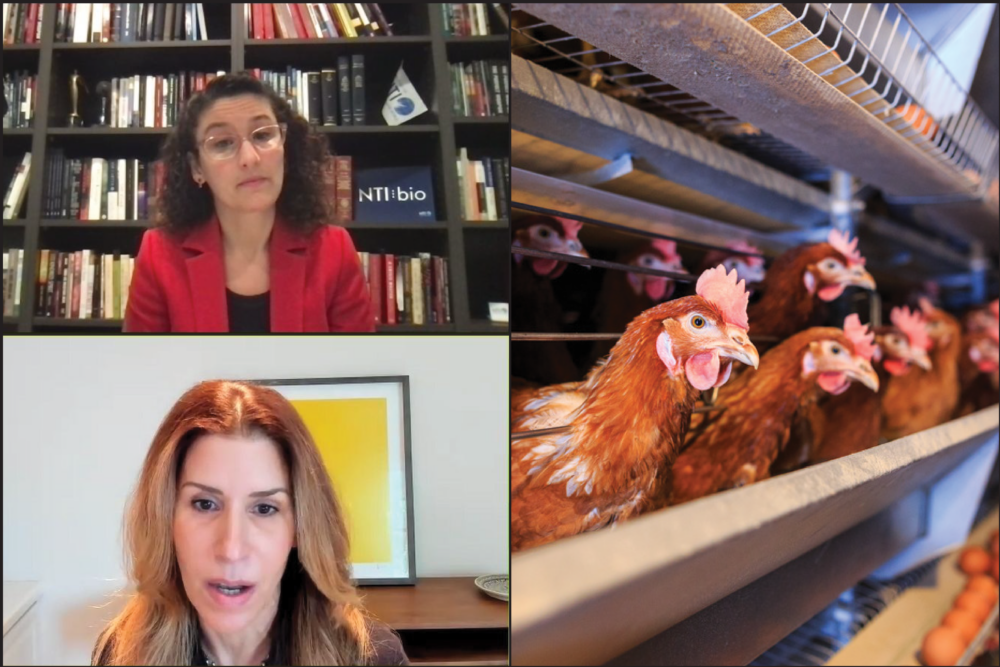
NTI is working with international partners to develop a new Joint Assessment Mechanism (JAM) within the office of the UN Secretary-General to rapidly identify outbreak origins. Without the ability to quickly determine the origin of an outbreak, researchers are hampered in their ability to rapidly develop vaccines and other medical countermeasures that can slow the pace of the outbreak, ultimately saving countless lives.
Senior Director, Communications
Director, Communications
Sign up for regular updates on innovative, real-world solutions to existential threats.
{ location = 'https://www.nti.org/get-updates/' }, 300);">Get Updates