
Arsenal and Missile Types
NPT Nuclear Weapon State
Estimated Arsenal Size
- 600 nuclear warheads
- Estimated to have 1,000 by 2030
Key Delivery Systems
Strategic
- 400 intercontinental ballistic missiles (ICBMs)
- 72 submarine-launched ballistic missiles (SLBMs)
- 20 air-launched ballistic missiles (ALBMs)
Capabilities and Developments
Military and Fissile Material Stockpile
- Highly Enriched Uranium: 14 ± 3 tons
- Weapons-Grade Plutonium: 2.9 ± 0.6 tons
Commitments and Policies
Disarmament and Commitments to Reduce Arsenal Size
- On March 9, 1992, China acceded to the Nuclear Nonproliferation Treaty (NPT) committing to nuclear nonproliferation and disarmament
- On April 29, 2025, China delivered a statement at the Third Session of the NPT Preparatory Committee, expressing its support for a step-by-step approach for nuclear disarmament without undermining stability and security
- In November 2024, China released a statement, “China’s Non-Proliferation Policy and Measures,” reiterating its commitment to nonproliferation and export control of Weapons of Mass Destruction (WMDs)
Future Commitments
- China has an obligation under Article VI of the NPT to pursue nuclear disarmament
- On 24 September 1996, China signed the Comprehensive Nuclear Test Ban Treaty (CTBT) but has not ratified it[10]
- China has not signed the Treaty on the Prohibition of Nuclear Weapons (TPNW)
Nuclear Weapons Policies
- China maintains a policy of No First Use (NFU), established since it first tested a nuclear weapon in 1964
- China advocates for establishing a treaty on “mutual no-first-use of nuclear weapons” among the five nuclear weapon states
Explore the Collection
Nuclear Disarmament Belarus
Nuclear Disarmament Belgium
Your are currently on
Nuclear Disarmament China
Nuclear Disarmament France
Nuclear Disarmament Germany
Nuclear Disarmament India
Nuclear Disarmament Israel
Nuclear Disarmament Italy
Nuclear Disarmament Kazakhstan
Nuclear Disarmament NATO
Nuclear Disarmament North Korea
Nuclear Disarmament Netherlands
Nuclear Disarmament Pakistan
Nuclear Disarmament Russia
Nuclear Disarmament South Africa
Nuclear Disarmament Turkey
Nuclear Disarmament Ukraine
Nuclear Disarmament United Kingdom
Nuclear Disarmament United States
Stay Informed
Sign up for our newsletter to get the latest on nuclear and biological threats.
More on
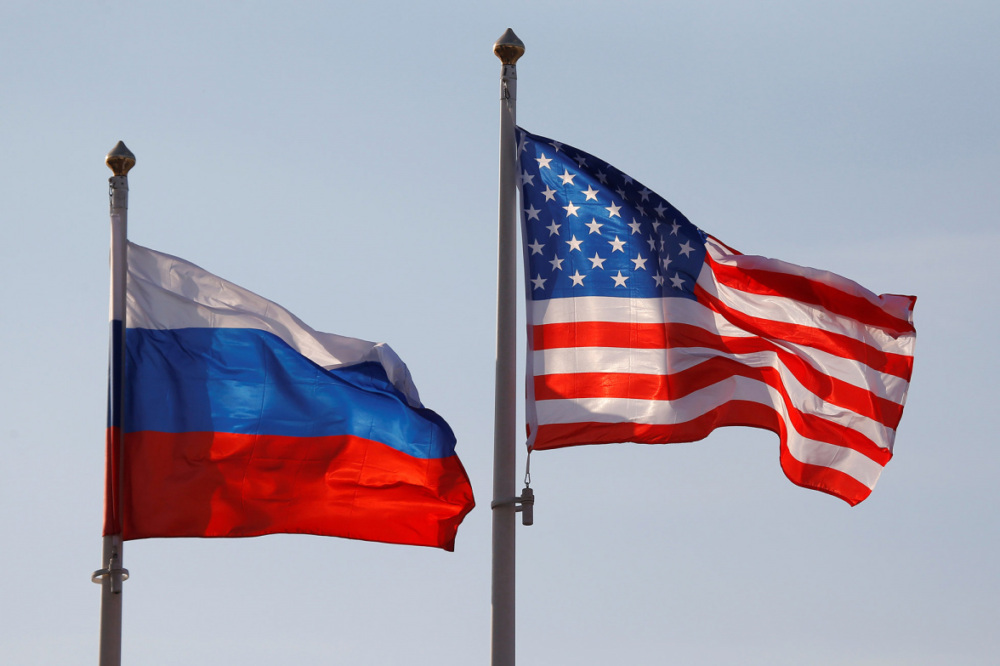
The End of New START: From limits to looming risks
Unless the United States and Russia agree to maintain limits on their forces, the world will enter a period of potentially unconstrained nuclear build-ups.
“When you take off nuclear restrictions, that’s a big problem.” – President Trump

Keep a Cap on Nukes “When you take off nuclear restrictions, that’s a big problem.” – President Trump
With the New START treaty set to expire February 5, President Trump has a real opportunity to stop a dangerous nuclear arms race. This is the moment for smart leadership and strong dealmaking.
Nuclear Disarmament South Africa
Information and analysis of nuclear weapons disarmament proposals and progress in South Africa
Glossary
- Treaty on the Non-Proliferation of Nuclear Weapons (NPT)
- The NPT: Signed in 1968, the Treaty on the Non-Proliferation of Nuclear Weapons (NPT) is the most widely adhered-to international security agreement. The “three pillars” of the NPT are nuclear disarmament, nonproliferation, and peaceful uses of nuclear energy. Article VI of the NPT commits states possessing nuclear weapons to negotiate in good faith toward halting the arms race and the complete elimination of nuclear weapons. The Treaty stipulates that non-nuclear-weapon states will not seek to acquire nuclear weapons, and will accept International Atomic Energy Agency safeguards on their nuclear activities, while nuclear weapon states commit not to transfer nuclear weapons to other states. All states have a right to the peaceful use of nuclear energy, and should assist one another in its development. The NPT provides for conferences of member states to review treaty implementation at five-year intervals. Initially of a 25-year duration, the NPT was extended indefinitely in 1995. For additional information, see the NPT.
- Intercontinental ballistic missile (ICBM)
- Intercontinental ballistic missile (ICBM): A ballistic missile with a range greater than 5,500 km. See entry for ballistic missile.
- Submarine-launched ballistic missile (SLBM)
- SLBM: A ballistic missile that is carried on and launched from a submarine.
- Highly enriched uranium (HEU)
- Highly enriched uranium (HEU): Refers to uranium with a concentration of more than 20% of the isotope U-235. Achieved via the process of enrichment. See entry for enriched uranium.
- Weapons-grade material
- Weapons-grade material: Refers to the nuclear materials that are most suitable for the manufacture of nuclear weapons, e.g., uranium (U) enriched to 90 percent U-235 or plutonium (Pu) that is primarily composed of Pu-239 and contains less than 7% Pu-240. Crude nuclear weapons (i.e., improvised nuclear devices), could be fabricated from lower-grade materials.
- Plutonium (Pu)
- Plutonium (Pu): A transuranic element with atomic number 94, produced when uranium is irradiated in a reactor. It is used primarily in nuclear weapons and, along with uranium, in mixed-oxide (MOX) fuel. Plutonium-239, a fissile isotope, is the most suitable isotope for use in nuclear weapons.
- Treaty on the Non-Proliferation of Nuclear Weapons (NPT)
- The NPT: Signed in 1968, the Treaty on the Non-Proliferation of Nuclear Weapons (NPT) is the most widely adhered-to international security agreement. The “three pillars” of the NPT are nuclear disarmament, nonproliferation, and peaceful uses of nuclear energy. Article VI of the NPT commits states possessing nuclear weapons to negotiate in good faith toward halting the arms race and the complete elimination of nuclear weapons. The Treaty stipulates that non-nuclear-weapon states will not seek to acquire nuclear weapons, and will accept International Atomic Energy Agency safeguards on their nuclear activities, while nuclear weapon states commit not to transfer nuclear weapons to other states. All states have a right to the peaceful use of nuclear energy, and should assist one another in its development. The NPT provides for conferences of member states to review treaty implementation at five-year intervals. Initially of a 25-year duration, the NPT was extended indefinitely in 1995. For additional information, see the NPT.
- Nonproliferation
- Nonproliferation: Measures to prevent the spread of biological, chemical, and/or nuclear weapons and their delivery systems. See entry for Proliferation.
- Disarmament
- Though there is no agreed-upon legal definition of what disarmament entails within the context of international agreements, a general definition is the process of reducing the quantity and/or capabilities of military weapons and/or military forces.
- First-use
- The introduction of nuclear weapons, or other weapons of mass destruction, into a conflict. In agreeing to a "no-first-use" policy, a country states that it will not use nuclear weapons first, but only under retaliatory circumstances. See entry for No-First-Use
Sources
- China. “Statement by Sun Xiaobo, Director-General of the Department of Arms Control of the Foreign Ministry of China at the General Debate of the Third Session of the Preparatory Committee for the 2026 NPT Review Conference.” Reaching Critical Will, April 29, 2025. https://reachingcriticalwill.org/images/documents/Disarmament-fora/npt/prepcom25/statements/29April_China.pdf.
- CTBTO. “Status of Signatures and Ratifications.” Accessed July 11, 2025. https://www.ctbto.org/our-mission/states-signatories.
- ICAN. “China.” Accessed July 11, 2025. https://www.icanw.org/china.
- International Panel on Fissile Materials. “Countries: China,” May 22, 2025. https://fissilematerials.org/countries/china.html.
- Kristensen, Hans M., Matt Korda, Eliana Johns, and Mackenzie Knight. “Chinese Nuclear Weapons, 2025.” Bulletin of the Atomic Scientists 81, no. 2 (March 4, 2025): 135–60. https://doi.org/10.1080/00963402.2025.2467011.
- Ministry of Foreign Affairs of the People’s Republic of China. “China’s Non-Proliferation Policy and Measures,” November 21, 2024. https://www.mfa.gov.cn/eng/wjb/zzjg_663340/jks_665232/kjlc_665236/fkswt_665240/202406/t20240606_11405135.html.
- Ministry of Foreign Affairs of the People’s Republic of China. “No-First-Use of Nuclear Weapons Initiative,” July 23, 2024. https://www.mfa.gov.cn/eng/xw/wjbxw/202407/t20240723_11458632.html.
- United Nations Office for Disarmament Affairs. “Treaty on the Non-Proliferation of Nuclear Weapons.” Accessed July 11, 2025. https://treaties.unoda.org/t/npt/participants.
- U.S. Department of Defense. “Military and Security Developments Involving the People’s Republic of China 2024,” 2024. https://media.defense.gov/2024/Dec/18/2003615520/-1/-1/0/MILITARY-AND-SECURITY-DEVELOPMENTS-INVOLVING-THE-PEOPLES-REPUBLIC-OF-CHINA-2024.PDF.