

White Paper: A Proposal for Biodesign Metadata Exchange for Use in Biosecurity
NTI | bio partnered with Lattice Automation to design and pilot a standard for capturing and transmitting metadata.

Chris Isaac is a program officer for NTI’s Global Biological Policy and Programs team (NTI | bio). In this role, he supports efforts to improve biosecurity and biotechnology governance through the Biosecurity Innovation and Risk Reduction Initiative, increase transparency and accountability for national health security capacities through the Global Health Security Index, and reduce global catastrophic biological risks arising from the misuse of biotechnology.
Isaac has been involved with synthetic biology through the Internationally Genetically Engineered Machines (iGEM) Competition since the start of his scientific career and brings with him a mixture of skills in policy, biochemistry, and programming.
Isaac holds a B.Sc. in Biological Sciences with a minor in Philosophy and a M.Sc in Biochemistry (Bioinformatics) from the University of Lethbridge. Additionally, Isaac is an alumnus of the Emerging Leaders in Biosecurity Fellowship at the Johns Hopkins Center for Health Security and is a member of the iGEM Safety and Security Committee.
NTI | bio partnered with Lattice Automation to design and pilot a standard for capturing and transmitting metadata.
The integration of artificial intelligence (AI) with the life sciences offers tremendous potential benefits to society, but advances in AI biodesign tools also pose significant risks of misuse, with the potential for global consequences.
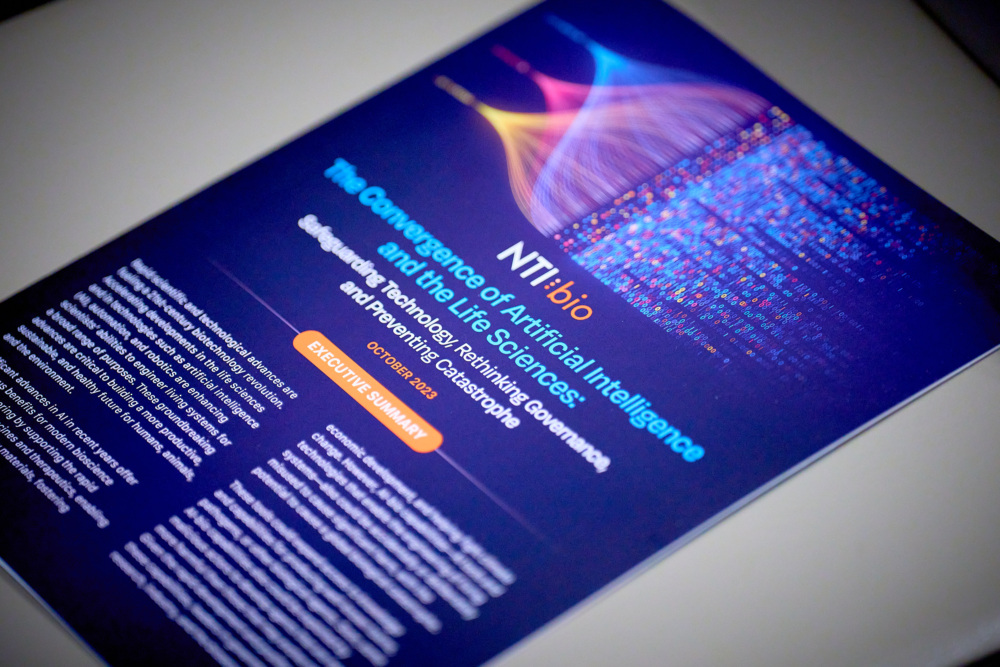
New report from NTI | bio offers recommendations for urgent actions that leaders within government, industry, the scientific community, and civil society should take to safeguard AI-bio capabilities.

NTI Seminar: Dr. Margaret Hamburg on COVID-19 Vaccines, Therapeutics, and the Biosecurity Nexus
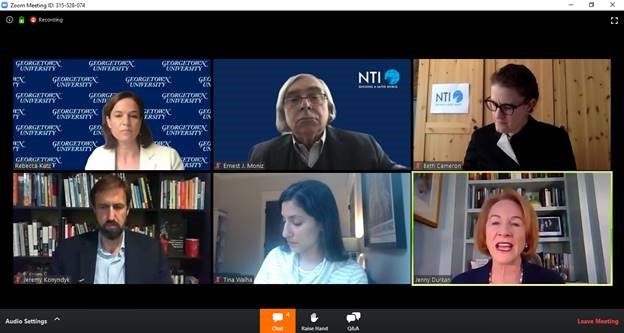
NTI I bio works with others to develop local resource for COVID-19 response

Strengthening AI governance to prevent misuse of AI-enabled tools for engineering living systems
 Past Project
 Establishing stronger norms and practices to prevent accidents, misuse, and other adverse outcomes of life science research
 Past Project
 Rapidly assessing origins of high-consequence global biological events
 Past Project
 Establishing an international Common Mechanism for DNA Synthesis Screening
Sign up for regular updates on innovative, real-world solutions to existential threats.