Minimizing Weapons-Usable Nuclear Material: A Nuclear Security Success Story Still in Progress
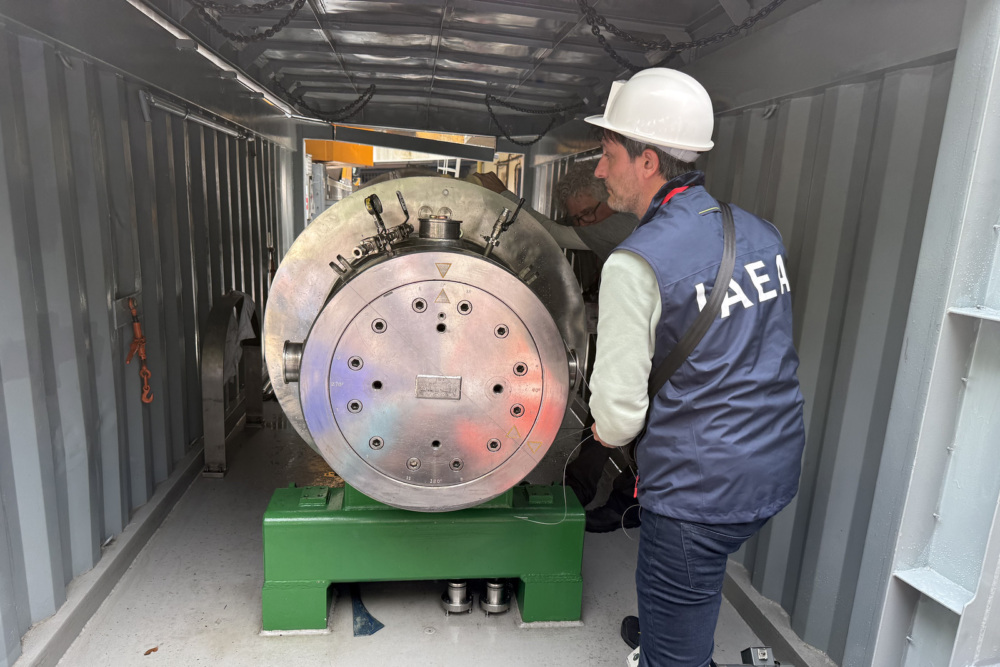
One of the most significant achievements in reducing the risk of nuclear terrorism over the past two decades is something that rarely makes headlines.
Here we highlight the work of NTI and share knowledge, ideas, and viewpoints addressing the crosscutting challenges our world faces—addressing risks while supporting innovation—to make our world safer.
One of the most significant achievements in reducing the risk of nuclear terrorism over the past two decades is something that rarely makes headlines.
Sign up for our newsletter to get the latest on nuclear and biological threats.
In recent months, the Trump administration appears to have been flirting with a return to underground nuclear weapons testing, a decision that could have serious environmental and security implications.
Global institutions remain essential, but, increasingly, some of the most practical and forward-leaning work is happening closer to home at the regional level.
Convincing Iran to forgo nuclear weapons development may be the most difficult challenge of all.
As global resources become more constrained, evidence-based tools that guide investments toward maximum impact are more important than ever. This World Health Day, the WHO urges the world to embrace evidence, support science-led solutions, and advance global cooperation to turn evidence into action.
Elise Rowan serves as the deputy vice president of NTI’s Communications team. She co-leads the organization’s Critical Mass project, which harnesses the power of culture and campaigns to change the narrative on nuclear weapons and shift political incentives toward policies that reduce nuclear risks.
Disney Channel’s The Luck of the Irish reminds us that failing to safeguard a powerful asset—whether a magical lucky coin or advanced emerging technology—can lead to disaster. Strengthening AIxBio governance is about building guardrails to accelerate innovation and safeguards to prevent harm.
Congress’s oversight of U.S. nuclear policy is at a critical juncture. When the U.S. Senate approved New START in 2010, it mandated several annual reports and certifications to ensure strong congressional oversight of Russian compliance with the treaty. These requirements expired along with the treaty, creating oversight gaps just as strategic competition heats up.
The convergence of artificial intelligence and the life sciences is reshaping what’s possible in biology, delivering major advances–ranging from accelerating vaccine discovery to advancing new tools for mitigating the effects of climate change–and new risks. NTI | bio’s AIxBio Horizon Scan looks ahead to where AIxBio capabilities are headed over the coming years.
A growing number of the world’s leading experts in health security and the life sciences are warning that unfettered open access to biological data could help AI design dangerous pathogens and are calling for safeguards on high-risk data to prevent misuse of AIxBio tools. Their warnings represent growing momentum behind an idea that NTI has championed: using managed access as a tool to strengthen biosecurity and safeguard rapidly advancing AIxBio capabilities.
Some of the world’s largest AI companies—Google DeepMind, OpenAI, and Anthropic—have warned that their models could be misused to cause harm with biology. The India AI Impact Summit is a critical moment for policymakers, scientists, developers, and biosecurity experts to work together on responsible governance that reduces AIxBio risks.
Senior Director, Communications
Director, Communications
Sign up for regular updates on innovative, real-world solutions to existential threats.
{ location = 'https://www.nti.org/get-updates/' }, 300);">Get Updates