
About the image
Capabilities at a Glance
The Pakistan Navy operates a fleet of five diesel-electric submarines and three MG110 mini submarines.1 Pakistan views its submarine force as necessary to maintain its credible minimum deterrence posture.2
Total Submarines in Fleet: 8
- Ballistic Missile Submarines (SSBNs): 0
- Nuclear-Powered attack submarines (SSNs): 0
- Diesel-electric attack submarines (SSKs): 5
- Mini Submarines (SSMs): 3
- Air-independent propulsion (AIP) enabled: 3/8
Submarines
History
In 1964, Pakistan purchased its first submarine, PNS Ghazi, from the United States. Between December 1969 and August 1970, the Pakistan Navy acquired three Daphne-class submarines from France.3 After losing the PNS Ghazi in the 1971 war with India, the Pakistan Navy purchased a second-hand Daphne-class vessel from Portugal in 1975.4 In 1978, the Pakistan Navy acquired two Agosta-70-class submarines that were originally intended for the South African Navy.5 In 1994, Pakistan procured three Agosta-90B boats from France’s Naval Group SA.6 In the early 2000s, the Pakistan Navy considered an additional purchase from DCNS, but abandoned it due to budgetary constraints.7
In 1988, Pakistan purchased the first of their three Cosmo-class MG110 miniature submarines from Italy.8 These vessels were intended to replace the SX404 mini-submarines that the Pakistan Navy deployed in the 1971 war against India. The Cosmo-class mini submarines are equipped for mine laying, coastal defense, and special forces operation.9
Modernization and Current Capabilities
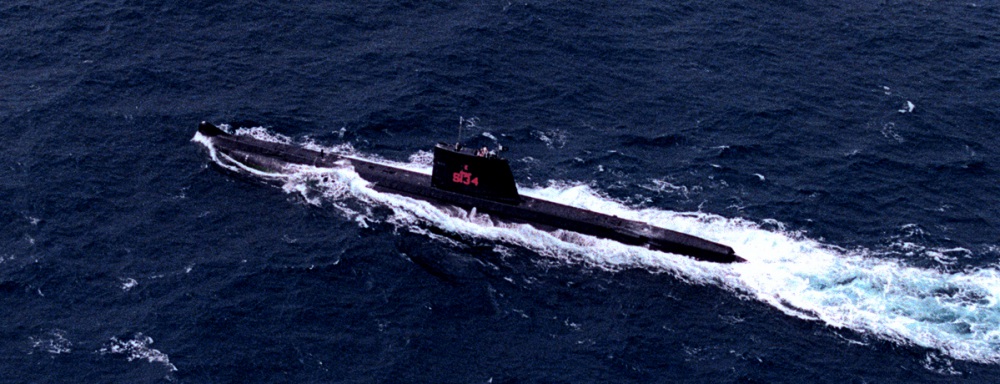
The current fleet primarily consists of two Agosta-70 boats (Hashmat-class) and three modern Agosta-90B (Khalid-class) submarines, all of French design. Karachi Shipyard and Engineering Works (KSEW) indigenously constructed Pakistan’s third Agosta-90B submarine PNS Hamza (S139) and commissioned it on 26 September 2008.10 The PNS Hamza features French company Naval Group’s MESMA (Module d’Energie Sous-Marin Autonome) air-independent propulsion (AIP) system, making it the first conventional submarine built in South Asia to feature AIP propulsion.11 In 2011, Pakistan retrofitted the two earlier Agosta-90B vessels with MESMA during overhauls.12
In 2015, Pakistan announced a five billion USD agreement with China to purchase eight Type 39 Yuan-Class attack submarines. Pakistan will also acquire one Type 039A Yuan-Class attack submarine for free from China for “training and acclimation purposes.”13 KSEW will construct four of these submarines in Pakistan while the China Shipbuilding Trading Company (CSTC) will build the remaining four in China14 In 2016, Pakistan finalized the deal and its long-term loan with China to finance the deal. The first four vessels were slated for delivery by the end of 2023 but were delayed until 2024.15 Four additional Yuan-class vessels are to be delivered, one per year, from 2025-2028.16
In 2003, Chief of the Naval Staff Admiral Shahid Karimullah stated that Pakistan had no intentions to arm its submarines with nuclear warheads unless it felt threatened by India.17 In January 2017, less than a month after India launched its Agni-V intercontinental ballistic missile (ICMB), Pakistan successfully test-fired its first nuclear-capable submarine-launched cruise missile, the Babur-3.18 Pakistan tested the Babur-3 missile again in April 2018.19
While most of Pakistan’s submarines are based at the Karachi Naval Dockyard, naval officials announced in 2014 that the submarines could be dispersed to the Jinnah Naval Base in Ormara.20
In February 2024, Pakistan began developing the sixth Hangor-class submarine, which includes an advanced weapons and sensor system.21 In April 2024, Pakistan’s Hangor-class submarine was launched in Wuhan, China.22
Ship Biographies
Hashmat-Class
Pakistan operates two Hashmat-class submarines. Their design is based on the French Agosta-class submarines. The Hashmat is 76 meters long with a 6-meter-wide beam and can travel up to 20.5 knots when submerged. Its weapons systems can fire torpedoes and anti-ship missiles.
Khalid-Class
Pakistan operates three Khalid-class submarines, also called Agosta-90B-class. Their design is based on the improved version of French Agosta-class submarines which includes modifications for a lower acoustic signature, improved battery range and performance, and increased diving depth. These vessels are 67.6 meters long with a 6.8-meter-wide beam and can travel up to 20 knots when submerged. Their weapons system is capable of firing torpedoes and anti-ship missiles.23 These submarines were upgraded by Turkey in 2019, which was the first foreign submarine contract that Turkey has filled.24
Cosmos-Class
Pakistan operates three Cosmos-class mini submarines. Designed by an Italian company in 1985, Pakistan commissioned the three submarines in 1993. They are 28 meters long with one propeller. They can stay underwater 20 days at a time and are equipped with Mark 5 torpedoes. The main purpose of the Cosmos-Class vessel is to conduct special operations.25
Hengor-Class 039B
Pakistan ordered eight of these submarines from China in 2015. These are based on the Chinese S26 design, are electric/diesel powered, will be equipped with AIP systems. Each submarine is armed with 21-inch torpedo tubes, which enables the launch of heavy torpedoes like the Chinese Yu-6 as well as anti-ship cruise missiles (ASCMs).26 The submarines are 77.6 m long and have a beam of 8.4 m.27
Import and Export Behavior
Imports
Pakistan has imported a majority of its submarine fleet from countries from the United States, France, and China. In 1964, Pakistan imported the PNS Ghazi from the United States. Then, in 1969-1970, Pakistan obtained three Daphne-class vessels (PNS Hangor, Shushuk, and Magro) from France. All of Pakistan’s Agosta-class submarines were either constructed by French company Naval Group or by indigenous shipbuilders with technology transfers from France.28 Pakistan has also had three of its Agosta-class submarines upgraded by Turkey.29 Most recently, Pakistan has signed an agreement with China for eight attack submarines. The first was launched in 2024 and the rest should be launched by 2028.30
Exports
Pakistan’s Karachi Ship and Engineering Works (KSEW) received extensive technology transfers from France’s Naval Group SA for the development of the Khalid-class (Agosta 90B) submarine program. While Pakistan’s licensing agreement with France enables it to export domestically produced Agosta 90B vessels, it has yet to complete any sales.31
Pakistan modernized the Karachi Naval Dockyard to facilitate the assembly and construction of the PNS Hamza (S139), its first indigenously-built submarine.32 Additionally, while Saudi Arabia and Malaysia were reportedly interested in a Pakistani sale, both countries eventually purchased vessels from France’s Naval Group instead.33
Explore the Collection
Australia Submarine Capabilities
Brazil Submarine Capabilities
Chile Submarine Capabilities
China Submarine Capabilities
France Submarine Capabilities
Germany Submarine Capabilities
Greece Submarine Capabilities
India Submarine Capabilities
Indonesia Submarine Capabilities
Iran Submarine Capabilities
Israel Submarine Capabilities
Italy Submarine Capabilities
Japan Submarine Capabilities
Malaysia Submarine Capabilities
Netherlands Submarine Capabilities
North Korea Submarine Capabilities
Your are currently on
Pakistan Submarine Capabilities
Russia Submarine Capabilities
Singapore Submarine Capabilities
South Korea Submarine Capabilities
Sweden Submarine Capabilities
Taiwan Submarine Capabilities
United States Submarine Capabilities
Submarine Detection and Monitoring: Open-Source Tools and Technologies
Stay Informed
Sign up for our newsletter to get the latest on nuclear and biological threats.
More on
Germany Submarine Capabilities
Overview of Germany's submarine capabilities and import-export behavior.
China Submarine Capabilities
A highlight of global trends in the sale and acquisition of diesel- and nuclear-powered submarines by country with capabilities, imports and exports. (CNS)
France Submarine Capabilities
Overview of France's submarine capabilities and import-export behavior.
Glossary
- Deterrence
- The actions of a state or group of states to dissuade a potential adversary from initiating an attack or conflict through the credible threat of retaliation. To be effective, a deterrence strategy should demonstrate to an adversary that the costs of an attack would outweigh any potential gains. See entries for Extended deterrence and nuclear deterrence.
- SSBN
- Ship, Submersible, Ballistic, Nuclear: A hull classification for a submarine capable of launching a ballistic missile. The "N", or nuclear, refers to the ship's propulsion system. SSBN's are generally reserved for strategic vessels, as most submarine launched ballistic missiles carry nuclear payloads. A non-strategic vessel carries the designation SSN, or attack submarine.
- Diesel-electric submarine (SSK)
- Diesel-electric submarine: A submarine with a diesel-electric transmission. Diesel-electric transmissions require access to oxygen for the diesel generator to charge the submarine’s batteries or drive the motor. This type of submarine is thus louder and must surface more frequently than a nuclear-powered submarine. A diesel-electric submarine can fire conventional cruise missiles against land targets, and in theory, can also carry nuclear-tipped cruise missiles. Diesel-electric submarines are significantly cheaper to build and purchase than nuclear-powered vessels, which makes them the vessel of choice for smaller navies.
- Air Independent Propulsion Technology (AIP)
- Air Independent Propulsion Technology (AIP): A propulsion system that uses liquid (or compressed) oxygen or hydrogen fuel cells, thereby allowing submarines to stay submerged for longer periods without the need for external sources of oxygen. This increased endurance also increases a submarine’s survivability.
- Deployment
- The positioning of military forces – conventional and/or nuclear – in conjunction with military planning.
- Intercontinental ballistic missile (ICBM)
- Intercontinental ballistic missile (ICBM): A ballistic missile with a range greater than 5,500 km. See entry for ballistic missile.
- Sea-Launched Cruise Missile (SLCM)
- Refers to cruise missiles with conventional or nuclear payloads that are launched from submarines.
Sources
- “Submarine Force,” Pakistan Navy, www.paknavy.gov.pk; “Chapter Seven: Central and South Asia Caribbean and Latin America,” The Military Balance 2009, International Institute of Strategic Studies, Routledge, 2009.
- “Pakistan to retain minimum nuclear deterrence, PM says,” The News, 7 January 2003, in Lexis-Nexis, http://web.lexis-nexis.com.
- “PN Dimensions: Submarine Force,” Pakistan Navy, accessed August 5, 2019, www.paknavy.gov.pk.
- “The Fleet: Submarines,” Pakistan Navy, http://paknavy.gov.pk.
- Jacques Isnard, “A Navy to a large extent under France’s wing,” Le Monde, May 9, 2002, www.lemonde.fr; “S 135 Hashmat class,” Periscope USNI Military Database, www.periscope1.com; “PN Dimensions: Submarine Force,” Pakistan Navy, accessed August 5, 2019, www.paknavy.gov.pk.
- “Pakistan navy inducts new submarine,” Associated Press of Pakistan, September 27, 2008, in Lexis-Nexis Academic Universe, www.lexis-nexis.com.
- “How Paris lost the Pakistani Market; Arms Sales,” Intelligence Online, March 17, 2011, www.lexisnexis.com; “Pak to Buy Three Submarines from Germany,” Asian News International, December 3, 2008, www.lexisnexis.com; “Germany Negotiating Sale of Submarines with Pakistan,” BBC Monitoring Europe – Political, July 13, 2009, www.lexisnexis.com; “France, Germany Vie to Sell Submarines to Pakistan,” South Asian Media Network, July 23, 2009, www.lexisnexis.com.
- “Cosmos Class MG110,” Global Security, accessed November 20, 2017, www.globalsecurity.org.
- Bilal Khan, “Pakistan Proceeds with New Miniature Submarine Program,” Quwa Defense News & Analysis Group, May 23, 2017, https://quwa.org; “Cosmos Class MG110,” Global Security, accessed: November 20, 2017, www.globalsecurity.org.
- The Royal Institute of Naval Architects, Karachi Shipyard and Engineering Works, www.rina.org.uk; “Pakistan navy inducts new submarine,” Associated Press of Pakistan, September 27, 2008; “India submarine ‘threatens peace,’” BBC News, July 28, 2009, http://news.bbc.co.uk; “Pakistan on verge of selecting HDW submarine,” Jane’s Defence Weekly, December 2, 2008, www.janes.com.
- Feroz Hassan Khan, “Pakistan’s Perspective on the Global Elimination of Nuclear Weapons,” Report prepared for the Henry L. Stimson Center, April 2009; “Agosta Class,” Jane’s Underwater Warfare Systems, September 25, 2009; “MESMA,” Direction des Constructions Navales Services, September 2008, www.dcnsgroup.com.
- “Agosta: Pakistan’s Tailor-Made Transfer of Technology,” DCNS, October 2010, http://en.dcnsgroup.com; Tim Fish, “DCNS to Provide AIP for Second Pakistani Sub,” Jane’s Defence Weekly, May 5, 2010, www.lexisnexis.com.
- “Outgoing Pakistan Navy Chief Sets Massive 50-Ship Fleet Vision,” Quwa Defense News and Analysis Group, 2020, https://quwa.org.
- H.I. Sutton, “Pakistan’s New Type-039B AIP Submarines: Image Shows Shipyard Expansion,” Naval News, October 6, 2020, www.navalnews.com.
- “Pakistan Navy Launches First Hangor-Class Submarine in China,” Naval News, April 28, 2024, www.navalnews.com.
- Srinjoy Chowdhury, “Germany’s reluctance to supply engines casts shadow on China’s desire to make submarines for Pakistan,” Times Now News, February 5, 2021, www.timesnownews.com.
- “Pakistan navy chief denies plan to equip submarines with nuclear warheads,” The News, January 26, 2003; in Lexis-Nexis, http://web.lexis-nexis.com.
- Pakistan Army, “Press Release – Rawalpindi – January 9, 2017,” Pakistan Ministry of Defense, January 9, 2017, www.pakistanarmy.gov.pk; Joshua Berlinger, “South Asia’s nuclear one-upmanship ramps up with Pakistan missile test,” CNN, January 10, 2017, www.cnn.com.
- Ankit Panda, “Pakistan Conducts Second Test of Babur-3 Nuclear-Capable Submarine-Launched Cruise Missile,” The Diplomat, April 1, 2018, https://thediplomat.com.
- Ridzwan Rahmat, “Pakistan Navy to shift submarines from Karachi to Ormara,” IHS Jane’s Navy International, April 23, 2014.
- “China launches 1st of 8 Hangor-class Submarines For Pakistan,” Marine Insight, April 29, 2024, www.marineinsight.com.
- “Pakistan Navy Launches First Hangor-Class Submarine in China,” Naval News, April 28, 2024, www.navalnews.com.
- “Agosta-90B,” Forecast International, July 2009, www.forecastinternational.com.
- “Pakistan to Launch Agosta 90B Soon,” The Nation, December 16, 2019, https://bharatshakti.in.
- Eric Arnett, ed., Military Capacity and the Risk of War: China, India, Pakistan, and Iran (Oxford: Oxford University Press, 1997).
- Bilal Khan, “Pakistan Announces Babur Sub-Launched Cruise Missile (SLCM) Test,” Quwa Defense News and Analysis Group, March 29, 2018, https://quwa.org.
- Aditya Tarar, “Pakistan Navy News: Construction of fifth Hengor class submarine for Pakistan Navy started, know how dangerous it is?” Hindustan News Hub, December 13, 2021, https://hindustannewshub.com.
- “PN Dimensions: Submarine Force,” Pakistan Navy, accessed August 5, 2019, www.paknavy.gov.pk.
- “Pakistan to Launch Agosta 90B Soon,” The Nation, December 16, 2019, https://bharatshakti.in.
- Gabriel Honrada, “China in middle of India-Pakistan naval arms race,” Asia Times, May 3, 2024, http://asiatimes.com.
- Kaleem Omar, “Arms export drive begins to bear fruit,” The News, February 12, 2001, p. 13; Nasir Jaffry, “2nd Agosta to be ready for trial soon,” The Statesman, February 16, 2002, www.thestatesman.net.
- “Pakistan commissions AIP-equipped Agosta,” Jane’s Defence Weekly, October 8, 2008, www.janes.com.
- “Saudi Arabia, Malaysia Interested in Buying Aircraft, Submarines from Pakistan,” Jang, November 18, 2000, www.jang.com.pk; Michael Dumiak, “Lurking in the Littorals: Diesel-electric subs gain range and lethality,” Defense Technology International, May 2007, pp. 24-27.